
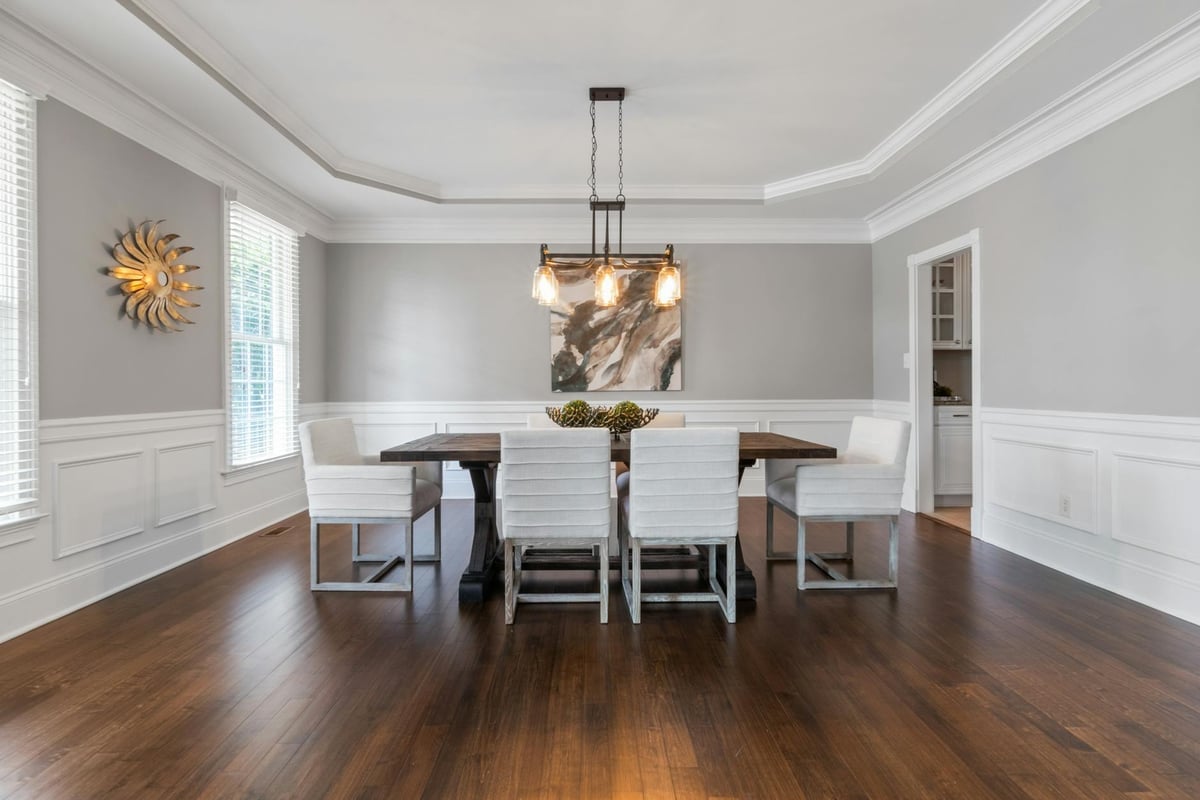
Your hardwood costs $6 to $12 per square foot to install, and a living room of mid-grade carpet runs $1,500 to $3,500 with pad and labor. How your furniture sits on those surfaces decides whether they last 30 years or need rescue work inside five.
Most damage is not accidental. It comes from quiet, repeated mistakes. Fix them and a screen-and-recoat at $1.50 to $2.50 per square foot handles the rest. Ignore them and you face full refinishing at $3 to $8 per square foot or carpet replacement at $2 to $10 per square foot plus install.
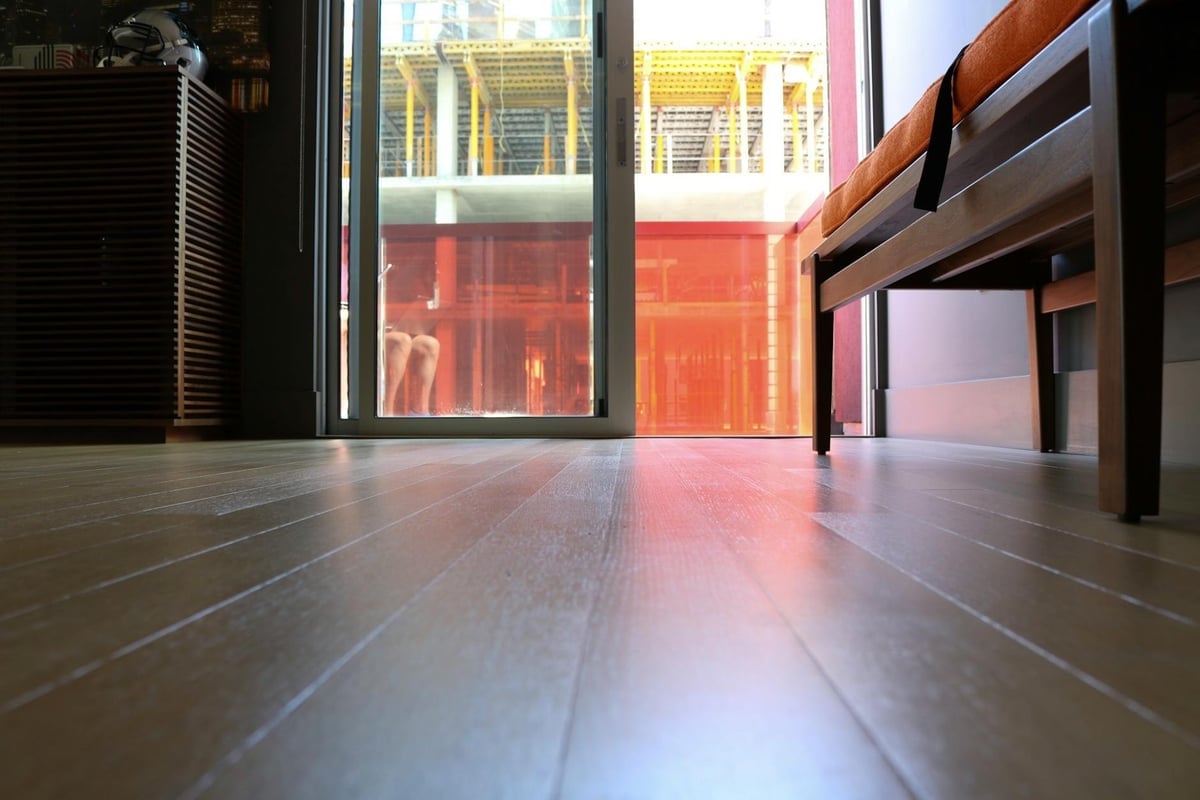
1. Rubber-Tipped Chair Feet Pressed Against Hardwood
Black rubber caps on dining chairs and bar stools look harmless. Over months of contact, the rubber reacts with the polyurethane finish and leaves dark gray scuff rings that will not wipe off.
Rubber contains plasticizers and oils that migrate into the finish, softening it and lifting pigment. Damage shows first under chairs that move most, then spreads as people slide back.
Once stained, you cannot spot-treat it. Board replacement is $50 to $200 per board, and a full refinish runs $3 to $8 per square foot. A 200 square foot dining room can reach $1,600 in restoration.
Swap rubber tips for self-adhesive felt pads or nail-on felt glides, and check them every three months, the same discipline you apply to other overlooked household hazards.
2. Metal Furniture Legs Used Without Felt Pads
Steel and iron table legs, wrought-iron plant stands, and metal bed frames act like chisels on hardwood. Every shift, even a fraction of an inch, cuts a fresh micro-gouge.
The damage looks like fine white scratches at first. As dirt fills the cuts, they turn dark and telegraph the footprint of the piece. On engineered hardwood, cuts can punch through the wear layer.
A screen-and-recoat at $1.50 to $2.50 per square foot will not save scratched-through engineered wood. You face board replacement at $50 to $200 per board, and matching old finish is rarely perfect.
Stick three-eighths-inch felt pads on every metal contact point. The same fix protects the legs of contemporary living room furniture that ships with bare metal feet.
3. Area Rugs Backed With Solid Rubber or Plastic on Hardwood
A rug with a solid rubber or PVC backing seals your hardwood. Trapped moisture cannot evaporate, and the finish discolors into a permanent rug-shaped ghost.
The discoloration is a chemical reaction between the off-gassing backing and the polyurethane topcoat. On lighter floors it shows as yellow or amber. On darker stains it shows as cloudy white haze that sanding cannot fully erase.
A full refinish on a 12 by 15 foot rug area runs $540 to $1,440 at $3 to $8 per square foot, just to remove the mark left by your old rug.
Use a breathable felt-and-natural-rubber rug pad rated for hardwood. Lift and rotate rugs twice a year. If the rug is hiding a stain you already have, treat the floor first the way you would with the hacks for getting rid of carpet stains on the other side of the room.
4. Heavy Furniture Pinning Carpet for Years Without Rotation
A sectional, piano, or stone-topped console can put more than 100 pounds per leg into a small contact patch. Carpet pile crushes flat, and after roughly two years the fibers stop springing back.
The dents draw the eye and collect dirt because the pile no longer stands up to a vacuum. Once compressed pile becomes matted pile, the only fix is replacement.
Mid-grade carpet replacement runs $2 to $10 per square foot installed, so redoing a 200 square foot family room is $400 to $2,000.
Set heavy pieces on wide furniture coasters and shift the layout one to two feet every six months. Carpet wear shows up alongside other critical home maintenance issues you are neglecting.
5. Dragging Furniture Across the Floor Instead of Lifting It
Dragging a loaded bookcase is the fastest way to ruin a hardwood finish in one afternoon. A single trip can leave a gouge deep enough to need a board replacement, not a touch-up.
On carpet, dragging catches loops and pulls threads, which unravel into visible runs. Pets accelerate the same pattern, which is why pet-proofing mistakes costing home damage overlap with furniture damage.
A gouge deep enough to catch a fingernail is past the finish. Refinishing runs $3 to $8 per square foot, and individual board replacement is $50 to $200 per board.
Always lift, or use furniture sliders. Bell’O Sliders and Magic Sliders both make hard-floor pads that let two people move a sofa across hardwood without scoring it.
6. Reusing Old Sliders That Have Picked Up Grit
Sliders are not single-use. Once the felt face embeds grit from a doorway or basement, the slider becomes a sanding block strapped to your sofa leg.
The damage shows as long parallel scratches in the direction the piece was moved. On a satin or matte finish those scratches will not buff out.
Repair cost matches a drag scratch: $1.50 to $2.50 per square foot for a screen-and-recoat if finish-deep, $3 to $8 per square foot if cut into the wood. Sun-baked finish near big windows scratches worse, and the same windows fade decor color choices unevenly.
Inspect sliders every time you move a piece, wipe the felt face, and replace any pad with a dark stripe of trapped debris.
7. Leaving the Same Furniture Layout for Five Years or More
Hardwood and carpet both fade in sunlight. If a sofa or rug sits in the same spot for five years, the exposed floor ages while the covered floor stays the original color. Move the piece and you have a sharp shadow line.
On hardwood, oak and maple show this most. On carpet, exposed fibers bleach in UV and protected fibers stay rich, so footprints look like permanent stripes after you redecorate.
A full sand and refinish on faded hardwood is $3 to $8 per square foot. Carpet replacement is $2 to $10 per square foot installed, with no clean way to patch into a faded room.
Rotate your layout every 12 to 18 months and add UV-filtering film on south- and west-facing windows. The same habit helps you dodge bigger tickets in home repairs that get expensive fast.
8. Couches and Cabinets Pinned Against Heat Vents and Radiators
A sectional jammed against a baseboard heater, or a console flush with a floor vent, creates a heat trap. Hardwood at the outlet of a 120-degree vent will cup, crown, or split along the grain within a heating season.
Carpet against a radiator scorches the pile and dries out the latex bond between the carpet and its backing. You see a brown halo first, then bald patches.
Board replacement at a vent is $50 to $200 per board. Wider warping pushes you to $3 to $8 per square foot for refinishing, and heat-damaged carpet usually needs full replacement at $2 to $10 per square foot installed.
Leave six inches of clearance between any furniture back and a heat source, and never block a vent with a rug. While rearranging, look at the room for smart upgrades that increase home value.
9. Plants and Recliners Treated Like They Cannot Hurt the Floor
Plants placed straight on hardwood without a sealed saucer leave dark water rings that go through the finish into the wood. Once the stain is deeper than the finish, sanding will not lift it.
Recliners are the other quiet wrecker. The steel mechanism extends every use and the rear feet rock with your weight, grinding the finish on hardwood and compressing pile on carpet in a crescent that never recovers.
That water ring is board replacement at $50 to $200 per board. A rocked-out recliner zone is $3 to $8 per square foot to refinish, the slow-build expense that pushes up the list in ways to increase the value of your home.
The fix is cheap. Use a glazed ceramic saucer with a cork pad under every plant, and put a thick felt pad under each rear recliner foot.
What Actually Works: The Five-Minute Furniture Audit
Walk every room with a flashlight and look at each piece from below. Anything bare metal, hard plastic, or worn rubber needs a felt pad before you leave the room.
Lift, do not drag. Keep a four-pack of Magic Sliders in a drawer, replace them when the felt face shows grit, and slide instead of scoot. That one habit prevents most of the damage on this list.
Rotate layouts every 12 to 18 months, swap solid-rubber rug backings for breathable felt-and-rubber pads, and keep six inches of air between any furniture back and a heat source. Pair the audit with the broader fix list in critical home maintenance issues you are neglecting and you stop the slow burn that turns a $300 felt-pad weekend into a $4,000 refinish job. The cheapest floor is always the one you already own, kept correctly.
- 1share
- Facebook0
- Twitter1
- Pinterest0