
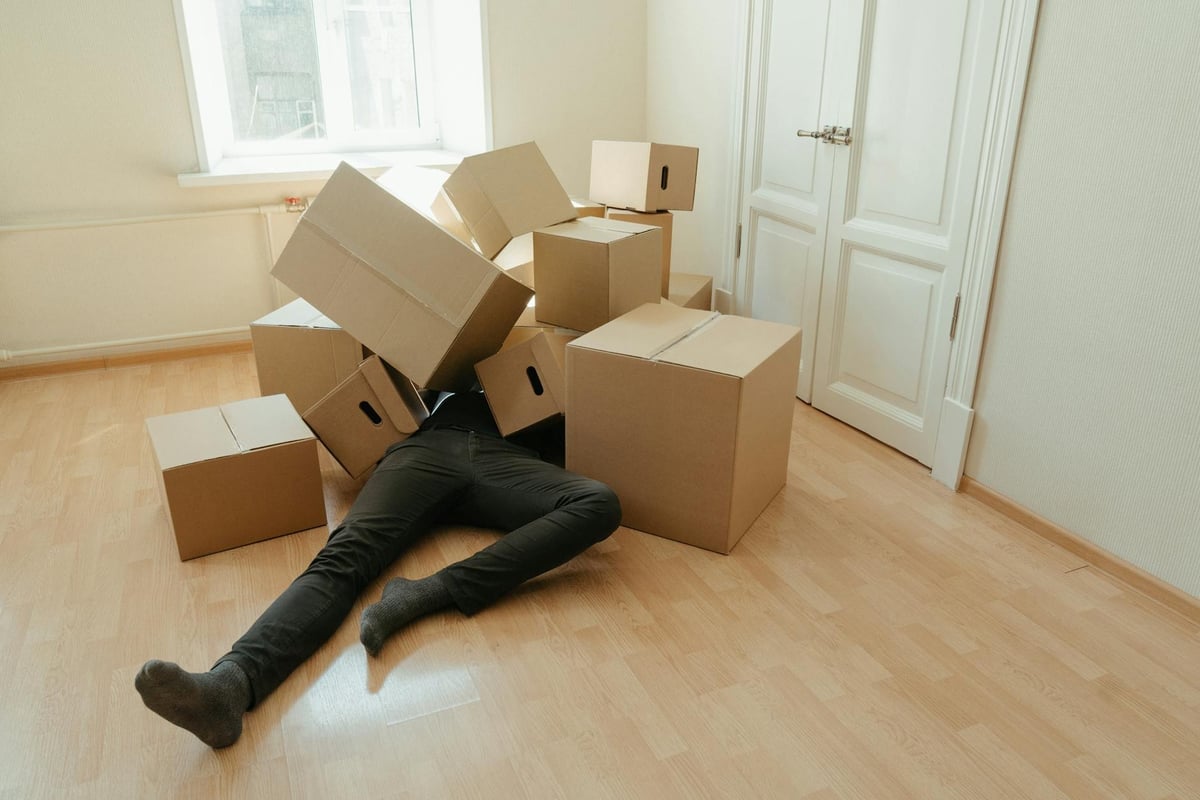
You closed on the house, the truck is in the driveway, and you have eight hours to unload. That pressure is why your first day in a new home is the most expensive. Hardwood gets gouged, trim gets cracked, electronics get fried, and old keys stay in circulation for weeks.
Floor refinishing runs $3 to $8 per square foot, a single surge can ruin $500 to $5,000 in electronics, and a missed water shutoff can flood a laundry room before lunch. Avoid these eight mistakes and protect tens of thousands in the home you just bought.
1. Dragging Boxes and Furniture Across Bare Hardwood
The first heavy box that slides across your living room leaves a scratch you will see every time the sun hits it. Cardboard bottoms collect grit from the driveway, and that grit acts like sandpaper on a polyurethane finish.
Once the finish is broken, moisture from wet shoes soaks into the wood and opens the door to cupping. The same risk hits homes with wrong furniture placement on hardwood.
Refinishing runs $3 to $8 per square foot, so a 400 square foot room costs $1,200 to $3,200. Board replacement runs $8 to $15 per square foot once you factor in stain matching.
Lay paper or hardboard on every traffic path before the truck doors open. Carry boxes instead of sliding them, use sliders under anything over 50 pounds, and put felt pads on chair legs immediately.
2. Not Removing Doors and Hardware for Oversized Furniture
The sofa looked like it would clear the doorway, and now there is a chunk missing from the casing and a gouge across the jamb. Painted interior trim is soft pine, and any sharp bracket will cut it the first time you force the squeeze.
Door hinges add an inch of width you can buy back in 60 seconds with a screwdriver. Sofa legs, bed rails, and refrigerator handles all come off the same way.
Repairing a damaged interior door, jamb, and casing runs $200 to $600 per opening once you include the trim carpenter, paint, and hardware. Replace two openings and you have spent a weekend at a nice hotel.
Measure every doorway your largest pieces have to cross before the truck arrives. Pop interior doors off their hinges, unscrew sofa legs and bed rails, and stack the hardware in a labeled bag taped to the piece.
3. Stacking Heavy Boxes on Engineered Hardwood and Vinyl Plank
Engineered hardwood and luxury vinyl plank look tough, but the wear layer on top is thin. A tall stack of book boxes presses dents into the surface that turn permanent in two days.
Floating floors are even more sensitive. Heavy stacks compress the click joints, and the planks lift or gap once you move the load.
Vinyl plank replacement runs $4 to $9 per square foot installed, and engineered hardwood runs $8 to $14. A 10 by 10 stacking area is a $400 to $1,400 mistake, and buyers spot it later, the same way they catch issues that delay selling your home fast.
Spread heavy boxes across plywood sheets, never stack more than three boxes high on a floating floor, and stage book boxes in the garage until you unpack room by room.
4. Leaving HVAC Running With Doors Propped Open All Day
The doors stay open for hours while the thermostat is set to 72. The system runs nonstop, the compressor short cycles, and driveway dust gets pulled through the return.
A clogged filter on day one is the easiest way to overheat a blower and shorten the life of a $4,000 to $8,000 system. HVAC stress lands on the list of overlooked household hazards for that reason.
A standard HVAC service call runs $150 to $400, and a burned-out blower motor or capacitor adds $300 to $900. Push the system hard on day one and you have spent a month of mortgage on a unit you assumed was healthy.
Turn the thermostat off, or set it to a wide 60 to 85 range, while doors are propped open. Put a fresh filter in before the movers arrive, and run a full cycle that evening with the doors shut.
5. Not Changing Locks and Garage Codes the Same Day
The previous owner, their cleaner, the listing agent, the staging crew, and at least one neighbor all have keys or codes to your new house. Closing does not erase any of that.
Unchanged locks are also an insurance problem. A theft claim with no forced entry gets scrutinized. This is one of the simple security steps that keep a home safe.
A locksmith rekey runs $150 to $400, and a new smart deadbolt set runs $100 to $300 per door. That is a fraction of what an accurate home valuation puts on the property you now protect.
Book a locksmith for the afternoon of closing, or install new deadbolts the first hour. Reset every smart lock, keypad, and garage remote.
6. Plugging Electronics Into Unknown Outlets Without a Surge Protector
The TV, router, computer, and kitchen appliances all go into the nearest outlet the first night. You do not yet know which circuits are shared or whether the grounding is intact.
Older homes are worst. Two-prong outlets, missing grounds, and undersized panels are common before the 1980s. Packing paper dumped near outlets adds a fire load on top.
A single surge can destroy $500 to $5,000 in electronics in one second. A whole-home surge protector at the panel runs $300 to $700 installed, and a quality surge strip costs $25 to $80 per location.
Plug every high-value electronic into a surge strip on night one, keep packing paper away from outlets, and schedule a panel inspection with a whole-home surge protector in the first 30 days.
7. Hooking Up a Washer Without Checking the Water Shutoff
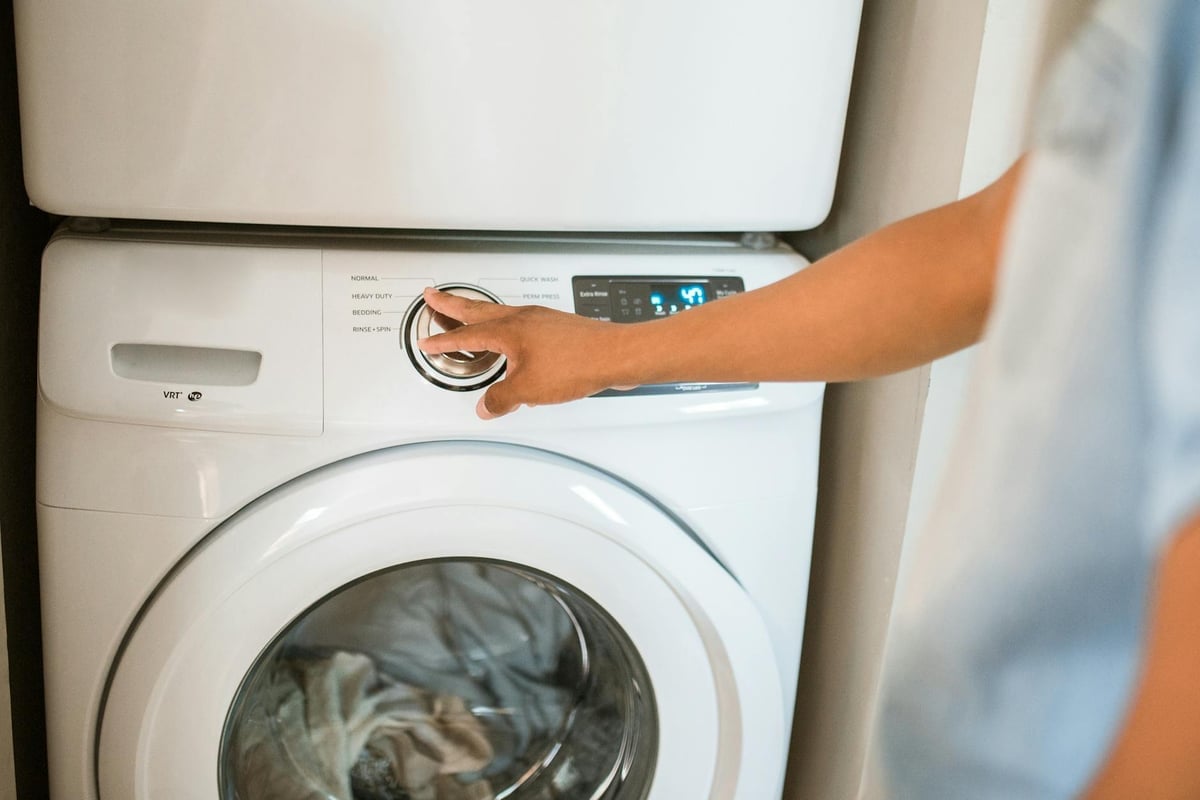
You screw on the supply hoses, push the washer back against the wall, and start a test load. Twenty minutes later the floor is wet, and you cannot find the shutoff because you never tested it.
Old rubber washer hoses are a top insurance claim, and previous owners often leave the originals on the machine. A burst hose pushes hundreds of gallons onto the floor in an hour.
Water damage from a washer connection runs $2,500 to $10,000 once you factor in flooring, drywall, and dry-out fees. A new pair of stainless braided supply hoses costs $25 to $40, and a single-lever shutoff box runs $80 to $150.
Find the main water shutoff and the laundry shutoffs before you connect anything. Replace old rubber hoses with braided stainless, and run the first cycle while you are standing in the room watching.
8. Skipping Smoke Alarm Checks and Idling Trucks on Fresh Sealcoat
The previous owner moved out weeks ago, the alarms have been chirping in an empty house, and the batteries either died or got pulled. You are now sleeping in a home full of cardboard, and the alarms may not work.
NFPA guidance is clear: test alarms monthly, replace standard batteries at least yearly, and replace the alarm itself at 10 years. The yearly smoke alarm maintenance requirements apply the day you take possession.
A truck idling on fresh sealcoat softens the coating, and a $400 to $1,200 sealcoat job ends up patched or redone. New alarms run $15 to $40 each, and 10-year sealed alarms cost $20 to $50. These slow-build hazards rank with the issues in the seven most common home infestations.
Test every alarm on day one, replace any unit older than 10 years, and move packing paper outside each evening. Park trucks on the street until fresh sealcoat has had 30 days to cure.
What Actually Works: A Moving-Day Plan That Protects Your New Home
The homes that come through moving day undamaged are not the ones with the most expensive movers. They are the ones where the owner ran a 30-minute walk-through that morning and made three decisions: where floor protection goes, which doors come off, and which thermostat and water shutoff get touched first.
Spend the first hour on the boring stuff. Lay paper or hardboard on every traffic path, pop hinge pins on tight doorways, change every lock and garage code, and put a fresh filter in the HVAC system. These steps protect the same long-term value you build through the proven ways to increase the value of your home.
Treat the rest of the day as ongoing protection. Keep packing paper out of corners, keep boxes off bare engineered floors, and test every smoke alarm before you sleep there. The same daily care also blocks the slower wear covered in the pet-proofing mistakes that cost homeowners thousands a year.
The cost of doing this on day one is a few hundred dollars in supplies and one extra hour of planning. The cost of skipping it is a refinished floor, a replaced door, a fried TV, and a security gap you cannot undo.
- 1share
- Facebook0
- Twitter0
- Pinterest1