
Your smoke alarm is a silent guardian that could save your family’s life in a fire emergency, but only if you maintain it correctly. Most homeowners believe having an alarm installed provides adequate protection, yet many commit critical mistakes that render these devices useless. According to the National Fire Protection Association (NFPA), working smoke alarms cut fire deaths in half, yet this protection vanishes instantly if your alarms are expired, incorrectly placed, or neglected. Among the most overlooked household hazards, faulty smoke alarms rank near the top because they are installed and then forgotten for years. Insurance claims can be denied, fire safety statistics show roughly 50 percent of fire deaths occur in homes without working alarms. If you want true protection, stop making these seven critical smoke alarm errors today.
1. Using Expired Smoke Alarms Instead of 10-Year Sealed Units
The NFPA recommends replacing smoke alarms every 10 years because sensor effectiveness degrades significantly after that point. Once that decade passes, the sensors inside degrade and become unreliable at detecting smoke. Basic replacement alarms cost between $15 and $50, while 10-year sealed lithium-battery units run $25 to $40 each. Most people buy inexpensive 9-volt battery alarms that seem cheaper upfront but require annual replacements and have a much shorter lifespan before sensor failure, typically 5 to 8 years depending on dust and humidity exposure. When your alarm hits 10 years old, the sensors lose sensitivity gradually and will not reliably detect a fire even if the batteries still work. Check the manufacture date on your alarms by looking at the back of every unit in your home. If any is older than 10 years, replace it immediately and mark your calendar to prevent missing the replacement deadline. Experts recommend adding smoke alarm maintenance to your monthly home maintenance checklist.
2. Installing Only One Alarm Per Floor When You Need Coverage in Every Bedroom
A common misconception is that one smoke alarm per floor provides adequate coverage for your entire home. The NFPA standard is far more specific and requires alarms in every bedroom, outside each bedroom area, and on every level including the basement. Most fire deaths occur at night when people are asleep, and a smoke alarm two rooms away might not wake a sleeping person in an enclosed bedroom with the door closed. If you have a master bedroom, guest bedroom, and children’s rooms, each space should have its own alarm. Installing only one downstairs and one upstairs creates dangerous blind spots where a fire could start and spread undetected. Each additional alarm costs $15 to $50, so protecting a three-bedroom home properly costs roughly $75 to $200 in equipment alone, but that investment could save your family’s lives. Hardwired interconnected systems cost $80 to $200 per unit to install but trigger all alarms simultaneously when one detects smoke, ensuring everyone is awakened. Wireless interconnected alarms offer a modern alternative with smartphone app alerts for remote monitoring. Comprehensive fire safety is part of ensuring your home is actually kept safe beyond surface-level protection.
3. Mixing Ionization and Photoelectric Detectors Without Understanding Fire Types
Most homeowners buy whatever alarm is cheapest without considering whether the sensor technology actually detects the type of fire most likely in their home. The NFPA recommends using both ionization and photoelectric sensors. Ionization alarms are extremely sensitive to fast-flaming fires where flames spread quickly in kitchens but are less effective at detecting smoldering fires in bedrooms. Photoelectric alarms excel at detecting slow-burning fires with thick smoke, which are often missed by ionization sensors. The ideal solution is dual-sensor combo alarms in bedrooms, costing $25 to $50 per unit. This is similar to avoiding dangerous lighting fixtures that pose fire hazards.
4. Failing to Interconnect Alarms So Only One Sounds During a Fire
Having multiple smoke alarms throughout your home is worthless if they do not communicate with each other. When one alarm detects smoke, all other alarms in your home should trigger simultaneously so everyone hears the warning no matter which room they are in. This interconnection is a critical component of fire safety that most homeowners completely ignore. Hardwired interconnected alarms are wired directly into your home’s electrical system and cost $80 to $200 per unit to install, but they are the fire safety gold standard. Installing a properly networked system is one of the smart upgrades that increase home value while protecting your family. Wireless interconnected alarms offer a simpler solution with smartphone alerts.
5. Using Old 9-Volt Battery Alarms Instead of 10-Year Sealed Lithium Units
The cheapest smoke alarm on the store shelf usually runs on a 9-volt battery that you must replace annually. A 9-volt battery alarm might cost $10 to $20 initially, but you will spend $10 per year on replacement batteries for a decade, totaling $100 to $200 over the alarm’s lifetime. Ten-year sealed lithium-battery alarms eliminate the battery replacement problem entirely and cost between $25 and $40 upfront. Hardwired alarms powered by your home’s electrical system with battery backup offer the most reliable solution and never lose power during outages.
6. Ignoring the Monthly Test Button and Never Verifying Your Alarms Work
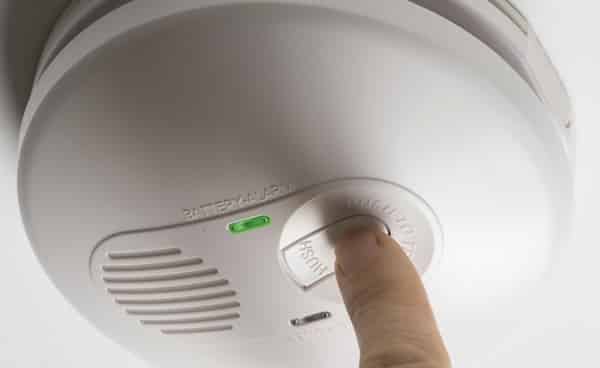
Buying a smoke alarm and installing it is only the first step toward true fire safety. Once installed, you must test every alarm in your home at least once per month to confirm that the battery is good and the sensor is functioning. This test takes thirty seconds per alarm and requires nothing more than pushing the test button until the alarm sounds, but most homeowners never do this simple check. Many people discover their alarms do not work only after a fire starts, at which point it is too late. A non-functioning alarm provides zero protection and offers your insurance company grounds to deny a claim. This connects to larger critical home maintenance issues you are neglecting that could cost you financially. Conduct yearly visual inspections checking for dust, paint, disconnection, and battery indicator lights.
7. Placing Alarms in False-Alarm Locations or Painting Over Sensors
The placement of your smoke alarms is just as critical as having them at all. Many homeowners install alarms in locations that create constant false alarms, leading them to disconnect the battery or remove the unit in frustration. Installing alarms too close to bathrooms creates steam-triggered false alarms, while placing them near kitchens means the alarm sounds every time you cook. This constant false-alarm cycle causes people to disable their alarms, completely defeating their purpose. Never place alarms within 10 feet of cooking appliances, 3 feet of bathrooms, or in high-humidity areas. Mount them on ceilings where smoke naturally rises. Homeowners also need to learn the secrets that home inspectors withhold about proper placement. Never paint over alarms as paint blocks sensors completely. Tape off alarms with painter’s tape when painting.
7. Forgetting Carbon Monoxide Detector Lifespan
While smoke alarms protect against fire, carbon monoxide detectors are equally critical for preventing deaths from CO poisoning. Unlike smoke alarms that last 10 years, CO detectors have a much shorter lifespan of 5 to 7 years before the sensor degrades and becomes unreliable. Many homeowners maintain their smoke alarms but completely ignore their CO detectors, leaving families vulnerable to an invisible deadly gas. Check your CO detector’s manufacture date now and replace it immediately if older than 7 years. CO detectors cost between $25 and $100. Homes that use natural gas for heating, cooking, or hot water absolutely must have a functioning CO detector, and homes with attached garages should have one as well since car exhaust contains dangerous carbon monoxide. Many modern smart home gadgets now include integrated CO and smoke detection with app-based alerts and remote monitoring.
What Actually Works: Replace any smoke alarm older than 10 years immediately, even if it seems to work. Install alarms in every bedroom ensuring complete coverage of your entire home. Upgrade to dual-sensor combination alarms in bedrooms. Consider investing in hardwired interconnected systems for maximum protection that wakes everyone. Test every alarm monthly on the same day and mark it on your calendar. Replace CO detectors older than 7 years. Place all alarms away from bathrooms and kitchens to prevent false-alarm fatigue. This comprehensive approach combined with proper placement creates a genuine fire safety system that protects your family. When a fire emergency occurs, your properly maintained alarm system will give you and your loved ones the precious seconds needed to escape safely.
- 15shares
- Facebook0
- Twitter0
- Pinterest15