
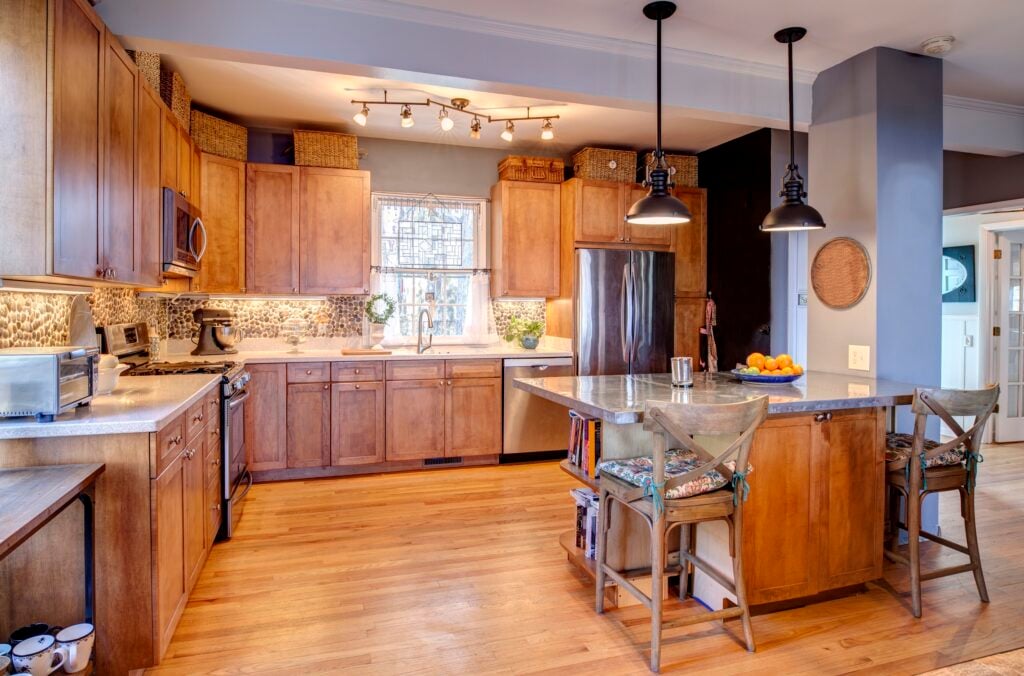
Your kitchen is the rooms appraisers and buyers notice first. One aesthetic choice can cost you thousands at closing. The National Association of Home Builders reports that kitchens account for up to 15 percent of a home’s appraised value, yet dated design elements suppress that number. You might think you can ignore the kitchen and still command the price you want. Most sellers learn too late that this is the one room where trends and buyer psychology control your bottom line.
Below are seven kitchen aesthetics that appraisers flag as costly, and what to fix instead.
1. Dark Cabinets in Small Kitchens (Dollar Impact: $4,000 to $8,000 appraisal deficit)
Dark stained or black cabinets eat visual space. In kitchens under 150 square feet, appraisers apply a 5 to 8 percent downward adjustment to home value when dark cabinetry dominates. Buyers in 2025 prefer lighter wood tones or white painted cabinetry in compact kitchens because they feel more open and modernized. The psychological effect is significant: dark cabinets absorb natural light and compress the visual perception of space, making even average-sized kitchens feel cramped and less inviting.
If your kitchen has dark oak, walnut, or espresso cabinets, a professional cabinet respray to white or light gray runs $3,500 to $5,000 and recovers nearly all cost at sale. This is one of the few kitchen updates with ROI above 100 percent in secondary markets. Hardware replacement adds $400 to $600 and is mandatory to complete the refresh. The respray cost is a one-time investment that pays for itself through appraisal gains alone.
2. Busy, Dated Granite Patterns (Dollar Impact: $2,500 to $5,000 repair cost)
Not all granite is equal. Heavy veining, gold or bronze undertones, and large geometric patterns scream early-2000s granite sales. Today’s appraisers see this as “requires update” rather than luxury. The color palette matters: blacks with thick veining, reds with spiderweb patterns, and multicolored finishes test poorly with modern buyers. These busy patterns were status symbols then, but they anchor a kitchen visually and make it feel smaller and darker.
Solid-color quartz, soft grays, white marble, or understated granite hues perform 12 to 15 percent better in buyer surveys. Contemporary buyers prefer minimal visual noise on countertops. If your granite shows heavy patterning, refinishing is not effective because the issue is the inherent pattern itself. You will need countertop replacement. Budget $3,000 to $6,000 for a full replacement in a standard kitchen. The alternative is to keep existing counters and price your home lower, but most sellers find replacement delivers better closing terms and faster sale cycles.
3. Oil-Rubbed Bronze Hardware and Fixtures Everywhere (Dollar Impact: $1,200 to $3,000 to replace)
Oil-rubbed bronze dominated kitchen hardware from 2008 to 2016. It dates kitchens instantly because today’s preference is brushed stainless, matte black, or polished nickel. When appraisers see matching bronze faucets, cabinet pulls, hinges, and light fixtures, they note it as “cosmetic update needed.”
Replacing all hardware typically costs $400 to $800. Updating the faucet to brushed stainless steel adds $300 to $600 for a mid-range model. Recessed lights with bronze trim or pendants should switch to matte black or stainless. Total hardware-and-fixture refresh runs $1,200 to $2,000 and is essential before listing.
4. Heavy Bullnose or Oversized Subway Tile Backsplashes (Dollar Impact: $2,000 to $4,000 removal and replacement)
Thick bullnose tile edges and large subway tiles (up to 12 by 24 inches) were stylish in the 2010s. Now they read as heavy and dated. The contrast with modern minimal design language costs you 3 to 5 percent in final appraisals. Small-format subway, glass tile, or patterned single-color tile in a running bond pattern aligns with 2025 buyer expectations.
Removing an old backsplash and installing new tile runs $1,800 to $3,500 depending on kitchen size. If your backsplash is bullnose ceramic, replacement is cheaper than refinishing. The payoff is immediate: new tile closes 2 to 3 percent faster on average.
5. White-on-White Sterile Kitchens Without Warmth (Dollar Impact: $3,000 to $6,000 in buyer concessions)
All-white cabinetry, white counters, white walls, and white tile feel institutional. Appraisers note this as “lacks personality” and buyers often request price reductions. The opposite mistake from dark kitchens, sterile white without any contrast or warmth suppresses value by testing poorly in buyer sentiment surveys. Warm whites, creams, or greige with natural wood accents, brass or gold-toned hardware, and warm-toned countertops perform significantly better. The psychological effect is profound: all-white kitchens trigger an almost hospital-like response in buyers, whereas kitchens with contrast and warmth feel inviting and deliberate.
Add open shelving with decorative items, warm lighting with dimmers, and consider a contrasting island color or natural wood countertop inlay. These additions cost $1,500 to $3,500 but restore perceived value quickly. This is one of the most fixable aesthetic problems and usually requires zero structural work. Even switching from cool whites to warm whites and adding a single wood element can improve perceived value by 2 to 3 percent.
6. Builder-Grade Pendant Lights or Generic Fixtures (Dollar Impact: $800 to $2,000 to upgrade)
Brass cylinder pendants, frosted glass globes, and generic brushed nickel fixtures are markers of builder-grade construction. Appraisers flag these as “original finishes” which is code for “not updated.” Statement pendant lights with character in brushed brass, matte black, or hand-blown glass cost slightly more but signal attention to detail.
Replacing three pendant lights over an island or counter runs $600 to $1,200. Adding dimmer switches and LED-compatible fixtures adds $200 to $400. This is one of the highest-impact cosmetic upgrades because lighting affects the entire room’s perceived quality and is visible to appraisers immediately upon entry.
7. Mismatched Stainless Steel Appliance Finishes (Dollar Impact: $400 to $1,200 per appliance)
One stainless fridge, one black glass cooktop, one brushed nickel dishwasher, and chrome hardware create visual chaos. Appraisers note this as “inconsistent finishes” and buyers interpret it as deferred care. All major appliances should be the same finish or color. Matching finish is mandatory in kitchens 200 square feet or larger where appliance visibility is high.
If you have mixed finishes, the lowest-cost fix is replacing the cheapest or most visible appliance to match the others. Budget $400 to $600 for a new microwave or cooktop that matches. If the major appliances are old, a full suite of matching new stainless steel runs $3,000 to $8,000 depending on quality and is a stronger investment than replacing just one piece.
What Actually Works: Fixing Your Kitchen for Resale
The common thread in all seven mistakes is that they make your kitchen feel outdated, not broken. Buyers and appraisers react emotionally to style, not function. The fastest ROI comes from cabinet respray, hardware replacement, and new pendant lighting, which cost less than $10,000 combined and can add 8 to 12 percent perceived value in mid-range markets.
Start with the most visible problem first: dark cabinets or dated granite. Then address hardware and lighting. Save major appliance replacement for last because it has lower ROI unless the appliances are clearly failing. Work with your real estate agent to identify which of these seven mistakes your kitchen has, then budget accordingly before listing. Most of the best kitchen updates for resale are cosmetic, not structural.
For deeper insights into which kitchen upgrades deliver the strongest home value recovery, see our guide to wise investment kitchen upgrades. To understand the full picture of resale pricing, review our home valuation guide and tips to selling your home fast. Kitchen color and lighting updates also align with broader home decor strategies covered in how to add color to your home decor and low-cost lighting trends. See how your kitchen mistakes compare to other costly home issues in our bathroom renovation mistakes guide and our comprehensive ways to increase home value resource.
- 2shares
- Facebook0
- Twitter0
- Pinterest2