
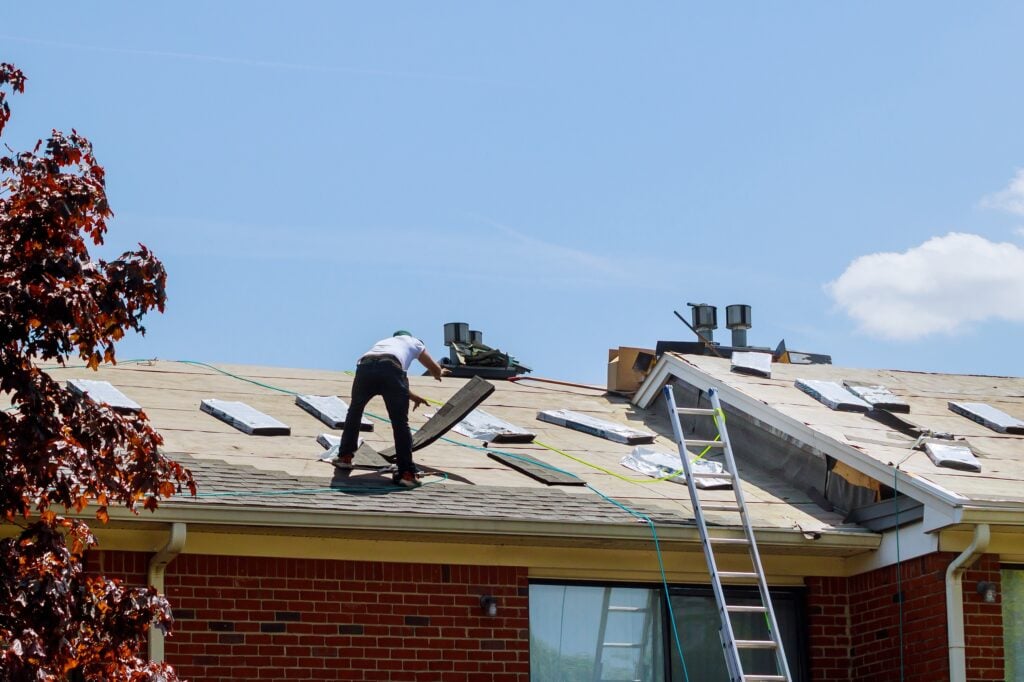
A new roof runs $5,000 to $25,000 depending on size and complexity. That number doubles when homeowners make predictable mistakes during contractor selection and installation. Seven mistakes show up repeatedly, and each one either inflates your final bill, voids your manufacturer warranty, or both.
1. Hiring Storm-Chasing Contractors
After a major storm, your neighborhood fills with out-of-town contractors who offer to file your insurance claim and manage the entire project. These storm chasers move fast because their business model depends on volume, not quality. They sign agreements while you are still processing the damage, then move to the next town as soon as your check clears.
Storm chasers are incentivized to maximize the insurance payout, not the lifespan of your roof. If problems emerge after they leave, you have limited recourse because the company has no local presence. A $5,000 to $25,000 reroof done by a contractor you cannot locate afterward is money you cannot recover.
Use your insurance settlement to hire a local contractor with a verifiable five-year track record. Your insurer will pay the claim regardless of who you choose. This is one of the critical home maintenance decisions where hiring locally pays off every time.
2. Skipping License and Workers Compensation Verification
If a worker falls off your roof and the contractor lacks active workers compensation insurance, you can be held personally liable for medical bills and lost wages. Your homeowner’s policy may deny the claim if the contractor was uninsured or unlicensed at the time of the injury.
Most states require roofing contractors to hold current licenses through the state licensing board. Ask to see the license number and verify it online before work begins. Ask for a certificate of insurance showing both workers compensation and general liability coverage, dated within the current policy year.
Unlicensed contractors offer lower bids because they skip the overhead that comes with compliance. A $500 savings on a $15,000 reroof is not worth the financial exposure. These are exactly the type of repairs that get expensive fast when contractor vetting gets skipped.
3. Taking the Lowest Bid
Three contractors bid your roof. Two come in around $12,000 and one comes in at $9,000. Roofing is one of the few home repairs where the lowest bid almost always means the most shortcuts, because the finished product is largely invisible once shingles are nailed down.
Low-bid contractors cut costs by using fewer fasteners, skipping underlayment in non-visible areas, rushing flashing installation, and omitting ventilation steps. These shortcuts violate manufacturer installation specs and void your warranty. A roof that should last 25 years fails in 12, and the $5,000 to $25,000 cost comes due again.
Request itemized estimates from each contractor. Ask why a bid is significantly lower than the others. If the contractor cannot explain the difference in writing, walk away. Protecting your investment here directly affects your home’s long-term value.
4. Choosing the Wrong Shingle for Your Climate
Three-tab shingles cost $3,000 to $6,000 for a typical reroof and last 15 to 20 years in mild climates. Architectural shingles add $2,000 to $5,000 to that total, last 20 to 30 years, and handle wind and temperature swings better. Class 4 impact-resistant shingles add another $1,500 to $3,000 on top of architectural pricing and resist hail damage while qualifying for real insurance premium discounts in many states.
Brands like GAF Timberline HDZ, Owens Corning Duration, CertainTeed Landmark, and IKO Cambridge come in climate-specific configurations. A contractor recommending the cheapest option regardless of your location is prioritizing their margin. In high-wind or high-hail regions, a three-tab shingle will fail years early and void its own warranty under storm loading it was never rated for.
Ask your contractor to show you the wind and impact rating for the shingle they recommend, and compare that against your area’s historical weather data. Choosing the wrong product is one of the most overlooked household hazards because the failure happens slowly over years.
5. Failing to Register the Manufacturer Warranty
Shingle manufacturers offer 20-year to lifetime warranties, but registration is required within 30 days of installation. Many homeowners never register, assuming it is automatic. Without registration, the manufacturer warranty is void. You are left with only the contractor’s workmanship warranty, which typically covers one to five years and disappears if the contractor goes out of business.
Registration takes about 10 minutes online. Ask your contractor to complete it during the final walkthrough while you are present, then send you the confirmation email before they leave the site. Keep that confirmation with your permit paperwork. A registered warranty can save you thousands on a shingle defect claim 15 years from now.
Some contractors charge a small processing fee to handle registration. Pay it. Without proof of registration, you have no manufacturer coverage, and water damage from a defective shingle becomes entirely your expense. Confirm registration the same day installation is complete.
6. Skipping Ice and Water Shield in Cold Climates
Ice and water shield is a rubberized waterproofing membrane installed along roof edges and in valleys before shingles go down. In climates where temperatures drop below freezing, melting snow backs up behind ice dams at the roof edge, finds gaps in the shingle seams, and leaks directly into the attic and walls. Ice and water shield seals around nail penetrations and prevents that water path from forming.
Installing ice and water shield on the lower six feet of a cold-climate roof costs $500 to $1,500. Full-roof coverage runs $2,000 to $4,000. Without it, a single ice dam event can cause $5,000 to $15,000 in attic and ceiling repairs. Most manufacturer warranties require ice and water shield in specified climate zones, so skipping it voids your warranty before the first winter passes.
If you live north of the 35th parallel or at elevation, ask your contractor to include ice and water shield pricing as a separate line item. Do not let it be removed to lower the bid. Check the monthly maintenance items that help you spot early ice dam buildup before it becomes structural damage.
7. Skipping Proper Attic Ventilation and Drip Edge
Attic ventilation circulates air under the roof deck and prevents heat and moisture from shortening shingle life. The standard requirement is 1 square foot of ventilation for every 150 square feet of attic space. If your attic falls short, shingles bake from below in summer and trap moisture in winter. Manufacturers require adequate ventilation as a condition of warranty coverage, and they will deny claims tied to thermal failure when ventilation records show a deficit.
Drip edge is the metal flashing along roof edges that directs water into gutters and prevents runback onto fascia boards. Skipping it or reusing corroded old drip edge causes fascia and soffit rot within a few years. Drip edge costs $2 to $3 per linear foot, or $800 to $2,500 for a typical home. Adding ventilation runs $500 to $2,000 depending on the number of vents needed. Both are required for a code-compliant installation in most jurisdictions.
Ask your contractor to include ventilation inspection results and drip edge replacement as explicit line items on the written estimate. Take photos of both during installation. If rot or shingle failure appear later, those photos confirm the work was done to code. Our guide on what home inspectors look for covers how inspectors document ventilation and flashing deficiencies that affect resale.
Torn-off decking also matters here. A roof-over installation layers new shingles over old ones without removing the existing material. This traps moisture between layers, prevents inspection of the sheathing, and typically voids the manufacturer warranty. A proper tear-off exposes the decking so rotted sections can be replaced. Decking repair adds $1,000 to $3,000 but prevents catastrophic failure from a hidden foundation problem.
What Actually Works: Getting It Right the First Time
Get three itemized bids from licensed, insured, local contractors. Each bid should specify materials by product name, ventilation plan, drip edge replacement, ice and water shield if applicable, full tear-off, and warranty registration. Compare the bids line by line. The contractor whose bid aligns with the middle range and who provides written references from similar jobs in your area is almost always the right choice.
A roof done correctly the first time costs $5,000 to $25,000. One done wrong costs that again in 10 years, plus the water damage repairs in between. Spending $1,000 to $3,000 more on proper materials and installation is the most reliable home investment you can make. Review how a quality roof affects smart home value upgrades, and check what buyers look for in a roof before listing your home.
- 0shares
- Facebook0
- Twitter0
- Pinterest0