
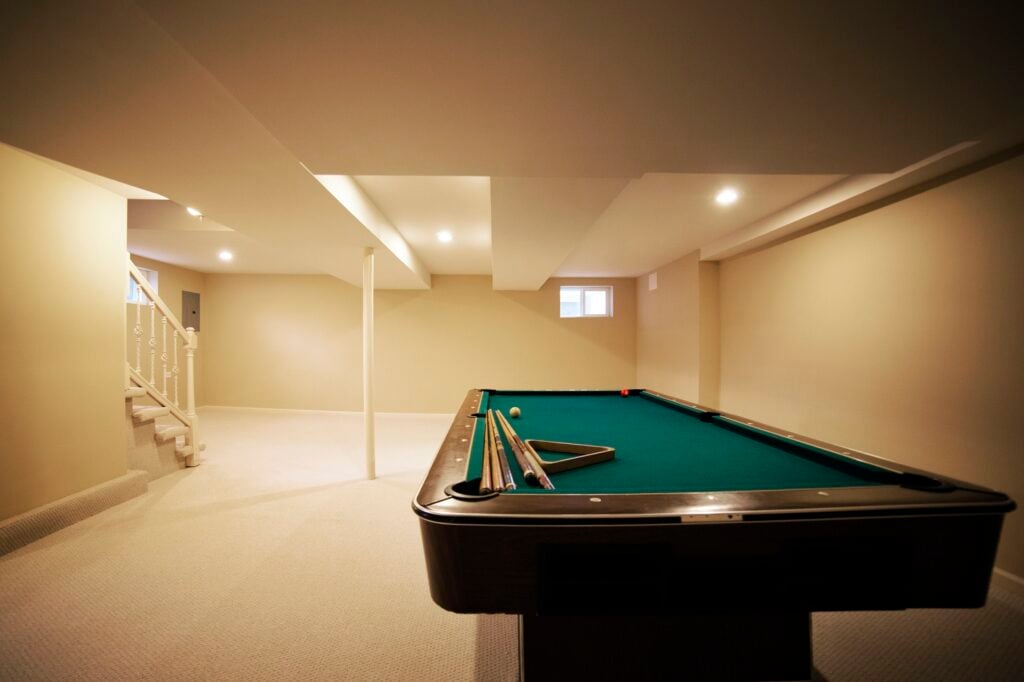
Most basement finishing projects fail not because the design is wrong, but because critical moisture and structural steps are skipped before drywall goes up. Water damage, mold, code violations, and radon concentration can turn a $20,000 renovation into a $50,000+ teardown and rebuild. This guide covers the seven mistakes that cost homeowners the most, how to spot them early, and what to fix first.
1. Skipping Waterproofing and Drainage Before You Finish (4K to 12K cost)
The number one basement mistake is assuming that just because your basement is “dry now” means it will stay dry after you finish it. Water doesn’t care about drywall or carpet. If you build a room without external drainage, interior sealing, and proper grading, water will find a way in during the next heavy rain or spring thaw.
Proper waterproofing means addressing the outside first. You need exterior foundation sealing, installed perimeter drainage (French drains or similar), and sump pump placement before any interior framing. Only after water is managed do you install interior sealants and install a perimeter drainage system like WaterGuard.
Skipping this step and then discovering leaks after finishing means ripping out drywall, flooring, and potentially finished rooms to fix the exterior problem. Waterproofing done before finishing costs between 4,000 and $12,000. Fixing it after finishing can cost $20,000 to $50,000 because you have to demolish what you just built. Moisture problems are among the most overlooked household hazards that lead to structural damage. Check your home’s grading, downspout placement, and basement floor condition now.
2. No Dehumidifier or Humidity Control (60+ Percent Triggers Mold)
Basements are naturally humid spaces. Even without standing water, relative humidity above 60 percent creates an ideal environment for mold growth behind walls, under flooring, and in insulation. Most homeowners don’t realize they need active humidity control until black mold appears in corners or they smell musty odors.
Install a properly sized dehumidifier and ensure your HVAC system includes a basement return air duct so your central system can help balance humidity. A standalone dehumidifier costs between 300 and $800, but running it year-round will use electricity. The alternative,mold remediation and potential drywall replacement,costs $2,000 to $10,000 or more.
Even with waterproofing, basements in humid climates need active dehumidification. Check humidity levels with a simple hygrometer monthly, especially before summer and after heavy rain. If your home is in areas prone to water damage, humidity control is not optional.
3. Insulating Walls Without a Vapor Barrier (Traps Moisture)
You install fiberglass insulation on basement walls and feel accomplished. Then, three years later, mold is growing on the back side of the drywall because warm interior air is condensing on the cold foundation wall behind the insulation. This happens because there is no vapor barrier between the living space and the concrete.
Basements need a Class I vapor retarder (6-mil polyethylene or spray foam) installed between the living space and the foundation wall. This prevents interior moisture from migrating backward into the insulation and concrete. If your basement touches the soil (and most do), vapor barriers are code-required in most jurisdictions.
Properly installing a vapor barrier adds $300 to $500 to your insulation project. Removing moldy insulation and drywall, killing mold, and reinstalling everything correctly costs $5,000 to $15,000. Moisture accumulation and poor ventilation are common causes of mold in homes. Do it right the first time.
4. Using Carpet Instead of Luxury Vinyl Plank (LVP) on Basement Floors
Carpet traps moisture, odors, and mold spores. Water sitting in carpet fibers feeds mold and bacteria. Even short-term wet events lead to smell problems and replacement costs. Basements are flood-risk zones by definition, so your flooring must be waterproof or water-resistant.
Luxury vinyl plank (LVP), porcelain tile, and sealed concrete are the correct choices. LVP mimics wood or stone, is waterproof, and costs $2 to $5 per square foot installed. A typical 800-square-foot basement means $1,600 to $4,000 for quality LVP. Carpet costs $1 to $3 per square foot, but the first water event ruins it, and you pay again.
Use moisture-resistant flooring to avoid pest infestations that feed on moldy carpet fibers. Removing soaked carpet and padding adds $500 to $1,500 in labor and disposal.
5. Forgetting Egress Windows for a Legal Bedroom (2K to 5K per window)
You finish a basement room intending to use it as a bedroom or add it to your home’s room count. Then an inspector (or worse, an insurance adjuster during a fire claim) tells you the room is not legal because there’s no egress window. IRC code 310.1 requires any sleeping room to have a window or door with a minimum of 5.7 square feet of opening area and a sill height no higher than 44 inches from the floor.
Egress windows are escape routes for fire and rescue entry points in an emergency. Finishing a bedroom without one violates code, makes the home uninsurable for that room, and reduces resale value. An egress window installation (including cutting a window well into the foundation) costs between 2,000 and $5,000 per opening.
Plan egress windows before framing. Adding one after the fact means removing foundation concrete, creating structural issues, and dealing with window well drainage to prevent new water problems. Home inspectors will flag non-code-compliant bedrooms, which impacts both safety and resale value.
6. DIY Electrical Work Without a Permit or Inspection (Safety and Insurance Risk)
Running new circuits, outlets, and lighting in your basement seems straightforward until you realize that unpermitted electrical work voids homeowner’s insurance, fails home inspections, and creates shock and fire hazards. Basement concrete is conductive, moisture levels are high, and improper grounding can be deadly.
Licensed electricians charge $1,500 to $3,500 for basement wiring. Permits add $200 to $500. That feels expensive until a fire starts or you try to sell and the inspector flags unpermitted work. You then pay the electrician again to tear it out and redo it correctly. Insurance claims for fire or shock injuries may also be denied if work was not permitted.
Hire a licensed electrician and get permits. It’s the only way your home stays safe and insurable. This is the type of repair that gets expensive fast when shortcuts are taken.
7. No Sump Pump Backup or Radon Mitigation Before Finishing (800 to 2,500 combined)
Your sump pump keeps water out today, but what happens during a power outage or pump failure? A battery backup ($500 to $1,500) prevents finished rooms from flooding when the primary pump fails. During storms with power loss, backup pumps have saved countless basements.
Radon is an odorless radioactive gas that enters basements from the soil and concentrates in finished underground spaces. EPA data shows that radon increases lung cancer risk with prolonged exposure. You need a radon test before you finish ($150 to $300 for a certified test). If levels are above 4 pCi/L, radon mitigation (a vent pipe and fan) costs $800 to $2,500.
Install the mitigation system before you finish so ductwork runs behind future drywall and walls. Testing after finishing makes remediation more expensive and disruptive. Radon mitigation is one of the critical home maintenance issues most homeowners neglect.
What Actually Works: Fix the Foundation First, Then Finish
The pattern across all seven mistakes is the same: foundation and environmental issues must be solved before any cosmetic work begins. Waterproofing, drainage, humidity control, vapor barriers, radon testing, and code compliance are not optional upgrades. They are the prerequisites to a finished basement that lasts 20+ years without rot, mold, or collapse.
Start by bringing in a professional home inspector or basement specialist to evaluate your existing conditions. Test for water intrusion, humidity, radon, and structural soundness. Monthly inspections help you catch problems early, but a professional assessment before major work is essential. Fix everything identified. Only then should you frame, insulate, and drywall. This sequence costs more upfront but saves money and increases home value by preventing future damage.
- 5shares
- Facebook0
- Twitter2
- Pinterest3