
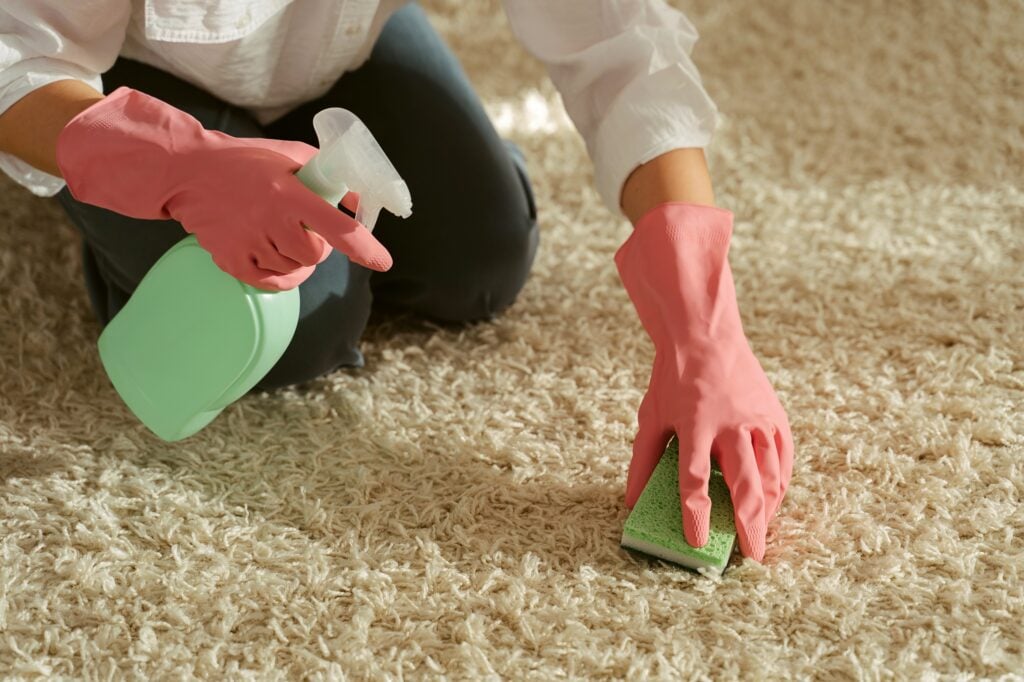
A glass of red wine. A dog accident on the rug. A coffee cup knocked off the side table. You grab a towel, scrub hard, and the spot becomes a permanent shadow. That single bad reaction is the difference between a $0 cleanup and a $2,000 carpet replacement.
Most carpet stains become permanent because your first move is wrong. Hot water sets blood. Scrubbing pushes wine into the backing. Steam bakes pet urine into the pad. A professional spot cleaner runs $50 to $150, and replacing carpet costs $2 to $10 per square foot plus $1 to $2 per square foot for installation.
Use these seven stain-specific fixes the next time something hits your carpet.
1. Red Wine Stains (Cold Water, Dish Soap, Hydrogen Peroxide)
Red wine causes the most panic because the pigment is dark and the pour is large. The longer you wait, the deeper the tannins sink into the fibers.
Blot first with a white towel, pressing hard without scrubbing. Pour cold water on the spot to dilute the wine, then keep blotting. Warm water opens fibers and helps the pigment lock in, so cold water is critical.
Mix one tablespoon of clear dish soap with two cups of cold water, dab it on, and blot from the outside in. If a pink shadow remains, dab 3% hydrogen peroxide on the spot and blot again. Peroxide breaks down the red pigment without bleaching most synthetic carpets, but test a hidden corner first.
A professional spot cleaning runs $50 to $150, and replacing a 12 by 12 bedroom carpet runs $700 to $2,400 with pad and install. The same risk grows if you have furniture placement mistakes destroying your carpet.
2. Pet Urine Stains (Enzyme Cleaner, Not Vinegar)
Pet urine is not a color stain, it is a chemistry problem. Dog and cat urine contains uric acid crystals that bond with carpet fibers and re-activate in humid weather, which is why a year-old spot still smells on rainy days.
Blot up everything you can with paper towels, standing on them to pull urine from the pad below. Then soak the area with an enzyme cleaner like Nature’s Miracle or Rocco & Roxie. These contain live enzymes that digest the uric acid, the only way to remove the odor compounds permanently.
Let the cleaner sit wet for 10 to 15 minutes, then blot dry. Do not steam clean before treatment because heat sets the smell. A bottle of enzyme cleaner costs $15 to $30 and outlasts a dozen accidents.
Repeat accidents usually mean your pet still smells old urine. If it happens in more than one room, you are living with pet-proofing mistakes letting your dog and cat destroy $2,500 in home features every year.
3. Coffee and Tea Stains (Cold Water Blot, Then White Vinegar)
Coffee and tea contain tannins, the same plant compound that stains teeth and the inside of your mug. Tannins bond to carpet fibers within minutes, which is why a coffee stain looks darker an hour later than at the spill.
Blot with a dry white towel, working from the outside in so you do not enlarge the ring. Pour cold water on the spot in small amounts and keep blotting. Avoid hot water, which sets the tannins.
Mix one tablespoon of white vinegar, one tablespoon of clear dish soap, and two cups of cold water, and dab the mixture on. Vinegar neutralizes the tannins and lifts the brown shadow plain water leaves behind. A coffee ring left for a day usually requires a $50 to $150 professional spot cleaning.
Coffee residue is one of the silent dirtiest items in your home problems because it feeds bacteria long after the stain looks gone.
4. Blood Stains (Cold Water Only, Never Hot)
Blood is a protein, and heat permanently bonds protein to carpet fibers. Hot water, warm water, steam, and even a hairdryer will turn a manageable stain into a permanent rust patch.
Blot with a dry white towel, then dab cold water on the spot and keep blotting. Switch to a clean section of towel every pass so you are pulling color out, not pushing it back in. Most fresh blood comes out with cold water alone if you start within five minutes.
If a stain remains, mix one tablespoon of clear dish soap with two cups of cold water and blot it on. For older blood, dab 3% hydrogen peroxide on light carpets only to break the iron and lift the rust color. OxiClean dissolved in cold water also works on set protein stains.
A botched blood cleanup costs $75 to $200 in professional treatment, and a permanent shadow often forces a full room replacement at $1,000 to $3,000. The same surface bacteria show up on household items dirtier than a toilet seat.
5. Grease, Oil, and Food Splatter (Cornstarch or Baking Soda First)
Grease stains do not respond to water because oil and water repel each other. Cooking oil, butter, salad dressing, makeup, and lotion all behave the same way, and spraying water only spreads the slick wider.
Lift any solid residue with a spoon, then cover the spot with a thick layer of cornstarch or baking soda. Both powders pull oil from the fibers as they sit. Leave it on for 30 minutes, then vacuum.
For the remaining shadow, mix one tablespoon of clear dish soap with two cups of warm water, blot it on, and work it gently into the spot. Dish soap is engineered to cut grease. Folex Carpet Spot Remover is another reliable choice at $8 to $12 a bottle.
A $200 to $1,500 stain-resistant area rug under the dining table pays for itself the first time you spill olive oil, the same way laundry room setup decisions save your clothes.
6. Ink and Nail Polish (Rubbing Alcohol or Non-Acetone Remover)
Ink and nail polish are solvent stains, which means water-based cleaners do almost nothing. They need the right solvent, applied carefully, or they spread into a much larger smear than the original drop.
For ballpoint ink, dampen a white cloth with 70% or 90% isopropyl rubbing alcohol and blot the stain. Do not pour alcohol directly on the carpet, and do not scrub. Press, lift, switch to a fresh section, and repeat until the ink transfers.
For nail polish, use a non-acetone polish remover on a white cloth with the same blot-and-lift method. Acetone can dissolve the carpet backing and the latex glue holding it to the pad, a $500 to $1,500 mistake. Finish with a damp cloth and a drop of dish soap.
Professional ink removal runs $75 to $200 per spot. A 30-second response keeps your floors looking like a real speed cleaning routine instead of a salvage job.
7. Mud, Candle Wax, and Chewing Gum (Let It Harden First)
Mud, wax, and gum all share one trick: they come out easier when dry or frozen. Wiping wet mud or warm wax pushes the mess deeper into the pile and triples the surface area.
For mud, let it dry, vacuum the bulk, then treat the shadow with dish soap and cold water. Scrubbing wet mud is the single most common reason a footprint becomes a permanent brown ring.
For candle wax, harden it with a bag of ice and scrape the brittle wax off with a butter knife. Lay a brown paper bag over the residue and run a warm iron over the paper. The heat melts the wax into the paper, not the carpet. For gum, harden with ice, break it off, and treat residue with rubbing alcohol.
A hot iron straight on the carpet melts synthetic fibers and creates a burn-in that costs $150 to $500 to patch. Without a matching remnant, you are looking at a full recarpet at $2 to $10 per square foot.
What Actually Works: The Right Method For The Right Stain
The best carpet stain hack is not a secret cleaner. It is matching the chemistry of the stain to the cleanup. Cold water for proteins like blood and pet urine. Dish soap for grease. Rubbing alcohol for inks. Enzymes for organic odors. Hydrogen peroxide for stubborn pigments on light carpets. Heat and scrubbing for almost nothing.
Build a basic stain kit: white cotton towels, clear dish soap, white vinegar, baking soda, 3% hydrogen peroxide, 70% isopropyl alcohol, a non-acetone polish remover, and an enzyme cleaner like Nature’s Miracle or Rocco & Roxie. The kit costs $40 to $60 and outlasts hundreds of dollars of professional callouts. Add Folex for stubborn synthetic-carpet spots.
If you have kids, pets, or weekly spills, a stain-resistant area rug at $200 to $1,500 in the highest-traffic zone is smarter than another carpet replacement at $2 to $10 per square foot. Carpet protection is one of the quieter smart upgrades to increase home value because it keeps the underlying carpet new for five to seven extra years.
Blot, do not scrub. Use cold water by default. Test in a hidden spot. Keep your stain kit where the spills happen. A few dollars of supplies and 10 minutes of the right method will save you thousands and keep your home smelling fresh instead of haunted by old spills.
- 13shares
- Facebook0
- Twitter0
- Pinterest13