
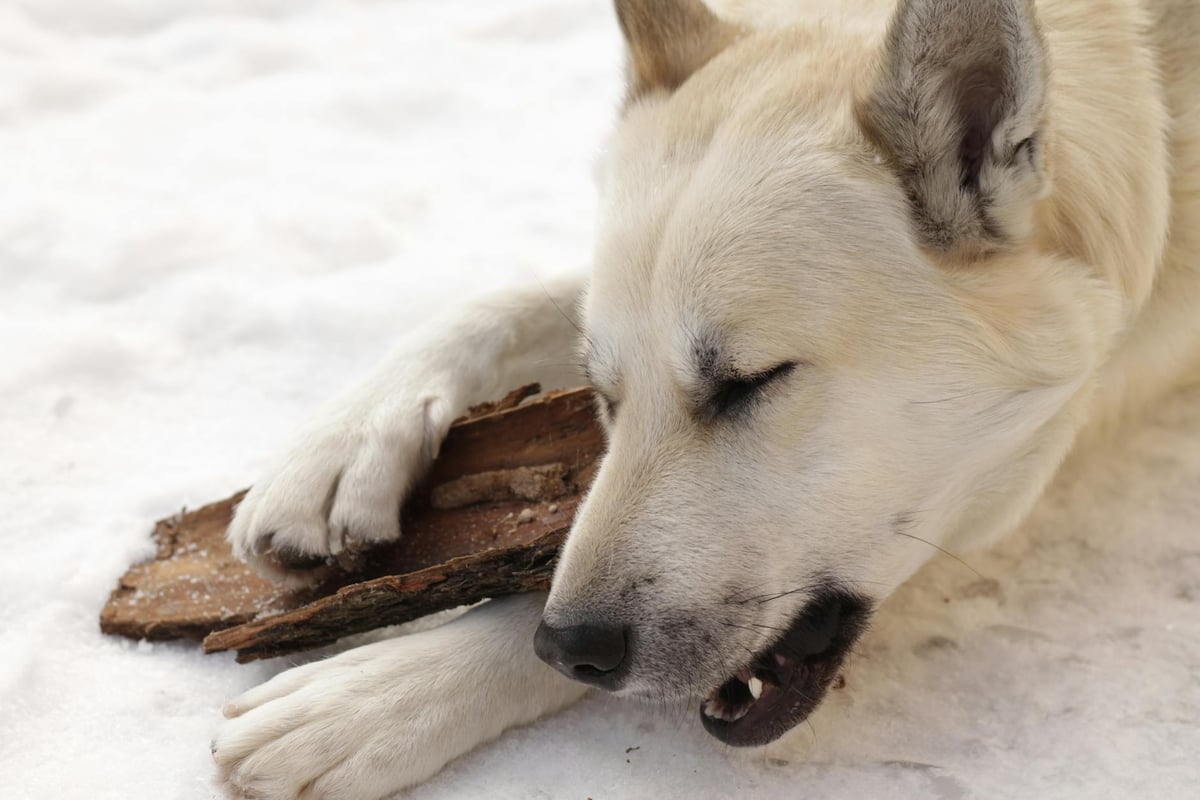
You love your dog and cat, but your home pays a tax you never agreed to. Insurance and remodeler estimates put the average annual pet-related repair bill at around $2,500 once you add up chewed trim, soaked subfloor, shredded screens, and emergency vet visits.
Most of this damage is preventable with the right materials and a few habit changes. The expensive part is when you treat the surface and ignore what is soaking or scratching underneath. These eight mistakes do the real damage.
1. Leaving Unsealed Wood Trim Exposed at Floor-Level Corners
Puppies and adult dogs gravitate to the same spots: door jambs, baseboard corners, stair stringers, and the bottom of kitchen cabinets. Softwood pine with a thin paint coat can be shredded by a teething puppy in a single afternoon.
Once the paint film breaks, saliva soaks into the raw grain and the wood swells. The damage is structural at that point, and a painter cannot fix it with caulk and touch-up.
Full baseboard and door-jamb replacement runs $400 to $1,200 per room with matching profile, primer, paint, and a finish carpenter. If chewing has reached trim around an exterior door, add $300 to $600 for re-sealing the threshold.
Seal every floor-level corner with clear polyurethane or a bitter-apple coating, and tack on PVC corner guards in high-traffic doorways. This is one of the home repairs that get expensive fast.
2. Cleaning Pee Accidents Without an Enzyme Cleaner
Soap, vinegar, and standard carpet shampoo break down the visible stain but leave the uric acid crystals intact. Those crystals reactivate every time the carpet meets humidity, which is why a room smells fine in winter and like a kennel by July.
The scent marker also tells your pet to come back. You are not cleaning the stain, you are reinforcing the bathroom location.
A real enzyme cleaner like Nature’s Miracle or Rocco and Roxie costs $20 to $40 a bottle and digests the uric acid. Skipping that step turns a $30 accident into a $1,500 to $5,000 subfloor and carpet replacement once urine reaches the pad and plywood.
Blot, soak the spot with enzyme cleaner until the carpet is as wet as the original accident, and air dry. For older stains, see the best hacks for getting rid of carpet stains.
3. Choosing Low-Pile Carpet Over an Untrained Pet
Low-pile and Berber carpets look durable, but they are the worst surface for accidents. The tight loop wicks liquid sideways into the backing and pad faster than plush carpet, and Berber loops snag on a single claw.
By the time you smell it, urine has spread two to three feet beyond the visible stain inside the pad. Shampooing the surface does nothing.
Carpet plus pad replacement in one bedroom runs $1,500 to $3,500, and if subfloor plywood has absorbed urine you are at $3,500 to $5,000. Hardwood under that carpet can be permanently stained black.
For high-accident zones use sealed luxury vinyl plank or tile, and keep carpet to rooms your pet does not sleep in. Same logic as these furniture placement mistakes destroying hardwood floors and carpet.
4. Using Standard Fiberglass Window Screens in Pet Rooms
Standard fiberglass screens are designed to keep flies out, not hold a fifty-pound dog or a determined cat back. A pet that sees a squirrel pushes through fiberglass mesh in under a second, and an open second-story window becomes a fall hazard.
The screens also disappear in chunks. You patch one, the cat shreds the next, and your AC bill creeps up because the bugs are already inside.
Replacing a screen with heavy-gauge pet-grade polyester or metal mesh runs $60 to $200 per window installed, and a reinforced storm-door screen is $250 to $450. That is cheaper than an emergency vet visit at $500 to $5,000 if your pet falls or runs into traffic.
Specify pet-resistant mesh on any window or door your pet can reach, and use a metal-mesh screen door on the patio. Walk through these overlooked household hazards in the same rooms.
5. Keeping Toxic Houseplants Within Reach
You can love plants and still poison your pet by accident. The ASPCA lists lilies as severely toxic to cats, where a single nibbled leaf or even pollen on a paw causes acute kidney failure within 48 hours. For dogs, sago palm is the killer, with a survival rate under fifty percent once leaves or seeds are ingested.
The damage is not just to your pet. Vomit sits on hardwood, rugs, and upholstery for hours before you find it, and the acidic content strips finishes and dyes.
An emergency vet visit for plant toxicity runs $500 to $5,000 with bloodwork, fluids, and overnight monitoring. Add $200 to $800 in refinishing or upholstery cleaning if vomit sat overnight.
Remove lilies, sago palm, pothos, dieffenbachia, and oleander from any room your pet enters. The best houseplants for air quality in the home list has species that clean your air without poisoning the cat.
6. Leaving the Trash Can and Countertop Open to Pets
An open kitchen trash can is a buffet for a dog and a stage for a cat. Chicken bones, chocolate wrappers, grape stems, and onion peels are all common emergency-vet diagnoses.
Counter surfing causes a second kind of damage. Cat claws on wood countertops, butcher block, and laminate leave scratch patterns you cannot sand out without going to bare wood.
A repeat counter-surfing dog also leaves chew marks on cabinet edges and lower drawer fronts. Refinishing a cabinet run is $1,200 to $3,500, and emergency surgery for a foreign-body obstruction is $2,000 to $5,000.
Use a locking step-can or under-cabinet trash drawer, store food in sealed containers, and clear counters before you leave the room. Same discipline solves the dirtiest items in your home list.
7. Ignoring Leather Furniture and Heated Floors Near Scratching Zones
Unprotected leather is a magnet for cat claws, and once the top grain is punctured the only fix is a patch or reupholstery. Conditioner and color repair kits hide light scuffs, but a real scratch goes through the dye layer into the corium below.
Leather repair runs $300 to $1,500 per piece for a professional patch, and full sofa reupholstery is $1,800 to $4,000. Suede and nubuck are worse because the nap shows every pull permanently.
Heated floor systems take a different hit. A scratching post placed over electric radiant heat can score the floor enough to crack the heating element below, and repair on a damaged radiant loop is $800 to $2,500. Refinishing scratched hardwood on its own is $3 to $8 per square foot.
Move scratching posts to non-heated zones, use microfiber or performance fabric on the sofa where the cat sleeps, and put a heavy washable rug between any post and a finished floor.
8. Closing Rooms in Summer Without AC or Airflow
A closed bedroom or laundry room in July hits 90 degrees within an hour. Dogs and cats left there overheat, drink more, and have more accidents on whatever surface is closest, usually carpet over wood subfloor.
You get two bills at once: the vet visit for heat stress at $500 to $3,000, and the soaked carpet pad and subfloor you find when you open the door. Pets that overheat also vomit and drool, both of which stain.
Wood blinds in those rooms get destroyed by anxious pets trying to see out, and pull cords become a strangulation risk. A chewed cellular shade is $80 to $250 per window, and a custom wood blind is $150 to $400.
Leave a fan running, the AC vent open, and the door cracked, and switch to cordless honeycomb shades in pet rooms. This is part of the critical home maintenance issues you are neglecting.
What Actually Works: The Materials-First Pet-Proofing Plan
Pet-proofing fails when you treat it like training. Training matters, but materials decide whether one accident costs $30 or $5,000. Walk each room at your pet’s eye level and list every unsealed corner, low-pile carpet zone, fiberglass screen, toxic plant, open trash can, and unprotected leather surface.
Fix cheap items first. A $30 enzyme cleaner, a $25 step-can, a $40 set of corner guards, and removing two houseplants eliminates more recurring damage than any contractor visit. Then upgrade what keeps failing: pet-grade screens, sealed luxury vinyl, cordless shades, and a microfiber slipcover.
Pair the material fixes with cleaning routines that prevent odor from setting. The same airflow logic in keeping your home smelling fresh stops re-marking, and early mess cleanup blocks the conditions behind the most common home infestations.
Do those passes once and your $2,500 annual pet-damage tax drops to under $300 in consumables. Skip them and you pay the full bill again next year, plus interest in soaked subfloor, a vet ER visit, or a sofa you cannot save.
- 0shares
- Facebook0
- Twitter0
- Pinterest0