
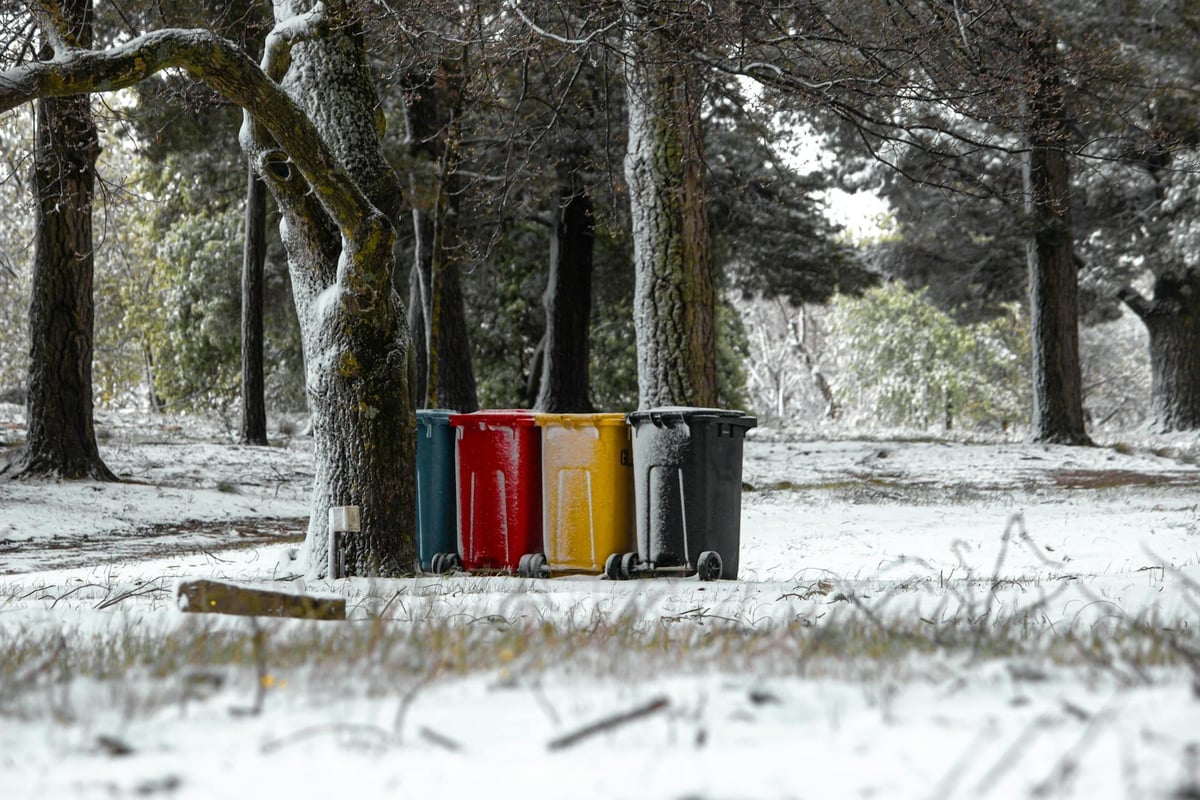
You roll your blue bin to the curb every week assuming you’re helping. The hard truth is that one wrong item can get an entire truckload rejected and sent straight to landfill.
Materials Recovery Facilities charge $300 per ton in extra sorting penalties when contamination runs high, and rejected loads push your trash bill up $30 to $120 a year. Seven everyday items are the worst offenders, and most homeowners drop them in the bin every week.
1. Plastic Bags and Film Jam Every Sorting Machine in the Building
Plastic grocery bags, bread bags, dry cleaning sleeves, and bubble wrap are the biggest source of trouble at modern MRFs. Inside a sorting plant they behave like rope, wrapping around the spinning star screens that separate cardboard from plastic.
Workers shut the entire line down two to four times a day to cut tangled film off the rollers. The industry estimates these jams cost recyclers more than $200 million a year in lost throughput and equipment damage.
If your local plant runs slow, the per-ton sorting penalty for your town climbs from $80 to as much as $300, and that surcharge shows up on your trash bill. A single contaminated truckload can rack up $1,500 to $3,500 in extra processing fees.
Bag your bags at the store instead. Most grocery chains have a film drop-off bin near the entrance. Your curbside bin should never see a plastic bag, including the one you use to gather your recycling. The same sort-and-store discipline applies to how you handle clutter everywhere else in the house.
2. Greasy Pizza Boxes Ruin Entire Bales of Clean Cardboard
Friday night pizza feels like the easiest recycling decision you make all week. The problem is that grease and cheese soak deep into the fibers within hours, and once oil bonds to cellulose, the pulp will not bind into new paper.
Paper mills use water to break cardboard back into pulp, and oil and water do not mix. Even a few square inches of grease can ruin a 1-ton bale of otherwise clean cardboard, dropping its value from $140 per ton to zero.
Multiply that by every greasy box in your neighborhood and a single hauler route loses $400 to $900 in marketable material every month. Your town absorbs that through higher contracted rates.
Tear the box in half. The clean lid goes in recycling, the greasy bottom in trash or yard waste. Watch for grease and crumbs elsewhere too, because those conditions show up on lists of the dirtiest items in your home.
3. Shredded Paper Slips Through the Sorters and Becomes Trash
You shred old tax returns for security, then dump the confetti in the bin feeling responsible. Inside the MRF, that shredded paper falls right through the disc screens, which are calibrated to catch sheets the size of an envelope or larger.
The fragments coat glass cullet and small plastics, contaminating both streams. Once paper fibers stick to broken glass, the load is no longer usable for new bottles, and the glass processor charges the MRF a $40 to $90 per ton rejection fee.
Your town pays that fee, and over a year of weekly pickups it adds $50 to $110 to the average household waste bill. Shredded paper is recyclable as a material, but only when bagged separately and labeled, which most curbside programs do not accept.
Compost it, use it as packing material, or seal it in a labeled paper bag only if your hauler explicitly says yes. Otherwise it belongs in the trash. This is also a good moment to review the household checks every homeowner should run each month.
4. Lithium Batteries Hidden in Devices Cause Million-Dollar Fires
This is the most dangerous item on the list. Vape pens, wireless earbuds, e-cigarette pods, power tool packs, and old phones all contain lithium-ion cells. When the bin gets dumped and compacted, those cells get crushed, short-circuit, and ignite.
Fire Rover has documented more than 390 lithium battery fires at North American recycling plants in a single year. A serious fire at one MRF can cause $2 million to $10 million in damage to conveyors, optical sorters, and the building.
Insurance premiums for recycling plants have tripled in some regions, and those costs filter down to your hauler’s contract. If the local MRF burns down, recycling stops being collected for weeks, and trash fees climb $80 to $200 a year while a replacement contract is signed.
Never put any battery or battery-containing device in curbside recycling or trash. Home Depot, Lowe’s, and most Batteries Plus locations have free drop-off bins. This is the kind of quiet danger that belongs on every list of the most overlooked household hazards.
5. Hard Plastic Toys and #6 Styrofoam Contaminate the Plastic Stream
Broken plastic toys, beach buckets, takeout clamshells, and foam egg cartons all look like recyclable plastic. They are not. Most are marked #6 polystyrene or carry no resin code, and almost no curbside program accepts them.
When non-#1 and non-#2 plastics get baled with PET bottles and HDPE jugs, the buyer rejects the load and bills the MRF a $200 to $300 per ton penalty. Styrofoam shatters into beads that cling to every other piece of plastic in the bale.
An average household tosses 3 to 6 pounds of mixed hard plastic and foam per month. Across one neighborhood that spoils a full truckload, and your hauler passes the cost back as a $30 to $75 annual surcharge per home.
Only #1 (PET) and #2 (HDPE) reliably go in curbside bins. Donate intact toys to thrift shops. The guide to 8 items you can’t recycle is worth reading start to finish.
6. Broken Glass, Mirrors, and Ceramic Mugs Wreck the Glass Stream
People assume any glass goes in the bin. Window panes, mirror glass, drinking glasses, Pyrex, and ceramic coffee mugs do not. They have different melting points than container glass and will not fuse properly in a bottle furnace.
A single ceramic mug shattered inside a bale of bottle glass can ruin the entire batch, because the high-melt shards become defects in any new bottle made from that cullet. Glass processors charge MRFs $50 to $120 per ton for contaminated loads, and a bad week costs a single plant $4,000 to $8,000.
Broken glass is also a safety issue for the workers who still hand-sort the back end of the line. Some haulers will reject your bin outright if they see broken glass on top, and rejected bins go straight to landfill.
Recycle only bottles and jars, rinsed and dropped in loose, never bagged. Old mugs and Pyrex go to a thrift store if intact, or trash if broken. While you are sorting kitchen items, review how to organize your pantry for less waste.
7. Food-Stained Takeout Boxes and Coated Paper Cups Look Clean but Aren’t
That takeout clamshell and this morning’s paper coffee cup are engineered to resist liquid, which is exactly why neither recycles cleanly. Paper cups are lined with polyethylene film that has to be peeled off by specialty equipment most MRFs do not own.
At a standard paper mill, the lining clogs the pulping screens and forces an unscheduled cleanout that runs $1,200 to $3,000 per incident. Food-soaked paperboard behaves like a greasy pizza box: oils ruin the pulp and the bale loses its value.
Multiply this by every coffee run and takeout night and your town pays $50 to $150 per household per year in tipping fees and lost commodity revenue.
Toss coated cups and food-stained takeout in the trash. Switch to a refillable mug and reusable containers, and pair that with knowing which foods go bad faster in the fridge so you generate less packaging waste.
What Actually Works: The Sort-Less, Sort-Better Solution
The fastest way to help your town’s recycling program is not to put more in the bin. It is to keep the seven items above out of it. A household that stops contaminating its load saves the local hauler $40 to $90 a year and avoids the $30 to $120 surcharge that comes back through your trash bill.
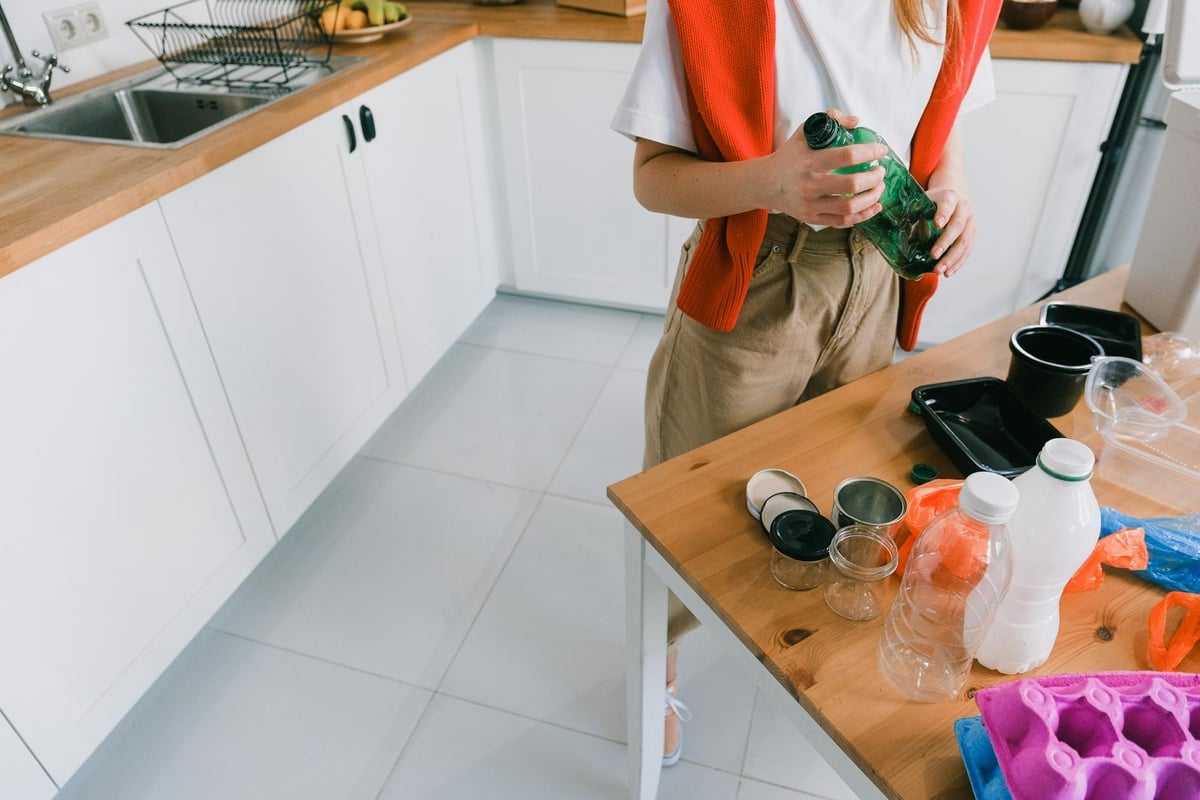
Build a two-bin habit in your kitchen. One holds clean, dry #1 and #2 plastics, metal cans, dry paper, and bottle glass. Everything else goes in the trash or a dedicated drop-off. Keep a basket near the door for batteries, electronics, and plastic film that you carry to a store once a month, the same way you would for pantry storage you check on a schedule.
When you are unsure about an item, default to the trash, not the bin. Wishful recycling is the number one driver of contamination nationwide. Pair this with food storage discipline and be honest about which foods are no longer safe past their expiration date.
Recycling works only when the inputs are clean. Treat your blue bin like a curated list, not a second trash can, and your town keeps more revenue.
- 1share
- Facebook0
- Twitter0
- Pinterest1