
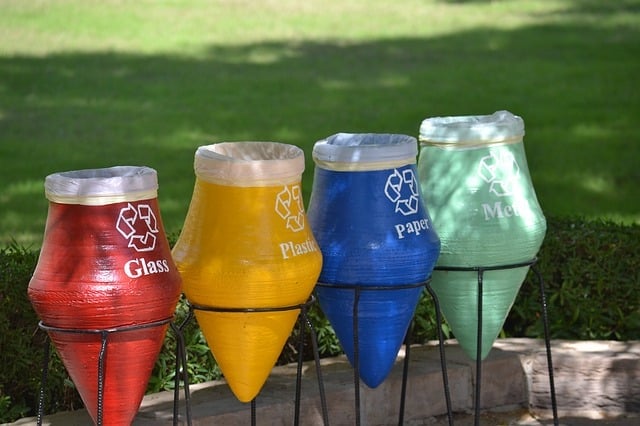
Your curbside recycling bin is a powerful tool, but only when you use it correctly. Many household items that seem recyclable actually contaminate entire loads at materials recovery facilities, forcing tons of legitimate recyclables into landfills. Understanding what doesn’t belong is the key to recycling that actually works.
Before trash day, sort these eight commonly misplaced items. Each one can derail the recycling process or create safety hazards that cost municipalities thousands of dollars to address. Know where they really belong, and your good intentions will actually reduce waste. Proper storage and sorting of household materials starts with knowing what can and cannot be recycled.
1. Plastic Bags and Film (Only Grocery Drop-Off)
Plastic bags feel recyclable, but they are your local materials recovery facility’s worst enemy. When bags get tangled in the sorting machinery, they jam conveyor belts and stop operations entirely. A single bag can halt a facility for hours, idling equipment and delaying the processing of hundreds of pounds of legitimate recyclables.
Most curbside programs explicitly ban plastic bags and film. The Recycling Partnership reports that bag contamination costs facilities between $30 and $120 per year in lost sorting time and equipment maintenance per resident’s contribution. Instead, take plastic bags directly to grocery stores and retailers like Target or Whole Foods, which operate drop-off programs specifically designed to handle film safely.
Keep plastic bags out of your blue bin entirely. For more information on what you’re accidentally putting in the wrong bin, see five household items you’re recycling wrong. Contact your local waste authority for approved drop-off sites near you.
2. Pizza Boxes (Even Clean Ones Still Contaminate)
Grease from pizza soaks into cardboard, making it unsuitable for recycling. Even wiping down the box leaves residual oils that contaminate entire loads. Contaminated batches cost facilities $200 to $500 in lost value and reprocessing.
Only completely clean cardboard belongs in the bin. If your pizza box is grease-free, compost it or trash it. For guidance on proper sorting, review waste reduction strategies.
3. Broken Glass and Ceramics (Different Melting Points Cause Contamination)
Broken glass and ceramic dishes seem like natural recycling candidates because they are inert materials. However, ceramics and certain types of glass have different melting points than standard container glass. When mixed at the recycling facility, they create defects in new glass products and can damage equipment during the sorting and melting process.
Glass recycling facilities use equipment calibrated for specific material compositions. Adding ceramics or heat-resistant glass reduces the value of the entire batch by 10 to 20 percent, costing facilities approximately $50 to $150 per contaminated load in lost revenue. Most recycling centers cannot safely hand-sort broken pieces due to injury risk, so they are usually sent directly to landfills. Donate unbroken dishes to thrift stores, or place broken glass carefully in household trash wrapped securely.
Check your local guidelines for special glass disposal. If you’re concerned about other household hazards that might impact your safety, learn more about overlooked household dangers.
4. Styrofoam and Polystyrene #6 Plastic (Most Facilities Don’t Accept)
Styrofoam clogs sorting equipment and takes up enormous bin space. Only 10 percent of U.S. recycling facilities accept polystyrene #6. When foam jams equipment, repair costs run $500 to $1,500 per incident. Electronics retailers like Best Buy sometimes accept foam packing materials. Call your local waste authority before assuming your styrofoam can be processed curbside. If foam from online shopping becomes clutter, reconsider your decluttering approach to prevent buildup.
Reuse styrofoam for storage or moving supplies. Avoid the material entirely by choosing minimal or plastic-free packaging.
5. Batteries (Fire Hazard at Material Recovery Facilities, Cost $2-$10 Million in Damages)
Batteries belong nowhere near a recycling truck or materials recovery facility. Lithium-ion batteries, alkaline batteries, and rechargeable cells can short-circuit during sorting and compaction, causing fires that shut down operations for days and destroy millions of dollars worth of equipment and recovered material. According to the National Association of Recycling Industries, battery fires in MRFs cause an average of $2 million to $10 million in annual facility damage across North America.
Your curbside recycling is not equipped to handle batteries safely. Instead, use Call2Recycle’s battery drop-off locator to find free collection sites in your area, or take batteries to a Best Buy or home improvement store, many of which offer free battery recycling. Some auto parts stores accept rechargeable batteries from power tools. If you’re concerned about battery disposal as part of a broader monthly home maintenance checklist, add battery collection to your seasonal tasks.
Label loose batteries with tape to prevent accidental contact during disposal. Never throw batteries in regular trash or recycling bins.
6. Light Bulbs (CFLs and LEDs Require Household Hazardous Waste Disposal)
Incandescent bulbs can technically go in regular trash, but compact fluorescent lamps (CFLs) and many LED bulbs contain traces of mercury and other hazardous materials that require special handling. Curbside recycling facilities cannot safely process light bulbs because they break during sorting and release mercury vapor and glass shards that contaminate both equipment and workers.
Most municipalities designate light bulbs as household hazardous waste. Call2Recycle and your local waste authority can direct you to free drop-off events, usually held quarterly. Home Depot and Lowe’s accept CFLs and most bulbs at customer service desks at no charge. If light bulbs are part of your home’s older fixture setup, learn about lighting fixtures that pose fire hazards and need replacement. Disposal through proper channels costs facilities $0.50 to $2.00 per bulb when done safely versus creating workplace hazards.
Store used bulbs in a safe location until you can transport them to a drop-off site. Never break or crush a bulb to try to fit it in your bin.
7. Electronics and E-Waste (Retailer Take-Back Programs, Sometimes with Rebates)
Electronics contain copper, gold, and rare earth elements, but also lead, cadmium, and mercury. Curbside facilities cannot safely dismantle them. Best Buy, Staples, and manufacturers operate free take-back programs. Best Buy recycles TVs and computers for free (limit five items per day) and sometimes offers rebates of $50 to $200. Proper e-waste recycling recovers 95 percent of materials and prevents hazardous waste from landfills.
Before discarding electronics, donate working devices to schools or resale platforms. Use smart decluttering strategies to identify what can be repurposed before recycling.
8. Used Motor Oil and Paint (Auto Parts Stores and Hardware HHW Programs)
Used motor oil is one of the most frequently misplaced household hazardous wastes. Just one quart of oil can contaminate up to 250,000 gallons of water in a landfill or groundwater supply. Motor oil does not degrade, making it a permanent environmental threat. Paint, especially oil-based formulations, contains volatile organic compounds (VOCs) and heavy metals that belong in household hazardous waste (HHW) streams.
Latex paint can be disposed of by allowing it to dry completely in the can (adding cat litter or sawdust speeds the process), then placing it in regular trash. However, oil-based paint and all used motor oil require professional disposal. Every automotive parts store, from AutoZone to NAPA, accepts used motor oil for free. Most local waste authorities collect paint at seasonal HHW events, often free for residents. Disposal costs range from $5 to $15 per gallon through commercial channels. If you’re managing basement or garage storage, check your decluttering methods to avoid accumulating paint cans and oil containers in the first place.
Store used oil in sealed, labeled containers, and bring paint in its original container to ensure proper processing. Check your local municipality’s waste calendar for HHW collection dates.
What Actually Works: Sorting Carefully Prevents Facility Shutdowns
The most impactful recycling habit is not adding more items to the bin. It is keeping contaminants out so the paper, cardboard, glass, and plastic that recycling facilities are designed to process can actually be recovered. Each mistake you avoid prevents real economic and environmental damage downstream.
When in doubt, consult your waste hauler’s guidelines, reuse the item if possible, donate it to someone who can use it, or dispose of it through specialized programs. A moment of extra thought prevents facility shutdowns, protects workers, and ensures your good intentions actually reduce waste. Call your local solid waste authority or visit Call2Recycle to find proper disposal options for any household item you are uncertain about.
- 179shares
- Facebook121
- Twitter27
- Pinterest11