
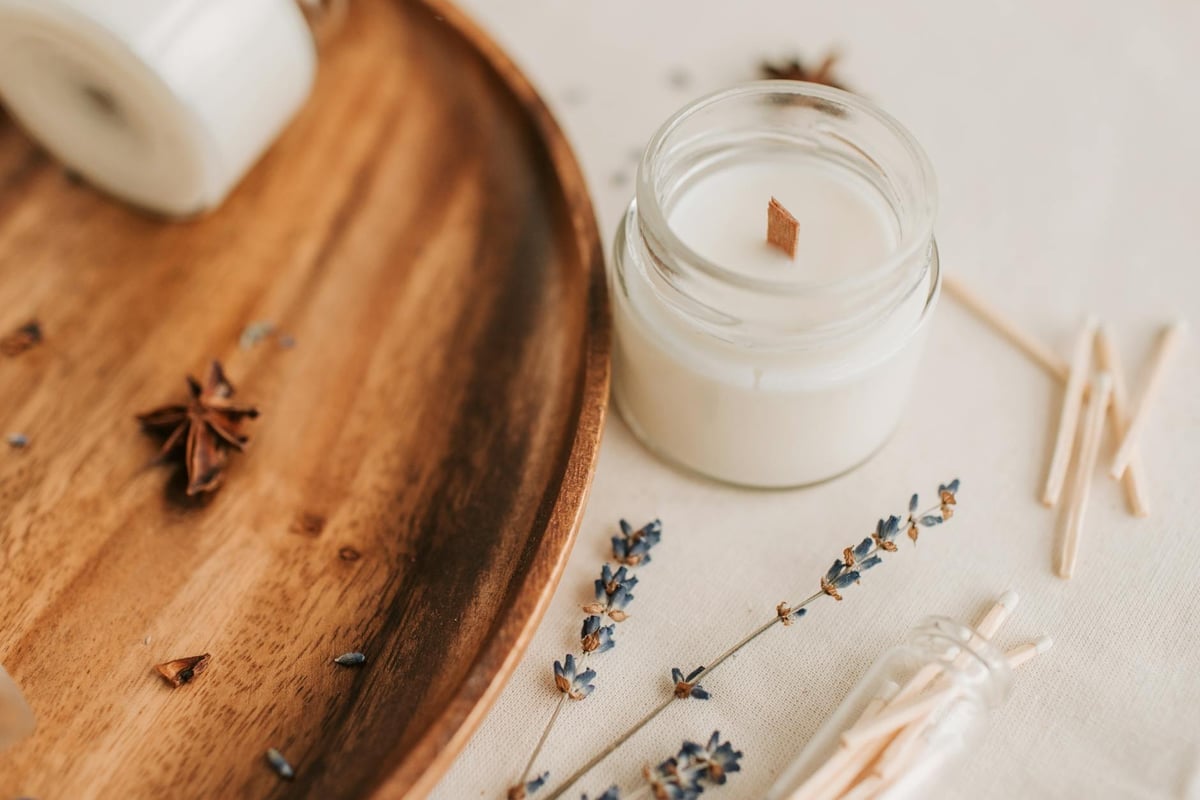
That pleasant vanilla scent drifting through your living room is rarely vanilla. Most of what you smell from a plug-in, an aerosol can, or a scented candle is a blend of synthetic fragrance chemicals, VOCs, and solvents the manufacturer is not required to list.
The Natural Resources Defense Council and the EPA have tracked these emissions for years, and peer-reviewed VOC studies keep finding the same culprits: phthalates that disrupt hormones, formaldehyde that irritates lungs, and limonene that reacts with indoor ozone to form more formaldehyde. An asthma attack triggered by one of these products can mean a $600 to $3,500 ER visit, and serious HVAC contamination can run $200 to $1,500 to remediate. Here are the seven worst categories in an average home.
1. Plug-In Oil Warmers
Plug-in oil warmers heat a small reservoir of fragrance oil around the clock, which means the chemicals inside vaporize into your air whether you are home or not. The convenience is what makes them one of the worst exposures on this list.
NRDC laboratory testing found phthalates in 12 of 14 air fresheners they sampled, including products that did not list phthalates on the label. Phthalates have been linked to endocrine disruption, reduced fertility, and increased asthma risk in children.
You may notice headaches that ease when you leave the house, a stuffy feeling in the bedroom where the unit is plugged in, or worsening allergy symptoms. If you already deal with the kind of irritants in our guide to overlooked household hazards, a plug-in warmer stacks on top.
Allergist co-pays run $40 to $75 per visit, and new inhalers or nasal sprays add $80 to $250 a month. Unplug every warmer tonight and run a HEPA purifier for a day to clear residual fragrance from soft surfaces.
2. Aerosol Spray Air Fresheners
Aerosol sprays push fragrance into the air as a fine mist of droplets small enough to travel deep into your lungs. The propellant, the solvent, and the fragrance blend all get inhaled at the same time.
Peer-reviewed VOC studies have measured benzene, formaldehyde, and terpenes coming out of common aerosol fresheners. Limonene, the citrus-scented terpene, is not toxic on its own, but it reacts with indoor ozone to form formaldehyde and ultrafine particles inside the room you just sprayed.
If anyone in your home has asthma, those particles can trigger a flare within minutes. An asthma-related ER visit averages $600 to $3,500 before insurance. The same ventilation problems that let mold spores spread from your bathroom exhaust fan also trap aerosol residue in the rooms you spray most often.
Toss the cans, or hand them off for hazardous waste pickup. A bowl of baking soda and a cracked window does the same job for under $2.
3. Paraffin Scented Candles
Paraffin is a petroleum refining byproduct, and burning it releases soot, benzene, toluene, and ultrafine particulate matter. Scented paraffin candles add synthetic fragrance compounds to that mix.
You can see part of the problem on your walls. Black soot streaks above candle shelves, gray film on lampshades, and a dingy ring around the ceiling fan are all signs paraffin combustion is depositing carbon throughout the room. The same soot lands in your HVAC filter.
Heavy candle use means replacement HEPA filters in the $80 to $300 range come around far more often than the manufacturer schedule suggests, and a soot-coated furnace blower or evaporator coil can require a $200 to $1,500 cleaning. If you already track lighting fixtures that cause fire hazards and high electric bills, an open flame burning petroleum wax belongs on the same list.
Switch to 100 percent soy or beeswax candles with cotton wicks and no synthetic fragrance, or use unscented only.
4. Gel and Bead Air Fresheners
Gel cups and scent beads use a slow-release matrix that holds fragrance compounds and evaporates them into the air over weeks. The slow burn makes them a constant low-level exposure.
Many gel formulas include para-dichlorobenzene, the same compound used in mothballs, which the EPA classifies as a possible human carcinogen. Others use phthalates as carriers, plus synthetic musks that have shown up in human blood and breast milk in environmental studies.
You will often find gels parked in bathrooms, basements, and laundry rooms, which have the worst ventilation. That is the same overlap behind the bathroom odor problems we covered separately, and the gel is making it worse.
Replace gels with an open dish of activated charcoal, around $10 a pound, that absorbs odor instead of masking it. Dermatology co-pays for fragrance dermatitis run $40 to $80 plus prescription creams at $25 to $150.
5. Reed Diffusers and Scented Oils
Reed diffusers and bottled scented oils look harmless because they have no flame, no plug, and no spray. The problem is the solvent base, evaporating into the room 24 hours a day.
Most commercial reed diffusers use dipropylene glycol or similar glycol ethers to carry fragrance up the reeds. These solvents are documented respiratory and eye irritants, and the fragrance blends layered on top typically include undisclosed phthalates.
Diffusers on bedside tables are especially bad, because you breathe their output for eight hours straight while you sleep. If you also keep houseplants that genuinely improve indoor air quality, the diffuser is undoing their work.
Allergist evaluations for unexplained nighttime symptoms run $200 to $400 out of pocket, and a sleep study to rule out other causes can be $1,000 to $3,000. Empty the diffuser and use a small bowl of dried lavender or coffee grounds instead.
6. Dryer Sheets and Scented Laundry Beads
Dryer sheets and scent boosters are not marketed as air fresheners, but that is functionally what they are. The fragrance is engineered to stay on fabric, vent out of the dryer, and waft out of every closet in the house.
Peer-reviewed studies of dryer vent emissions have measured acetaldehyde, benzene, and other VOCs venting outside and drifting back in through windows. Inside the laundry room, the heat drives fragrance compounds into the air at concentrations high enough to trigger headaches and asthma in sensitive people.
Scented beads concentrate the problem. Pouring perfumed beads into every load multiplies the residue on fabric, which off-gasses inside drawers for weeks. If laundry is already on your radar from our dirtiest items in your home guide, fragrance buildup belongs there too.
Switch to unscented detergent and skip the dryer sheets. Wool dryer balls cost $15 once and last for years.
7. Scented Wax Melts and Tart Warmers
Scented wax melts are sold as a safer candle alternative because they have no open flame, but the chemistry on the warming plate is not safer. The wax is usually paraffin, the fragrance load is often heavier than in candles, and the warmer keeps the wax hot for hours.
University indoor-air research has shown wax melts can emit terpene levels comparable to a strongly scented candle, sometimes higher because there is no flame to combust the fragrance. Those terpenes react with indoor ozone to form formaldehyde and ultrafine particles.
Wax melts are popular in bedrooms, nurseries, and small offices, which are the worst rooms to add a continuous emission source. If pests have already pushed you to look at the most common home infestations, you are also dealing with dander and droppings that aggravate the same airways.
HVAC remediation for a home with heavy wax melt and candle use runs $200 to $1,500 once you factor in coil cleaning and duct work. Unplug the warmer and use a small simmer pot of citrus peel and cinnamon instead.
What Actually Works: A Source-First Approach to Indoor Air
You do not get fresh indoor air by adding more chemicals. You get it by removing the source of the smell, moving the air, and filtering what is left. Every category above is a masking product, and masking keeps you spending $50 to $150 a year on refills while your symptoms get worse.
Start with source control. Take out the trash daily, run bathroom and kitchen exhaust fans every time you use the room, and clean problem surfaces on a schedule. The same conditions behind pantry storage mistakes that create a pest paradise also create persistent food and dampness odors, so fixing one fixes the other.
Add filtration next. A HEPA purifier sized for your largest room costs $150 to $400, and a quality MERV 11 to 13 furnace filter at $25 to $60 every three months keeps your HVAC from spreading what the purifier missed. Switching off scented sources can cut a $80 to $300 monthly filter bill in half.
Finally, scent the air the old way. Simmer pots, fresh herbs, a bowl of coffee beans, and open windows on mild days cost almost nothing and do not put phthalates or formaldehyde into your bedroom. Your sinuses, your HVAC, and your wallet will notice the difference inside a month.
- 1share
- Facebook0
- Twitter1
- Pinterest0