
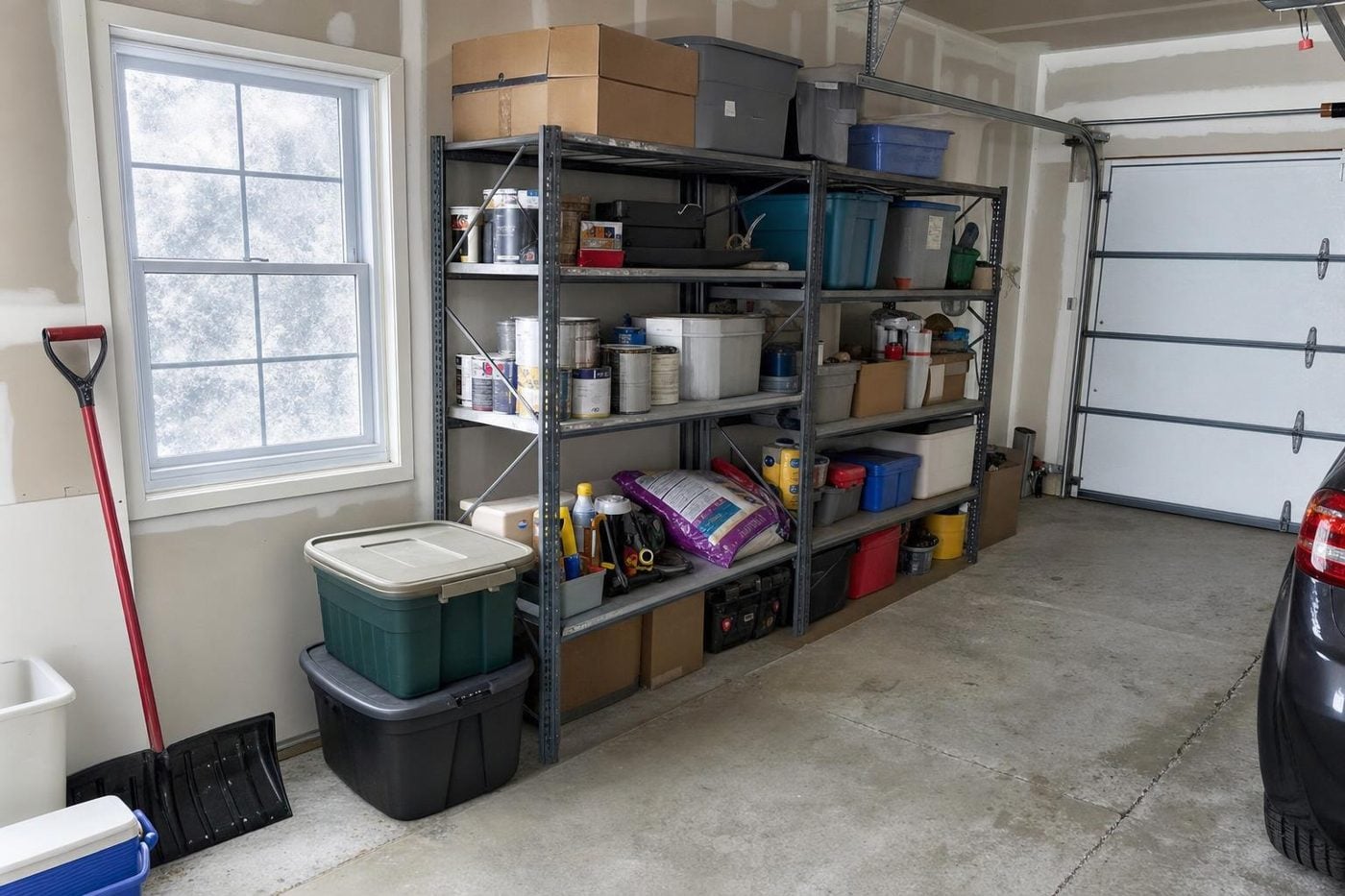
The garage is an easy dumping ground when you run out of space inside the house. Grill stuff, extra cans from the pantry, an old sleeping bag, the box of old tax returns. Out of sight, out of mind, right?
The problem is that garages are not climate-controlled. Over winter, an unheated garage swings between freezing overnight and relatively warm during a sunny afternoon. That cycle of freezing and thawing is hard on a surprising number of common household items. Add in the moisture that builds up in an enclosed space and the mice that move in looking for warmth and food, and you have conditions that can ruin belongings, attract pests, or in a couple of cases, create a genuine safety hazard.
Here are the seven things you should pull out of your garage before winter really sets in, plus where to put each one instead.
1. Propane Tanks (Gas Grill Cylinders)
When grilling season ends, a lot of people disconnect the propane tank from the grill and slide it into the garage to keep it out of the weather. This is one of the more dangerous storage habits on this list.
Propane cylinders should never be stored inside a garage, shed, basement, or any enclosed structure. The propane industry and fire safety guidance are consistent on this: even a small leak can allow propane gas to accumulate in an enclosed space, and because propane is heavier than air, it settles near the floor where a water heater pilot light, a power tool spark, or even a car ignition can set it off.
What to do instead: Store propane cylinders outdoors, upright, away from your home’s foundation, doors, and windows. A shaded spot that does not get direct sun is fine. The valve should be closed tight. Cold temperatures alone will not harm a propane cylinder. The danger is always about enclosure and ventilation, not the cold itself.
2. Latex Paint
Half-empty cans of paint left over from your last interior project are a garage staple. The trouble is that latex paint is water-based, and water freezes.
One hard freeze does not always ruin a can of latex paint, but repeated freeze-thaw cycles often do. As the water in the paint freezes and expands, it breaks down the emulsion that holds the pigment and binders together. What you end up with is a lumpy, separated, unusable mess that looks a bit like cottage cheese. Even if the can seems okay after thawing, the paint may apply unevenly and fail to adhere properly.
What to do instead: Keep latex paint inside your home, somewhere above freezing, for the entire winter. A basement shelf, a utility closet, or even under a bathroom sink works well. Make sure the lid is sealed tight to prevent a skin from forming on top. If you have cans that already went through a freeze, stir them thoroughly after thawing. If the texture does not come back to smooth and uniform, the paint is done. Dispose of it the way your local waste program directs.
3. Canned Food
Stocking up on canned goods and moving the overflow to the garage feels practical. Many garages even stay cool enough in fall that it seems like an ideal pantry extension. But once temperatures drop below freezing, you have a problem.
When the liquid inside a can freezes, it expands. That expansion can stress or rupture the can’s seams. Even if the can looks fine from the outside, the internal seal may have been compromised. The USDA advises storing canned goods in a cool, dry place. If a can froze by accident and is only swollen, USDA says to thaw it in the refrigerator and throw the food out if it does not look or smell normal. If the seams have rusted or burst, throw the can out.
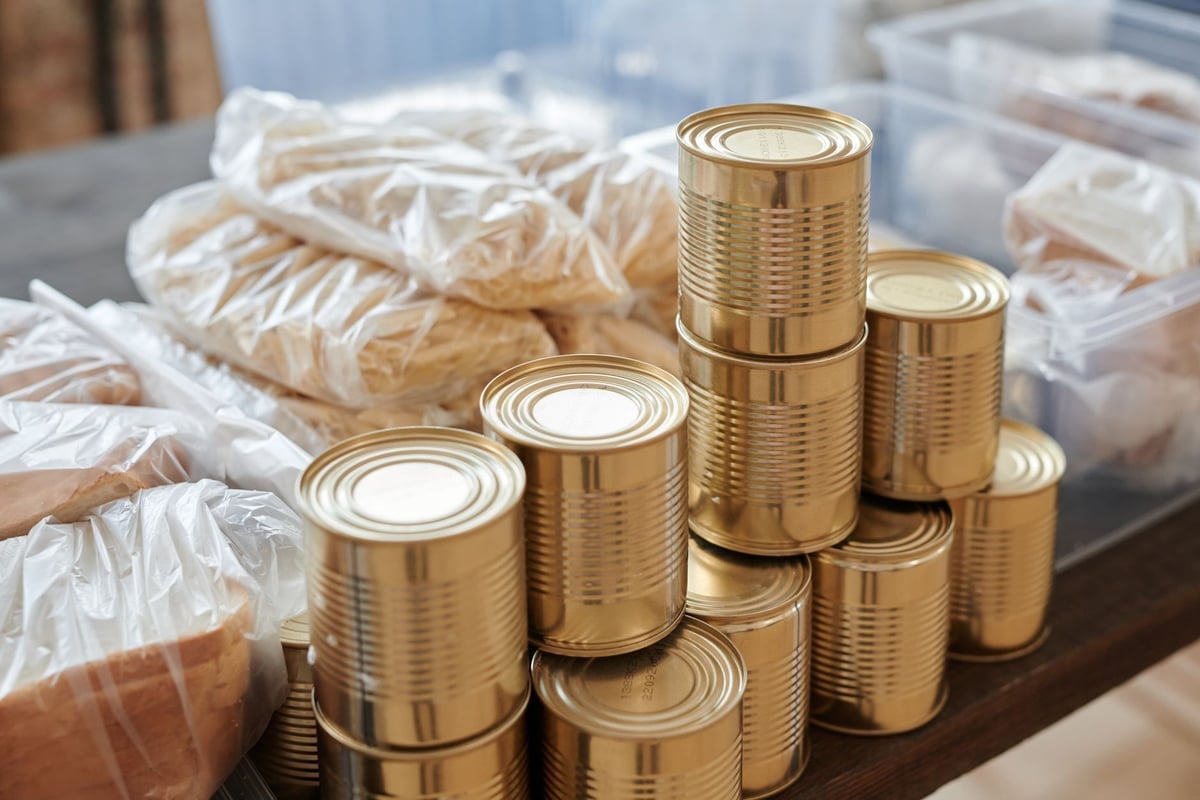
A can that bulges for no obvious reason can signal Clostridium botulinum contamination. Never open or taste one.
What to do instead: Move canned food back into your kitchen pantry or a temperature-stable indoor storage space. Check any cans that have been in the garage already. If a seam looks off or the can is bulging, do not open it. Contact your local waste management authority for disposal instructions.
4. Pet Food and Birdseed
A large bag of dog food or a fifty-pound sack of birdseed takes up real space, so the garage is the obvious place to store it. The issue is that both of these items are irresistible to rodents.
Mice move indoors as temperatures drop, and they are remarkably good at finding entry points into garages. Once they find a food source, they stay, they breed, and they leave droppings throughout the space. The CDC identifies rodent droppings as a source of serious illness, including hantavirus. You do not want mice nesting near your car, your stored belongings, or your pet’s food supply.
Even a loosely closed bag is enough to bring them in.
What to do instead: Store pet food and birdseed in sealed, hard-sided containers. Metal cans with tight lids are the most effective deterrent. Heavy-duty plastic containers work too, though determined mice can chew through thinner plastic over time. If you must keep these items in the garage, put them in a proper metal storage bin and inspect regularly for signs of gnawing or droppings. Birdseed is best kept in a metal trash can with a locking lid.
5. Paper Documents and Photographs
Tax records, insurance policies, old letters, printed photographs. People box these up and slide them into the garage when they need to clear out a home office or spare bedroom. Over one winter, you may not notice any damage. Over two or three, the garage can ruin them.
Humidity is the main enemy here. As temperatures rise and fall, moisture condenses inside boxes and on surfaces. Paper absorbs that moisture and warps, yellows, or develops mold. Photographs are especially vulnerable because the emulsion layer that holds the image can separate or develop fungal growth.
Mice make things worse. They shred paper for nesting material. A box of irreplaceable family photos is exactly the kind of soft material they go for.
What to do instead: Important documents belong inside your home, ideally in a fireproof box or filing cabinet. For photographs, acid-free archival boxes kept in a climate-stable indoor space are your best protection. If you have documents you access rarely, consider scanning and storing digital copies in a cloud service as a backup. Physical originals should still live indoors.
6. Clothing, Bedding, and Upholstered Furniture
Seasonal clothing, extra blankets, and furniture that does not fit in the house right now all tend to migrate to the garage. In winter, this is a bad idea on two fronts: moisture and mice.
Fabric absorbs humidity. Clothing and bedding stored in an unheated, unventilated garage over a wet winter can come out smelling musty or showing visible mildew growth. Mildew can set into fabric quickly and is difficult to fully remove, especially from natural fibers and foam cushions.

More urgently, mice actively seek out soft materials for nesting. A pile of old coats, a stored duvet, or an upholstered chair left in the garage is exactly what a pregnant mouse is looking for in November. By spring, you may find nests, droppings, and damage you did not see coming.
What to do instead: Bring seasonal clothing inside and store it in vacuum-seal storage bags, which remove air and moisture and are much harder for pests to access. Bedding can go in zippered plastic bins kept indoors. Upholstered furniture should not live in the garage at all during winter. If you are between homes or doing a renovation, look into climate-controlled storage units for anything you cannot bring inside.
7. Batteries and Electronics
Power tool batteries, spare AA batteries for remotes and flashlights, old laptops, tablets, backup hard drives. These often get tucked in the garage on a shelf or in a bin. Cold weather affects all of them.
Cold temperatures reduce battery capacity significantly. Lithium-ion batteries, which power most rechargeable tools, phones, and laptops, deliver less power in the cold, and charging one while it is below freezing can damage it. Standard alkaline batteries are less vulnerable but still perform poorly in the cold.
Electronics face an additional problem: condensation. When you bring a cold electronic device into a warm space, moisture condenses on its internal components, similar to how a cold glass fogs up on a humid day. That moisture can cause short circuits or corrosion. The damage may not show up immediately, but it accumulates over time.
What to do instead: Store batteries and electronics at room temperature, inside your home. A shelf in a closet, a drawer, or a dedicated storage bin in a spare room keeps them in working condition through the winter. If you do store any electronics in the garage during a cold stretch and then bring them inside, let them sit at room temperature for several hours before powering them on. That gives condensation time to evaporate before electricity passes through the circuits.
Quick-Reference Checklist: Move These Out of the Garage Before Winter
- Propane tanks: Store outdoors, upright, away from the house. Never in an enclosed space.
- Latex paint: Move indoors, above freezing. Repeated freezing ruins it.
- Canned food: Keep in a cool, dry indoor space. Discard any cans with bulging, leaking, or damaged seams.
- Pet food and birdseed: Transfer to sealed metal or heavy-duty plastic containers. Keep indoors or in a rodent-proof bin.
- Paper documents and photos: Store inside in a fireproof box or archival containers. Consider digital backups for irreplaceable items.
- Clothing, bedding, soft furniture: Use vacuum-seal bags indoors. Keep upholstered furniture out of the garage entirely during winter.
- Batteries and electronics: Store at room temperature. Let cold electronics warm up before turning them on.
If you are not sure whether your garage ever drops to freezing overnight, a basic indoor thermometer left on a shelf will tell you within a day or two. That information alone can change how you think about what belongs in there and what does not.
The information in this article is for general informational purposes only. We are not doctors, medical professionals, lawyers or financial advisors, and nothing on this site is intended as medical, legal or financial advice. Always consult a qualified professional about your own circumstances before acting on any information here. We accept no liability for any loss or damage arising from the use of, or reliance on, the information in this article.
- 0shares
- Facebook0
- Twitter0
- Pinterest0