
Water leaks are patient. They can drip inside a wall, seep under a floor or bleed slowly from a buried pipe for weeks or months before you see anything that looks like a problem. By the time the damage is obvious, mold has often already taken hold, wood has softened and repair costs are much higher than they would have been with an early catch.
Finding a hidden leak is a lot like finding signs of a pest problem: you look for indirect clues rather than the thing itself. The seven signs below follow that same logic. Each one tells you something specific about where a leak is likely hiding and what to do about it today.
1. Your Water Bill Goes Up With No Change in Use
A water bill that creeps upward over several billing cycles, with no new people in the house, no new appliances and no change in your outdoor watering routine, is one of the most reliable early signals of a hidden leak.
The EPA estimates that household leaks can waste significant amounts of water nationally, and many of those leaks are slow and silent. Because water meters measure everything that passes through the supply line into your home, even a small continuous leak registers over time.
What it usually means: A slow drip from a supply line, a running toilet or a leaking irrigation connection. The leak could be anywhere between the street and your fixtures.
What to do next: Pull out your last three or four water bills and compare them month to month. If usage is trending up without explanation, move directly to Sign 2 for a quick confirmation test. If the spike is sudden and large, call your water utility first. Some utilities will flag unusual usage or offer a one-time leak adjustment on your bill.
2. The Water Meter Moves When Everything Is Off
This is the meter test recommended by the EPA’s WaterSense program, and it is the single most useful DIY check you can do.
How to do it: Turn off every faucet, appliance and fixture in the house. That includes the dishwasher, washing machine, ice maker and any irrigation system. Find your water meter, usually near the street at the front of the property, at the side of the house or in the basement, and read the numbers or look for the small low-flow indicator, a small dial or triangle that spins when even a tiny amount of water is moving. Take a photo of the meter or write down the reading. Wait one to two hours without using any water. Read the meter again.
If the numbers have changed or the low-flow indicator was spinning with everything off, water is moving through your supply line when it should not be. You have a leak somewhere in the system.
What to do next: If the meter moved, your next step is to narrow down whether the leak is inside or outside. Turn off the main shut-off valve inside the house and repeat a shorter version of the test. If the meter stops moving, the leak is inside. If it keeps moving, the leak is likely in the service line between the meter and the house. Who repairs that line varies, so call your water utility first. Call a licensed plumber for anything you cannot locate visually.
3. A Musty Smell or Mold in a Cabinet, Closet or Under Carpet
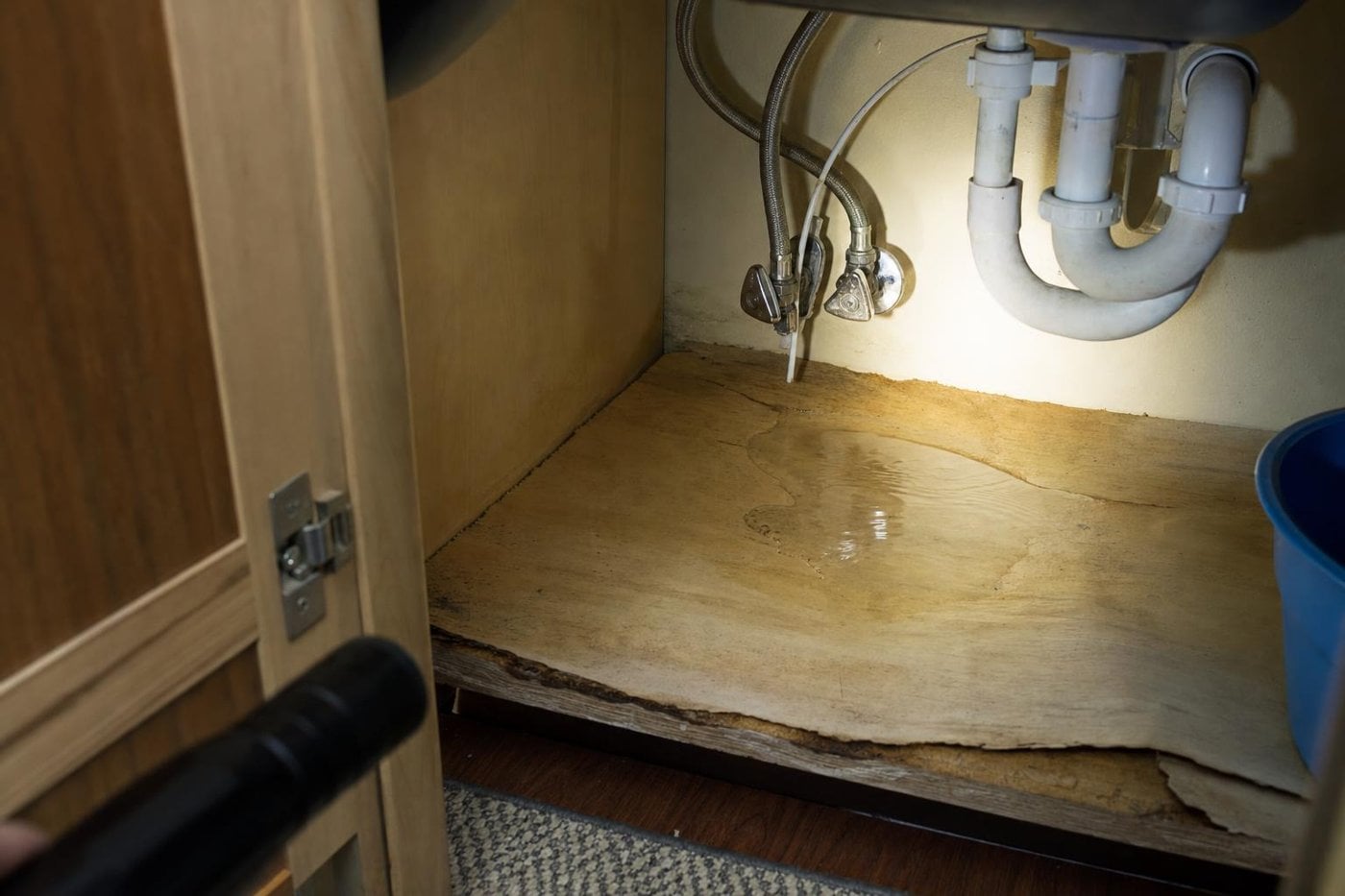
Mold and mildew need three things to grow: a food source (almost any organic material), warmth and moisture. A musty smell in a cabinet under a sink, in a closet on an exterior wall or coming up from carpet near a bathroom is a strong sign that moisture is present somewhere it should not be.
The EPA’s mold guidance is direct: fix the moisture source first, then dry wet materials within 24 to 48 hours to prevent mold growth. After that window, mold can establish itself on drywall, wood and carpet padding quickly.
What it usually means: A slow drip from a supply line or drain connection inside a wall or cabinet, a pinhole leak in copper pipe or a failed seal around a fixture. Mold inside a wall cavity often goes undetected until the smell is noticeable from the room.
What to do next: Open cabinet doors under every sink and look for discoloration, swelling of the cabinet floor, or any visible drips or mineral deposits on the pipes. Press on the wall behind the pipes. Soft or spongy drywall means moisture has been present for a while. If you find mold covering an area larger than about ten square feet, EPA guidance suggests getting professional help. For anything inside a wall, call a licensed plumber rather than opening the wall yourself.
4. Stains, Bubbling Paint or Soft Spots on Walls and Ceilings
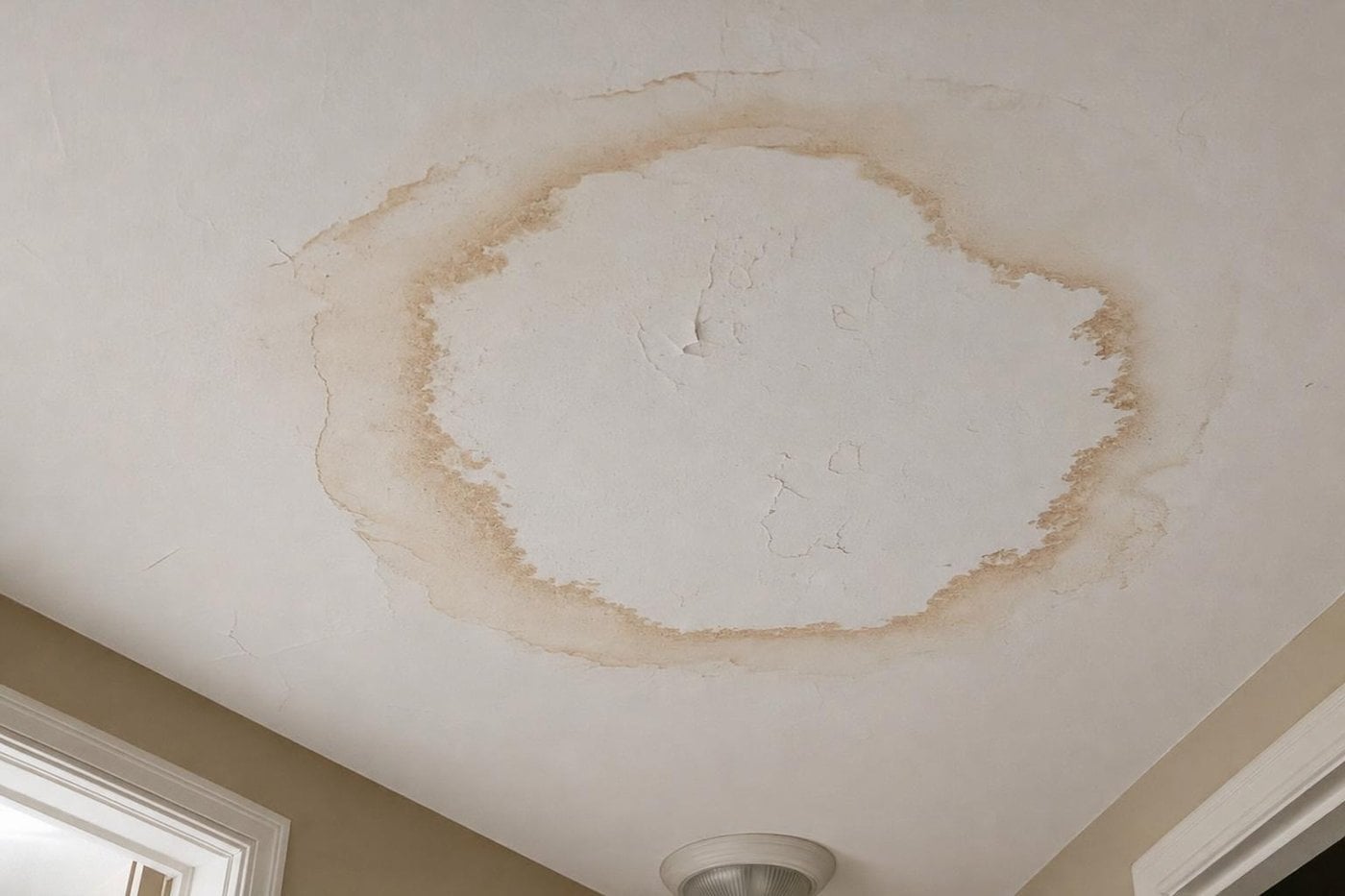
Water stains on a ceiling are easy to spot but easy to dismiss, especially if they look dry. The problem is that a stain you can see on the surface of drywall usually means the material behind it has already absorbed a substantial amount of moisture.
Bubbling or peeling paint on a wall, a yellowish ring on a ceiling below an upstairs bathroom, or a soft spot when you press gently on drywall all point to the same thing: water is or was pooling somewhere behind the surface.
What it usually means: A slow leak from a supply line, drain or wax ring seal above the stain. Bathroom floors are a common source because water gets under the floor covering around the toilet base or tub surround and migrates through the subfloor before appearing as a ceiling stain one floor below.
What to do next: Do not paint over a water stain without finding and fixing the source first. The stain will return and the moisture will continue damaging the structure. If the stain is directly below a bathroom or kitchen, check that room for the signs in items 5 and 6. If the stain is wet or growing, call a plumber promptly. Before touching or inspecting near any stain close to light fixtures, outlets or appliances, turn off the electrical circuit to that area at the breaker panel first.
5. Warped, Cupped or Soft Flooring Near a Tub, Shower or Toilet
Flooring reacts to sustained moisture in ways that are hard to miss once you know what to look for. Hardwood and engineered wood floors will cup (the edges of each plank lift higher than the center) or warp when moisture gets underneath them. Vinyl and laminate floors can bubble or separate at the seams. Tile floors near a shower or toilet may develop loose tiles or cracked grout lines, which can be a sign that the subfloor below has shifted from water damage.
Soft spots in vinyl or linoleum near the base of a toilet are a particularly common sign. The wax ring seal at the base of a toilet can fail slowly, releasing small amounts of water with every flush and gradually softening the subfloor.
What to do next: Get down and press on any flooring that looks unusual near a water source. If it gives under your fingers, the subfloor is compromised. Check the caulk line around the tub or shower surround for gaps or missing sections that allow water to get behind the tile. Cracked grout should be repaired promptly. For a soft or spongy floor around a toilet, the wax ring may need replacing, and a licensed plumber should check the subfloor at the same time.
6. The Sound of Running Water or a Hissing Toilet When Nothing Is On
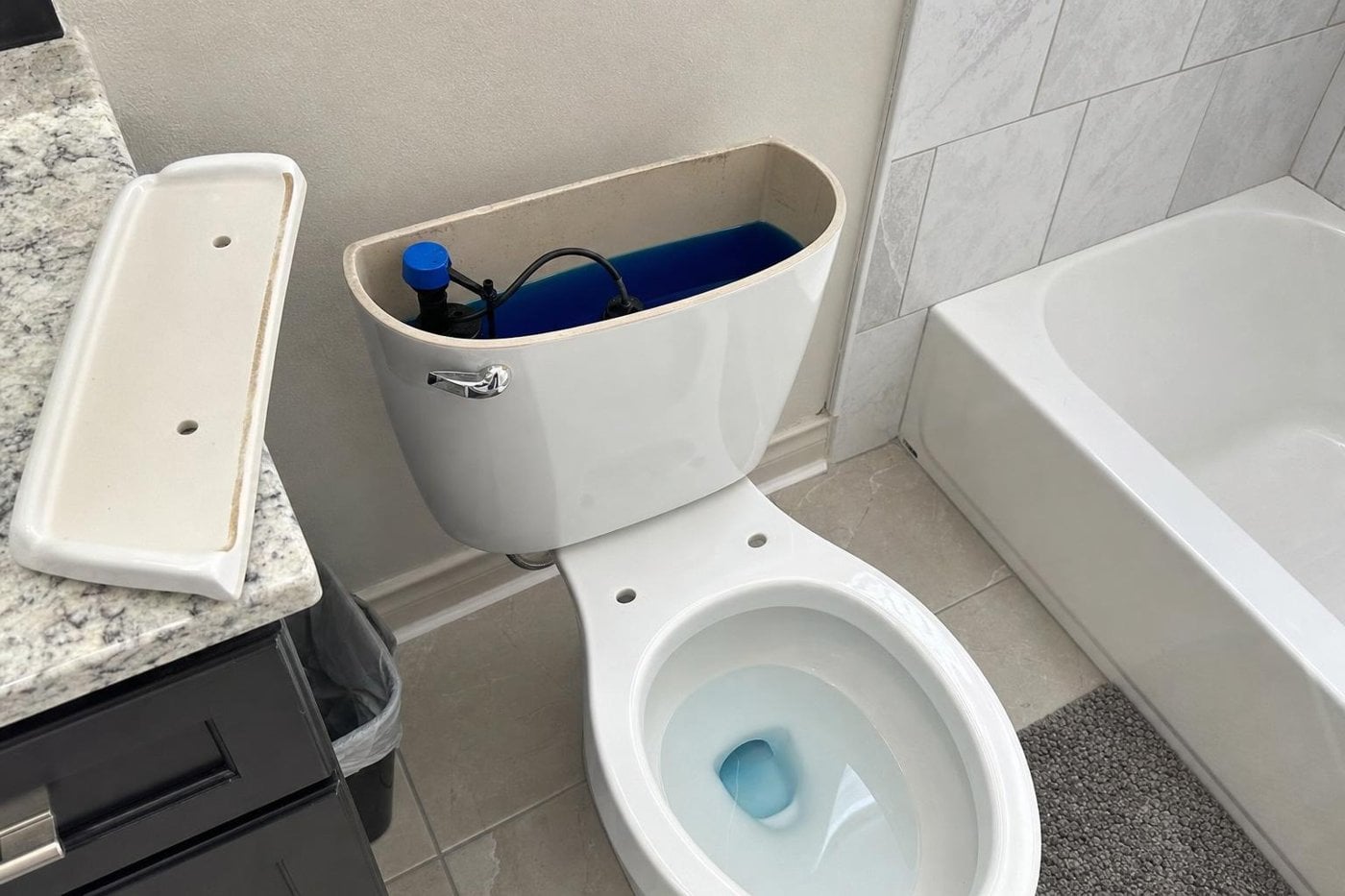
If your house is quiet and you can hear what sounds like water trickling or a faint hiss coming from a wall or bathroom, trust that sound. Pipes do not make noise when no water is moving through them. A hissing or running sound from a toilet is one of the most common signs of a leaking flapper valve, the rubber seal at the bottom of the tank that controls water flow into the bowl.
The toilet dye test: This test comes directly from EPA WaterSense guidance and takes about fifteen minutes. Remove the lid from the toilet tank. Add a few drops of food coloring to the water in the tank. Do not flush. Wait about fifteen minutes. Then look at the water in the bowl. If the color has seeped into the bowl without flushing, the flapper is not sealing properly and water is continuously leaking from the tank into the bowl. This kind of silent leak can waste a substantial amount of water over time without ever being visible on the floor.
What to do next: A flapper is an inexpensive part available at any hardware store and can often be replaced without calling a plumber. For sounds inside walls, particularly a steady hiss or dripping sound that does not come from any fixture, call a licensed plumber. Do not open walls near electrical wiring without first switching off the circuit at the breaker.
7. An Unusually Green, Soggy or Sunken Patch in the Yard
Your lawn should be relatively consistent in color and texture. If one area stays noticeably greener, stays wet between rain events, smells like sewer or has visibly sunk below the grade of the surrounding soil, the most likely explanation is a leak in the underground service line or sewer line running beneath it.
The service line is the pipe that runs from the water main at the street to your house. Responsibility for maintaining and repairing that line varies by location. In many municipalities, the homeowner is responsible for the portion of the line from the meter to the house. In others, the utility covers part of it.
What to do next: Call your water utility first. They can often tell you where their responsibility ends and yours begins, and some utilities will come out to check for a service-line leak at no charge. If water is pooling near the foundation of the house, that is an urgent situation. Sustained moisture against a foundation can affect structural integrity over time. Call a licensed plumber promptly, and mention the location when you call so they can assess whether a slab leak is involved.
Places to Check Twice a Year
Even without an obvious symptom, a quick check of these spots in spring and fall can catch a slow leak before it becomes a big repair.
- Under every sink: Look for drips on supply lines, mineral deposits on pipes (white or greenish crust means past or current moisture) and soft cabinet flooring.
- Behind and around the toilet: Check the base for any water on the floor and look at the supply line connection at the bottom of the tank.
- Around the water heater base: A ring of rust or discoloration on the floor indicates a slow drip. Also check the temperature and pressure relief valve pipe for signs of discharge.
- Washing machine hoses: Look for bulges, cracks or wet spots where the hose connects to the wall or the machine. Hoses that are five years old or older are worth replacing preventively.
- Refrigerator ice maker line: Pull the refrigerator away from the wall and check the small water line at the back for kinks, cracks or wet spots on the floor behind it.
- Outdoor spigots before freezing weather: Disconnect garden hoses and check that the spigot shuts off completely. A spigot that drips after the hose is removed needs a new washer before temperatures drop.
Two Things Every Homeowner Should Know
Know where your main water shut-off valve is and that it actually works. In a plumbing emergency, the first thing a plumber will ask is whether you have already shut off the water. The main shut-off is typically inside the house near where the supply line enters, in a utility room or crawl space, or outside near the foundation. Turn it once a year just to confirm it moves freely.
Keep electricity and water separate during any leak investigation. Before inspecting any area where water is near outlets, light fixtures or appliances, turn off the breaker to that area first. For any leak you cannot locate visually, any leak inside a wall and any leak under a concrete slab, a licensed plumber is the right call. Slab leaks in particular require specialized detection equipment and are not a DIY repair.
Quick-Reference Checklist
- Compare recent water bills for unexplained increases
- Run the meter test: shut everything off, read the meter, wait one to two hours, read again
- Sniff under sinks, in closets and near carpeted bathrooms for musty odors
- Look for ceiling stains, bubbling paint or soft drywall, especially below bathrooms
- Press on flooring near toilets, tubs and showers for soft or spongy spots
- Run the toilet dye test: food coloring in the tank, wait fifteen minutes, check the bowl
- Walk the yard for unusually green, wet or sunken patches near the foundation
- Check under sinks, washing machine hoses, water heater base and outdoor spigots twice a year
- Locate the main water shut-off valve and confirm it turns
- Turn off electricity at the breaker before inspecting water near any outlet or appliance
- Call a licensed plumber for leaks inside walls, under slabs or anywhere you cannot safely reach
The information in this article is for general informational purposes only. We are not doctors, medical professionals, lawyers or financial advisors, and nothing on this site is intended as medical, legal or financial advice. Always consult a qualified professional about your own circumstances before acting on any information here. We accept no liability for any loss or damage arising from the use of, or reliance on, the information in this article.
- 0shares
- Facebook0
- Twitter0
- Pinterest0