
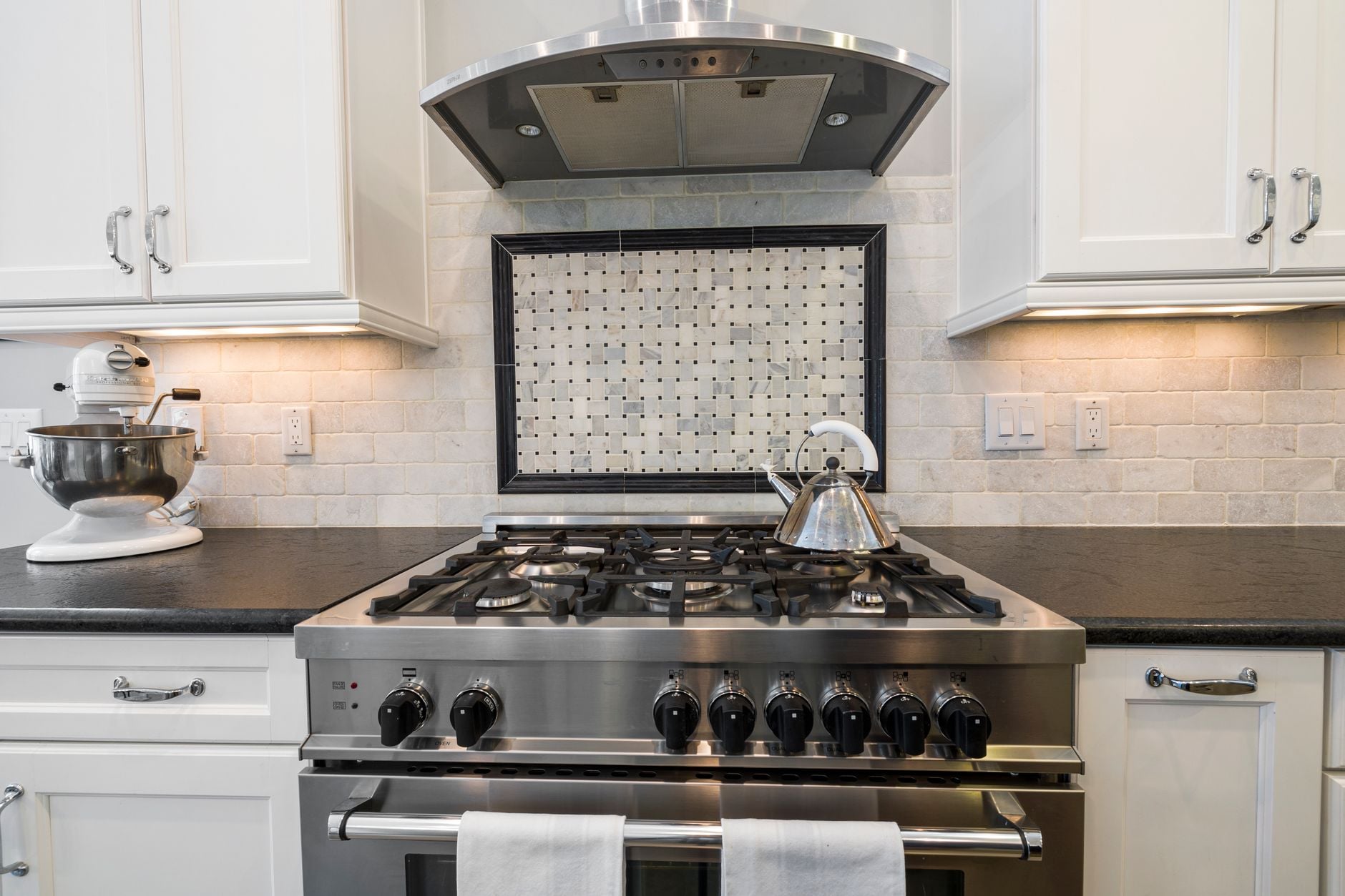
Your range hood does one job: pull grease, smoke, and cooking odors out of your kitchen before they settle on your cabinets, walls, and ceiling. When the filter is clogged with built-up grease, it does that job poorly. The fan works harder, airflow drops, and more smoke and smell stay in your kitchen. During the holidays, when you are roasting, frying, and simmering for hours at a time, that becomes a real problem fast.
Cleaning the filter before heavy cooking season is one of the most practical things you can do to keep your kitchen functional and your home safer. This guide walks you through the whole process, including what to do based on your filter type, how to handle the hood housing while you have things apart, and what fire safety habits to keep in mind when grease is involved.
Why a Dirty Range Hood Filter Is a Problem Worth Solving Now
Every time you cook, tiny grease particles rise with the steam and smoke. The range hood filter catches those particles before they get pulled into the fan motor or vented out through your ductwork. Over time, that trapped grease accumulates into a thick, sticky layer that blocks airflow.
A clogged filter makes your hood fan work harder while actually pulling less smoke and odor away from the cooktop. That means more residue landing on your kitchen surfaces, more lingering smell in your home, and a fan motor that is under more stress than it should be. During a Thanksgiving or holiday cooking marathon, that combination shows up quickly.
There is also a fire safety dimension here. The National Fire Protection Association and the U.S. Fire Administration both point to cooking as the leading cause of home fires and home fire injuries. Grease buildup anywhere near your cooktop, including inside a hood filter, can feed a fire if one starts. Keeping that filter clean is part of keeping your kitchen safe, not just functional.
Step 1: Check Your Manual for Filter Type and Cleaning Schedule
Before you do anything else, pull out your range hood manual or look it up online using your hood’s model number. This step matters because there are different filter types, and they are not all cleaned the same way. Using the wrong method on the wrong filter can damage it or leave it less effective.
The two main categories are:
- Metal mesh or baffle filters: These grease filters are used on ducted hoods that vent air outside your home, and most ductless hoods have them too. They are usually aluminum or stainless steel and are designed to be washed and reused. Many can go in the dishwasher, though some finishes can discolor, so verify that in your manual first.
- Charcoal or carbon filters: These are found on ductless, recirculating hoods, usually alongside a metal grease filter, and they absorb odors before the air returns to the kitchen. Standard charcoal filters cannot be washed and must be replaced on the schedule your manual specifies. A few hoods use regenerable carbon filters with their own cleaning instructions, so check which kind you have.
Your manual will also tell you how often the filter should be cleaned or replaced. For heavy cooks, that interval may be shorter than the standard recommendation. If you have not cleaned the filter in several months and you cook frequently, do it now regardless of where you are in the schedule.
Step 2: Turn Off and Unplug the Range Hood
Before you touch the filter, switch the hood off and unplug it from the outlet, or flip the breaker for that circuit if the unit is hardwired. You are going to be handling the filter and wiping around electrical components and the fan housing. Working on a powered appliance is not worth the risk.
If you are unsure how to cut power safely, check your manual or consult an electrician. This is a simple appliance in most homes, but do not skip this step.
Step 3: Remove the Filter

Most range hood filters slide out or pop out from the underside of the hood. Some have a small latch or tab you press to release them. Refer to your manual if the removal is not obvious. Metal mesh filters and baffle filters are usually easy to detach without tools.
Hold the filter over a trash can as you remove it if it is heavily loaded with grease. Dripping grease on your stovetop or floor is a minor annoyance, but it is worth avoiding.
Step 4: Wash Metal Mesh or Baffle Filters
This is the main cleaning step for ducted hoods with reusable metal filters. Here is what works:
- Fill your sink or a large basin with very hot water. The hotter the water, the better it cuts through solidified grease. Use the hottest water your tap produces.
- Add a generous squirt of degreasing dish soap and two or three spoonfuls of baking soda. The dish soap attacks the grease, and the baking soda boosts its effectiveness and helps lift stubborn buildup. Stir to combine.
- Submerge the filter and let it soak. Filters with heavy, baked-on grease need a longer soak than lightly soiled ones, so check the filter as it soaks and give it more time if the grease is not loosening.
- Scrub gently with a soft-bristled brush. An old toothbrush works for mesh filters. A dish brush with a long handle is easier for larger baffle filters. Work the brush through the mesh or along the baffles to dislodge grease that did not soak off. Avoid abrasive scrubbers that could scratch or damage the filter surface.
- Rinse thoroughly with hot water. Make sure all soap and loosened grease is gone. Hold the filter up to the light to check that the mesh is clear and open, not still blocked by residue.
- Let the filter dry completely before reinstalling it. Prop it upright to air dry, or dry it thoroughly with a soft cloth.
If your manual confirms the filter is dishwasher safe, you can run it through the dishwasher instead of hand washing, following the manual’s instructions for rack and cycle. Some manufacturers, Bosch among them, warn that metal filters can discolor in the dishwasher, so read that section of your manual carefully before choosing this route.
Step 5: Replace Charcoal Filters (Do Not Wash Them)
If your hood is a ductless, recirculating model, you have charcoal or carbon filters, usually in addition to a metal grease filter. These filters work by absorbing cooking odors as air passes through them. That absorption capacity is used up over time and cannot be restored by washing.
KitchenAid and Samsung both say their charcoal filters are not washable. Unless your manual describes a regenerable filter, replacement is the only option.
Check your manual for the recommended replacement interval and the correct filter part number. Many manufacturers sell replacement charcoal filters directly, and they are also available through appliance parts retailers and major online marketplaces. Install the new filter according to the manual instructions before reinstalling everything.
Step 6: Clean the Hood Housing While You Have Access
With the filter out, you have a good view of the underside of the hood and the fan housing. Grease does not stay confined to the filter. It coats the interior surfaces of the hood too, and that buildup should be addressed while you are already in there.
Spray a kitchen degreaser on the underside of the hood and the interior surfaces you can safely reach. Let it sit for a minute or two, then wipe it down with a cloth or paper towels. Work inward toward the fan housing, stopping before you reach any electrical components or wiring.
Do not spray liquid directly into the fan housing or onto the motor. Wipe carefully with a lightly dampened cloth if grease has accumulated around the fan blades. If the interior is heavily soiled in areas you cannot safely wipe without getting close to electrical parts, that is a job for a professional appliance service technician.
Wipe the exterior of the hood as well, including the underside panels and control surfaces. Grease film on exterior surfaces is easy to miss.
Step 7: Reinstall the Filter and Restore Power
Once the metal filter is fully dry or the new charcoal filter is in place, slide or snap it back into the hood according to your manual. Make sure it seats properly. A filter that is not locked in correctly will rattle during operation and may not filter effectively.
Plug the hood back in or restore power at the breaker. Run the fan on a low setting for a minute to confirm everything is working normally before you close up and move on.
Fire Safety Habits to Keep in Place During Holiday Cooking
A clean range hood filter is one layer of kitchen safety, but it works alongside your habits at the stove. The National Fire Protection Association reports that cooking is the leading cause of home fires and home fire injuries in the United States. Grease buildup anywhere in the cooking area, including in filters, inside pots, and on burner grates, can feed a fire once one starts.
Keep these habits in place throughout the holiday season:
- Never leave the stove unattended while frying. The NFPA says to stay in the kitchen when frying on the stovetop. If you see wisps of smoke or smell the oil, turn off the burner, because smoke means the oil is too hot.
- If a grease fire starts in a pan, slide a lid over it and turn off the burner. Covering the pan cuts off the oxygen. Leave the lid on until the pan has cooled completely, because the fire could start again. If the fire does not go out, or you do not feel comfortable sliding a lid over the pan, get everyone out and call 911 from outside.
- Never pour water on a grease fire. Water causes burning grease to splatter violently and can send flames across the kitchen.
- Keep a working fire extinguisher rated for grease fires in or near the kitchen. Look for Class B on the label, or a multipurpose B-C or A-B-C model. The U.S. Fire Administration advises keeping it easy to reach and checking its pressure gauge, and everyone in the household should know where it is and how to use it. Use it only on a small fire, with a clear way out.
- Keep the cooking area clear of towels, paper bags, and other flammables. During busy holiday cooking sessions, it is easy for dish towels and packaging to migrate close to the burners.
Quick Pre-Holiday Range Hood Checklist
Use this before your first big holiday cooking session:
- Locate your range hood manual and confirm the filter type (metal mesh, baffle, or charcoal).
- Turn off and unplug the hood before doing any work on it.
- Remove the filter and inspect the buildup level.
- For metal filters: soak in hot water with degreasing dish soap and baking soda, scrub gently, rinse, and dry completely before reinstalling. Confirm dishwasher safety in the manual if using that method.
- For charcoal filters: replace with the correct part number on the schedule in your manual. Do not wash.
- Wipe down the interior hood surfaces and exterior panels with a kitchen degreaser while the filter is out.
- Reinstall the filter, restore power, and test the fan.
- Review grease fire safety basics with anyone who will be cooking: cover pan fires with a lid, turn off the burner, never use water on burning grease, and get out and call 911 if the fire does not go out.
- Confirm your kitchen fire extinguisher is easy to reach and its pressure gauge reads in the normal range.
Once the filter is clean and back in place, your hood will move air the way it is supposed to, and you can get through a full day of holiday cooking without your kitchen turning into a smoke-filled, grease-smelling mess.
The information in this article is for general informational purposes only. We are not doctors, medical professionals, lawyers or financial advisors, and nothing on this site is intended as medical, legal or financial advice. Always consult a qualified professional about your own circumstances before acting on any information here. We accept no liability for any loss or damage arising from the use of, or reliance on, the information in this article.
- 0shares
- Facebook0
- Twitter0
- Pinterest0