
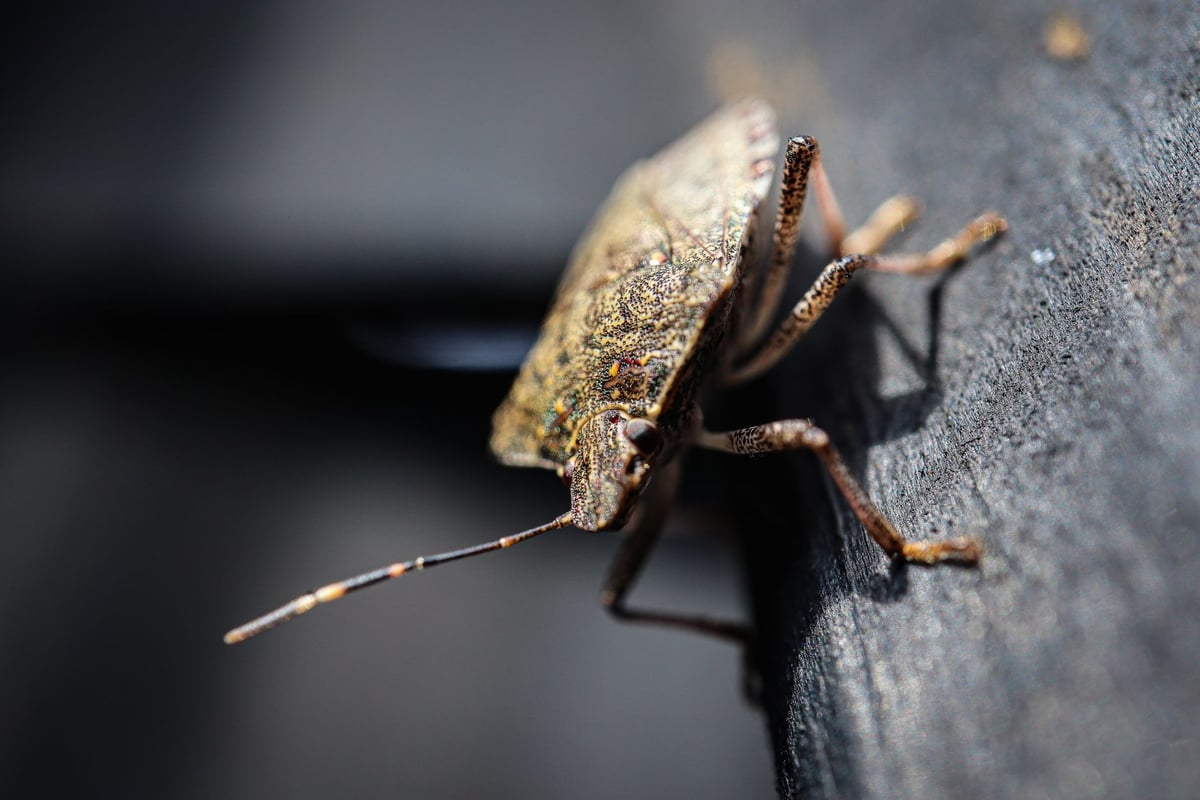
Every fall, as temperatures start to drop, brown marmorated stink bugs do something that frustrates homeowners from New England to the Pacific Northwest. They look for a warm place to ride out the winter, and your house fits the description perfectly. A small gap around a window frame, a torn screen, or a crack where a cable enters the wall is all the invitation they need.
The brown marmorated stink bug is an invasive species originally from East Asia. It has spread across much of the United States, and it arrived here without the natural enemies that keep it in check in Asia. That matters to you as a homeowner because populations can be large, and the bugs can enter houses in large numbers.
Stink bugs hiding in your walls or attic over winter do not bite people or pets, do not breed inside your home, and do not cause structural damage. They do wander into living areas on warmer winter days, though, and crushing or disturbing one releases the unpleasant odor that gives them their name. Penn State Extension notes that in a small number of sensitive people the odor can trigger allergy symptoms.
University extension services at Penn State, Virginia Tech, and the University of Maryland have published guidance on managing stink bug invasions. The strategy they consistently recommend is the same: seal the building before the bugs arrive. The six steps below cover the most common entry points, plus what to do if they are already inside.
Why Fall Is the Window That Matters
Stink bugs begin searching for overwintering sites in late summer and early fall. Penn State Extension puts the search at September through October. They are looking for protected voids, spaces inside walls, attics, and crawl spaces where they can stay dormant through the cold months.
Once they are inside those wall voids, they are essentially out of reach. On warm days in winter and early spring, some become active again and crawl out through gaps under or behind baseboards, around window and door trim, and around ceiling lights and exhaust fans, which is how they end up on your windowsill in February. If that is already happening, Penn State advises finding those indoor gaps and sealing them with caulk so the bugs cannot crawl out into your living space. Sealing your home in late summer or early fall, before they begin that migration, gives you the best chance of keeping them outside where they belong.
The 6 Prevention Steps
1. Seal Cracks Around Windows, Doors, Siding, and the Chimney
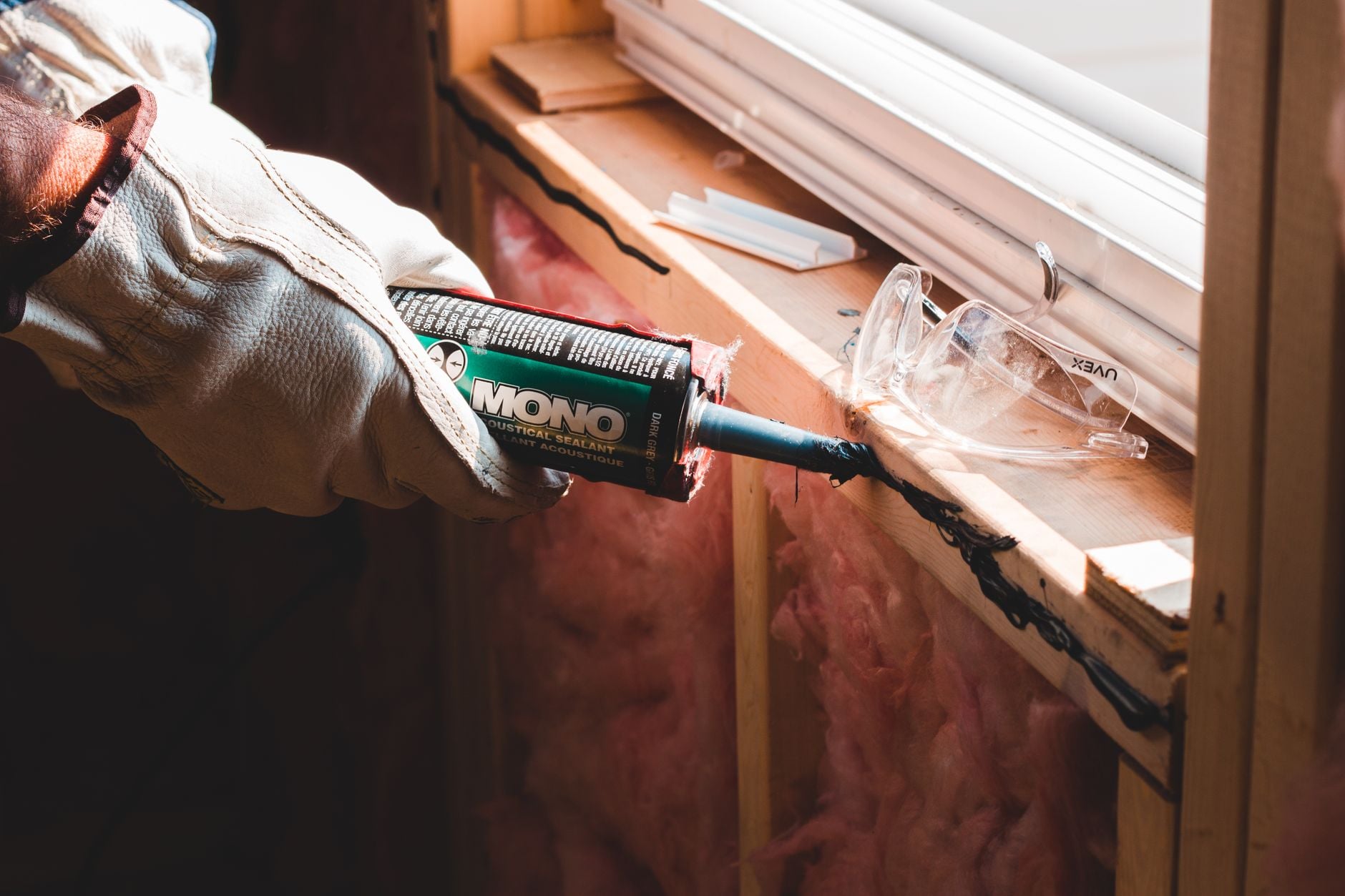
Grab a tube of good quality silicone or silicone-latex caulk and do a slow walk around the outside of your home, looking for cracks and gaps. Virginia Tech research found that slits narrower than about 3 millimeters (roughly an eighth of an inch) and holes smaller than about 7 millimeters keep out most of these bugs, so anything larger is worth sealing.
Pay close attention to the points where window and door frames meet the siding. Caulk also around any area where the siding changes material, such as the transition between brick and wood, and behind the chimney where it meets the exterior wall. Gaps in those spots are easy to miss.
Penn State Extension lists cracks around windows, doors, siding, utility pipes, behind chimneys, and underneath wood fascia as the places to seal. Check the caulk label for its minimum application temperature before you start.
2. Repair or Replace Damaged Window and Door Screens
A screen with even a small tear, a bent corner that has pulled away from the frame, or a hole worn through near a latch is an open door for stink bugs. Walk through your home and push gently on every screen. If it flexes away from the frame or has any visible damage, it needs attention.
Screen repair kits are inexpensive and work well for small holes or tears. Larger or frame-related damage usually means replacing the screen panel, which is straightforward for most standard window sizes. While you are at it, check that screens fit snugly in their tracks. A screen that rattles in the frame is not fully seated and leaves gaps along the edges.
Purdue Extension notes that screens must be in good condition and fit tightly if they are to keep these bugs out. Do not overlook basement windows, which are frequently forgotten during screen checks.
3. Install or Replace Weatherstripping and Door Sweeps
Weatherstripping around doors compresses over time and loses its seal. If you can see daylight around a closed exterior door, feel a draft, or slide a piece of paper under the door without resistance, the seal is gone. Stink bugs can and will use that gap.
Foam or rubber weatherstripping along the top and sides of door frames is easy to apply yourself. The bottom of the door is handled by a door sweep, a strip of rubber or bristles mounted to the door’s bottom edge that presses against the threshold when the door closes. Make sure the sweep fits tightly and is in good repair.
Check sliding glass doors as well. The pile weatherstripping on sliding doors wears out and flattens, and the overlap between the panels is a common weak point. Replace worn pile seals and make sure the locking mechanism pulls the panels tight against each other.
4. Screen Attic Vents, Soffit Vents, and Chimney Openings
Your attic and soffits need ventilation to prevent moisture buildup, so you cannot simply block those vents. What you can do is make sure every vent is covered with tight mesh screen in good condition. Washington State University Extension advises screening attic and crawl space vents with mesh small enough to keep insects out.
Check the mesh on every gable vent, ridge vent cap, and soffit vent. The mesh should be intact with no tears, and it should be attached securely to the frame with no gaps at the edges. For soffit vents with cracked or missing covers, replacement vent covers with built-in screens are available at any hardware store.
For chimneys, a properly fitted chimney cap keeps insects out along with birds, squirrels, and rain. If your chimney does not have a cap, that is a gap worth closing. Penn State Extension also lists the cracks behind chimneys as an entry point to seal. Make sure any chimney cap or screen used meets local fire code requirements and does not restrict airflow below safe levels.
5. Check Around Window Air Conditioners
Window air conditioning units leave gaps that stink bugs can use. The gaps around the unit where it sits in the window frame are rarely fully sealed, and when you leave the unit in through fall, those gaps stay open during exactly the period when bugs are actively looking for a way in.
The simplest fix is to remove window AC units before fall migration starts. Store them for the season and close and latch the window fully. If removing the unit is not practical, fill the gaps around the sides and top with foam weatherstripping or use a window AC insulating wrap kit designed for this purpose. Check the foam or insulating wrap that may have come with the unit as well. That material compresses and deteriorates over time.
University of Maryland Extension lists removing window air conditioners among its prevention steps, and sealing the gaps around any unit that stays in is the next best thing.
6. Seal Gaps Where Utility Lines Enter the House
Electrical cables, cable TV or internet lines, water pipes, gas lines, and dryer vents all pass through exterior walls, and each one of those penetrations is a potential entry point. Washington State University Extension advises sealing gaps where pipes or wires enter the building.
Go around the outside of your home and look at every spot where a pipe, wire, or hose enters the wall. You will often find gaps filled loosely with old caulk that has cracked and pulled away, foam that has deteriorated, or nothing at all. Silicone caulk works well for smaller gaps. For larger openings around pipes, use an expandable foam sealant and then cover with caulk or an escutcheon plate for a finished look.
Pay particular attention to where gas lines and air conditioning refrigerant lines enter, where the dryer vent exits, and where the main electrical service enters the house. These spots are easy to overlook during regular home maintenance checks.
What To Do If Stink Bugs Are Already Inside
If bugs are already in your home, resist the urge to crush them. That releases the odor. There are two removal methods that extension services recommend consistently.
The first is a vacuum. Use a shop vac or a vacuum you are willing to dedicate to this task, because the bag or canister can pick up the smell for a while. If you use a regular household vacuum, empty the bag or canister immediately into a sealed plastic bag and take it outside. Some people place a nylon stocking inside the vacuum hose, secured with a rubber band outside the hose opening, so the bugs collect in the stocking and can be removed and disposed of without going through the machine.
The second method is a container of soapy water. Knock the bug directly into the water or hold the container under the bug and nudge it in. The bugs cannot climb out and will drown, according to University of Maryland Extension. Seal the container before disposal.
Penn State and University of Maryland Extension advise against spraying indoor insecticides for stink bugs. Indoor sprays do not stop additional bugs from emerging from wall voids, and dead bugs left inside walls can feed carpet beetles, which may then attack woolens and stored dry goods. If sealing the outside of your home completely is not possible, Penn State says exterior treatments applied by a licensed pest control operator in the fall, just before the bugs gather, may give some minor relief. Sunlight breaks the insecticide down within days to a week, and University of Maryland Extension generally does not recommend insecticides for this pest, so treat this as a last resort for next fall, not a fix for bugs already inside.
Quick-Reference Checklist Before Winter
- Caulk perimeter gaps: windows, doors, siding transitions, behind chimney
- Repair or replace screens: all windows, doors, and basement windows
- Check weatherstripping and door sweeps: all exterior doors including sliding doors
- Inspect attic and soffit vents: screen mesh intact and secure, chimney capped
- Remove or seal window AC units: before fall migration begins
- Seal utility penetrations: pipes, cables, vents, and service entries
- If bugs are inside: vacuum or soapy water, do not crush, do not spray indoor insecticides
- For large-scale problems: contact a licensed pest control professional about exterior fall treatments only
Most of these steps take an afternoon and cost very little in materials. A tube of silicone caulk, a roll of weatherstripping, and a door sweep cover the majority of the most common entry points. Starting the inspection and sealing process in late summer gives you the most time to find and close gaps before the bugs start moving.
The information in this article is for general informational purposes only. We are not doctors, medical professionals, lawyers or financial advisors, and nothing on this site is intended as medical, legal or financial advice. Always consult a qualified professional about your own circumstances before acting on any information here. We accept no liability for any loss or damage arising from the use of, or reliance on, the information in this article.
- 0shares
- Facebook0
- Twitter0
- Pinterest0