
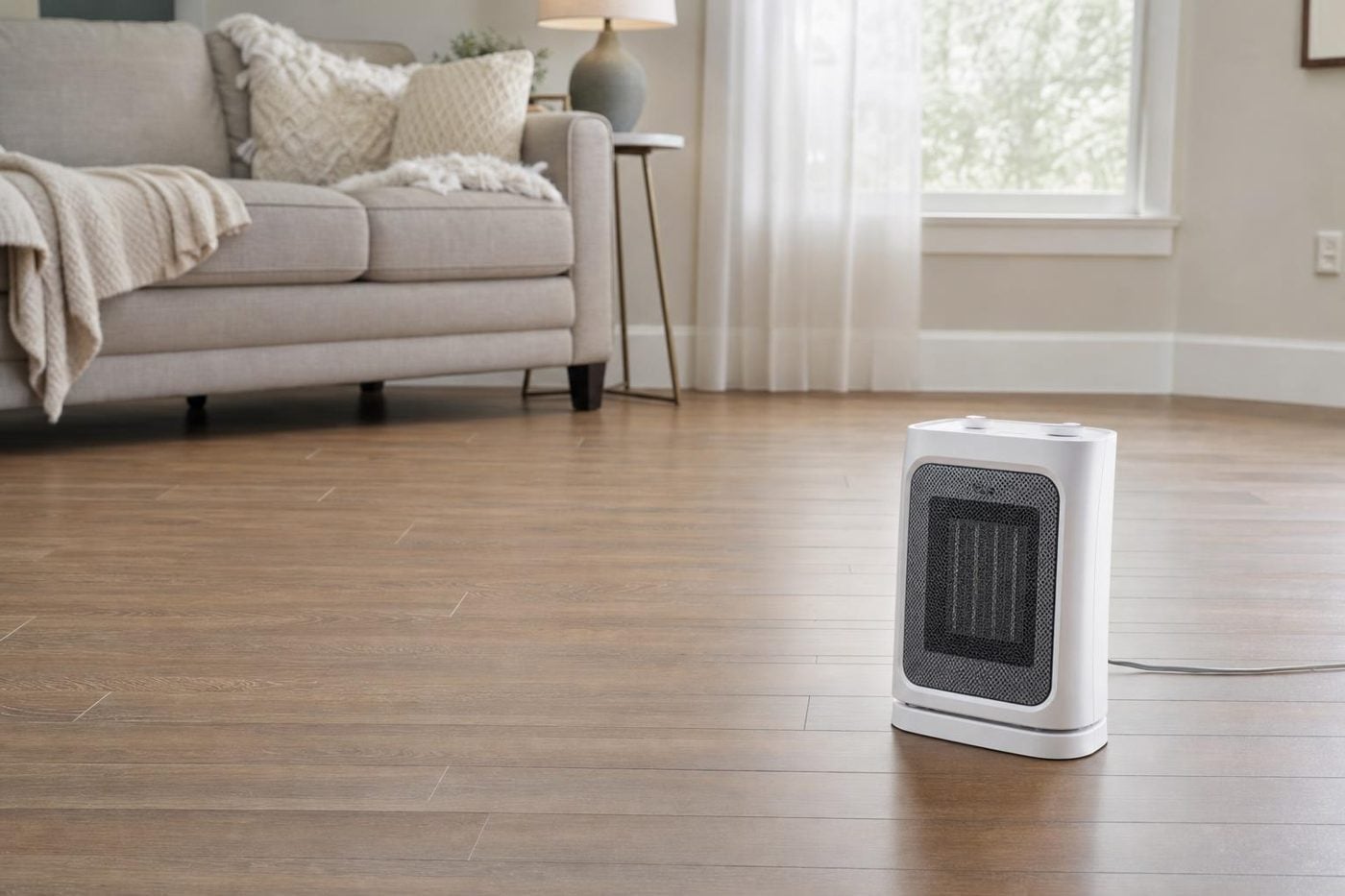
Portable space heaters are genuinely useful. They warm a single room quickly and move wherever you need them. The problem is that they are also one of the leading causes of home heating fires in the United States, according to the National Fire Protection Association (NFPA) and the U.S. Fire Administration (USFA). Most of those fires are not accidents in the unpredictable sense. They happen because of specific, repeatable habits that fire safety agencies have been warning about for years.
If you own a space heater or plan to buy one this season, the six mistakes below are worth taking seriously. Each one has a clear fix.
1. Placing It Within 3 Feet of Anything That Can Burn
According to the NFPA, heating equipment too close to things that can burn is a leading cause of home heating fire deaths. People set a heater near the couch to stay warm while watching TV, or point it toward the bed, or tuck it under a desk where a jacket is hanging. It feels harmless because nothing catches fire immediately. But heaters radiate intense heat, and flammable materials do not need to touch the heating element to ignite.
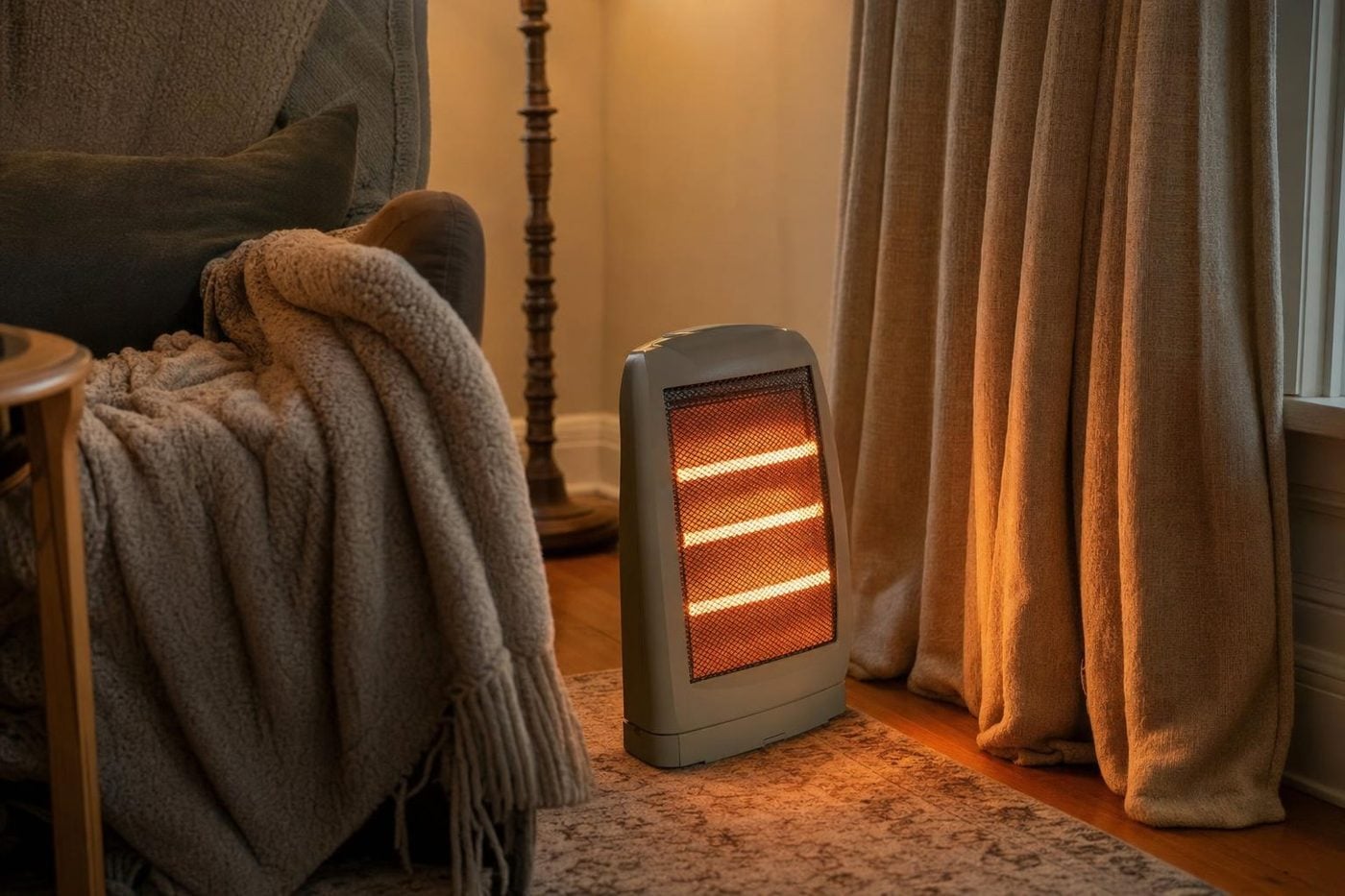
Curtains are a particular hazard because they can swing or billow and contact the heater without anyone noticing. Bedding, paper stacks, clothing piled on a chair, and upholstered furniture all carry the same risk.
The NFPA’s official guidance is clear: keep at least 3 feet of clear space on all sides of a space heater. That means in front, behind, and to both sides. Think of it as a safety bubble. If you cannot create that buffer in the spot where you want to use the heater, choose a different spot.
2. Plugging It Into an Extension Cord or Power Strip
Extension cords are convenient, and it feels logical to use one when the outlet is across the room. The issue is that space heaters draw a large amount of electrical current, often more than a standard extension cord or power strip is rated to handle safely over sustained use. That mismatch generates heat inside the cord itself, which can melt the insulation and start a fire under a rug or behind furniture where you cannot see it happening.
Power strips with surge protectors are not a solution either. Even strips rated for higher loads are not designed for the continuous, heavy draw of a space heater running for hours.
Always plug your space heater directly into a wall outlet. The CPSC (Consumer Product Safety Commission), NFPA and USFA all recommend this. If the only available outlet is too far away, use a different room or reposition your furniture. Also inspect the cord on your heater periodically. Frayed insulation, kinks, or discoloration anywhere along the cord are signs the heater should be replaced before you use it again.
3. Leaving It On While You Sleep or Leave the Room
A lot of people leave space heaters running overnight because that is when they feel coldest. Others leave them on when they step out to run an errand, figuring they will be back soon. Both habits significantly increase fire risk.
If something goes wrong while you are asleep or out of the room, there is no one to respond in the critical first seconds. A heater that tips over, overheats, or ignites a nearby object can turn into a serious fire in minutes.
The guidance from NFPA and USFA is consistent: turn your space heater off every time you leave the room, and never run it while you are sleeping. If you want warmth while falling asleep, use the heater to bring the room to a comfortable temperature, then shut it off before you close your eyes. Many newer models have built-in timers that will cut power automatically. Using that feature is a reasonable backup, but it does not replace the habit of turning the heater off yourself.
4. Using a Heater Without Safety Certifications or Automatic Shut-Off Features
Not all space heaters are built to the same safety standard. Deeply discounted heaters, older hand-me-down units, and some imported models may lack basic safety features that reputable manufacturers now treat as standard.
There are two things to look for before you buy or use any space heater.
First, check for a label from a recognized independent testing laboratory. Look for UL (Underwriters Laboratories), CSA (Canadian Standards Association), or ETL (Intertek). These marks mean the heater has been tested against established safety standards. If there is no such label, do not use the heater.
Second, confirm the heater has both an automatic tip-over shut-off and an overheat protection shut-off. Tip-over protection cuts power the moment the unit falls or is knocked sideways. Overheat protection shuts the unit down if internal temperatures exceed a safe threshold. These two features exist specifically to interrupt the most common failure scenarios.
Before this heating season, locate your heater and check for both the safety certification label and these two features. If you cannot confirm either, replace the unit. The CPSC maintains a recall database at cpsc.gov where you can also check whether your model has been recalled.
5. Setting It on a Rug, Carpet, or Table
Many people place space heaters on carpet because that is where the floor space is, or set them on a table to direct heat toward their face while working. Both placements carry real risks.
Carpet and rugs are flammable. If a heater overheats or tips over onto carpet, the material beneath it can ignite. Rugs also create an unstable surface, which makes tip-overs more likely in the first place. Tables introduce height, which means a tip-over sends a hot unit falling further with more force, and tables themselves can be combustible.
Place your space heater on a hard, flat, nonflammable floor surface. Tile, hardwood, and concrete are all appropriate. Keep it away from high-traffic zones where children or pets could knock it over. If you have young children or animals in the home, think carefully about whether a space heater is the right solution for that room, or whether there is a safer heating option.
Also consider the heater’s position relative to doorways and walkways. A heater sitting in a path that people regularly cross is an accident waiting to happen.
6. Using a Fuel-Burning Heater Indoors Without Proper Venting
Propane heaters, kerosene heaters, and similar fuel-burning devices produce heat through combustion. That combustion also produces carbon monoxide (CO), a colorless, odorless gas that can cause unconsciousness and death at high concentrations. Using these heaters in an enclosed indoor space without adequate ventilation is one of the most dangerous heating mistakes possible.
Some fuel-burning heaters are labeled for indoor use with ventilation requirements. Many others are explicitly rated for outdoor or well-ventilated spaces only. Using an outdoor-rated heater inside, even briefly, is a serious CO poisoning risk.
If you use any fuel-burning heater, read the manufacturer’s label carefully and follow the ventilation requirements exactly. If the unit is not rated for indoor use, do not bring it inside. The CPSC recommends a working carbon monoxide alarm on every level of the home and outside sleeping areas. CO detectors should be tested monthly, just like smoke alarms.
Speaking of smoke alarms: make sure yours are working and within their service life (most units need replacement after 10 years). A functioning smoke alarm gives you the early warning you need to get out safely if something does go wrong.
A Few More Habits Worth Building
Beyond the six mistakes above, a couple of additional steps are worth adding to your routine.
Inspect the power cord every season. Look for any cracking, fraying, or discoloration along the entire length of the cord and at both ends. A damaged cord on any appliance is a fire hazard, but on a high-draw device like a space heater, it is especially serious.
Test your smoke alarms and CO detectors monthly. Press the test button on each unit and confirm the alarm sounds. Replace batteries at least once a year, or invest in units with sealed 10-year batteries. If an alarm is more than 10 years old, replace the entire unit.
These two steps take less than five minutes and meaningfully improve your odds of catching a problem before it becomes a fire.
Quick-Reference Checklist
- 3-foot clearance: Keep all flammable materials (curtains, bedding, furniture, clothes, paper) at least 3 feet away from the heater on all sides.
- Wall outlet only: Plug the heater directly into a wall outlet. No extension cords, no power strips.
- Off when you leave or sleep: Shut the heater off every time you leave the room and before you fall asleep.
- Check for safety labels: Look for UL, CSA, or ETL certification. Confirm the unit has automatic tip-over shut-off and overheat protection.
- Hard floor only: Set the heater on a hard, flat, nonflammable surface. No carpet, rugs, or tables. Keep it away from areas where kids or pets walk.
- No indoor fuel-burning without venting: Only use fuel-burning heaters with the ventilation their label requires. Never use an outdoor-rated unit inside. Run CO detectors on every level.
- Inspect the cord: Check for fraying, cracking, or discoloration before each heating season.
- Test alarms monthly: Press the test button on every smoke alarm and CO detector. Replace units older than 10 years.
- 0shares
- Facebook0
- Twitter0
- Pinterest0