
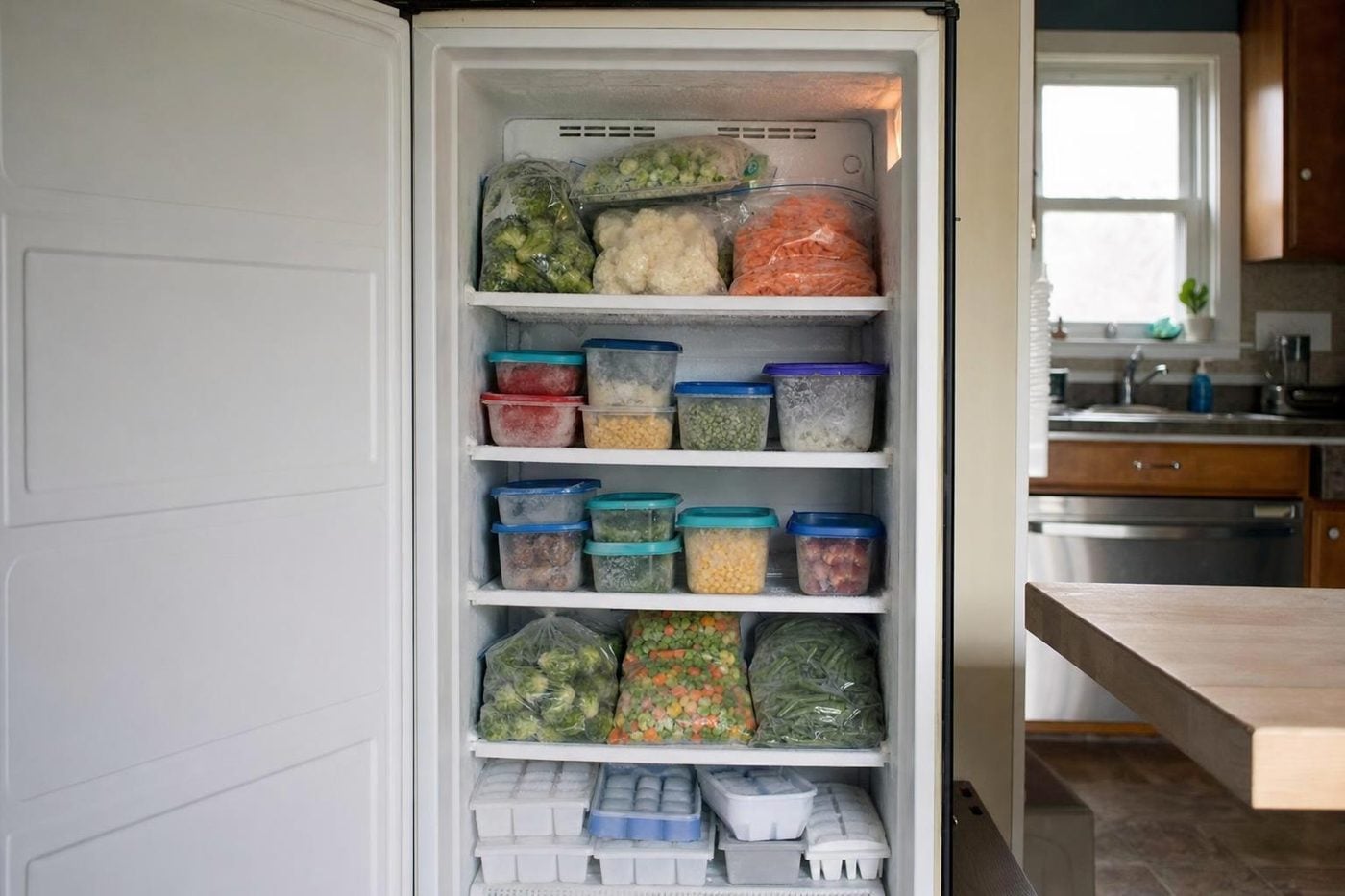
The freezer is one of the most reliable food-safety tools in your home. According to the USDA, food kept at a constant 0°F (minus 18°C) is safe indefinitely because freezing keeps bacteria from growing.
But “safe indefinitely” doesn’t mean “comes out tasting good.” Freezing can shred the texture of certain foods, turn creamy sauces into broken, oily messes, and cause glass bottles to shatter in your freezer drawer. A handful of items also create real safety concerns, not just quality ones.
The eight foods below cover both categories. For each one, you’ll find what most people do, what actually goes wrong, and what to do instead. A quick-reference checklist is at the bottom.
1. Eggs in the Shell
A lot of people buy eggs in bulk and figure the freezer is the logical next step when they can’t use them in time. It seems sensible. It isn’t.
The USDA’s “Freezing and Food Safety” guidance specifically states that you should not freeze eggs still in their shells. When liquid inside the egg expands during freezing, the shell can crack. A cracked shell exposes the egg to bacteria and makes the egg unsafe.
The fix is easy. Crack the eggs, beat the yolks and whites together, and pour the mixture into a freezer-safe container or ice cube tray. You can also freeze yolks and whites separately if your recipes call for one or the other. Label the container with the date and the number of eggs. Frozen beaten eggs maintain quality for up to a year, according to USDA guidance.
This is a safety concern, not just a quality one. A cracked shell in the freezer means potential bacterial contamination when the egg thaws.
2. Unopened Cans of Food
Maybe the pantry shelf froze in an unheated garage over winter, or someone thought putting a can of soup directly in the freezer would be faster than transferring it. Either way, freezing food inside a metal can is a problem.
The USDA says clearly: do not freeze canned foods in their cans. The liquid inside expands when it freezes, which can cause the seams of the can to burst or the lid to pop. A compromised can is not just a mess. Damaged seals can allow contamination, and a burst can in your freezer creates a cleanup problem that can harbor bacteria.
If you have leftover canned food you won’t use right away, transfer the contents into a labeled freezer-safe bag or rigid container before freezing. Most canned foods freeze well once removed from the can.
This is both a safety and a practical concern. Burst cans can contaminate other food in the freezer.
3. Mayonnaise and Mayonnaise-Based Salads
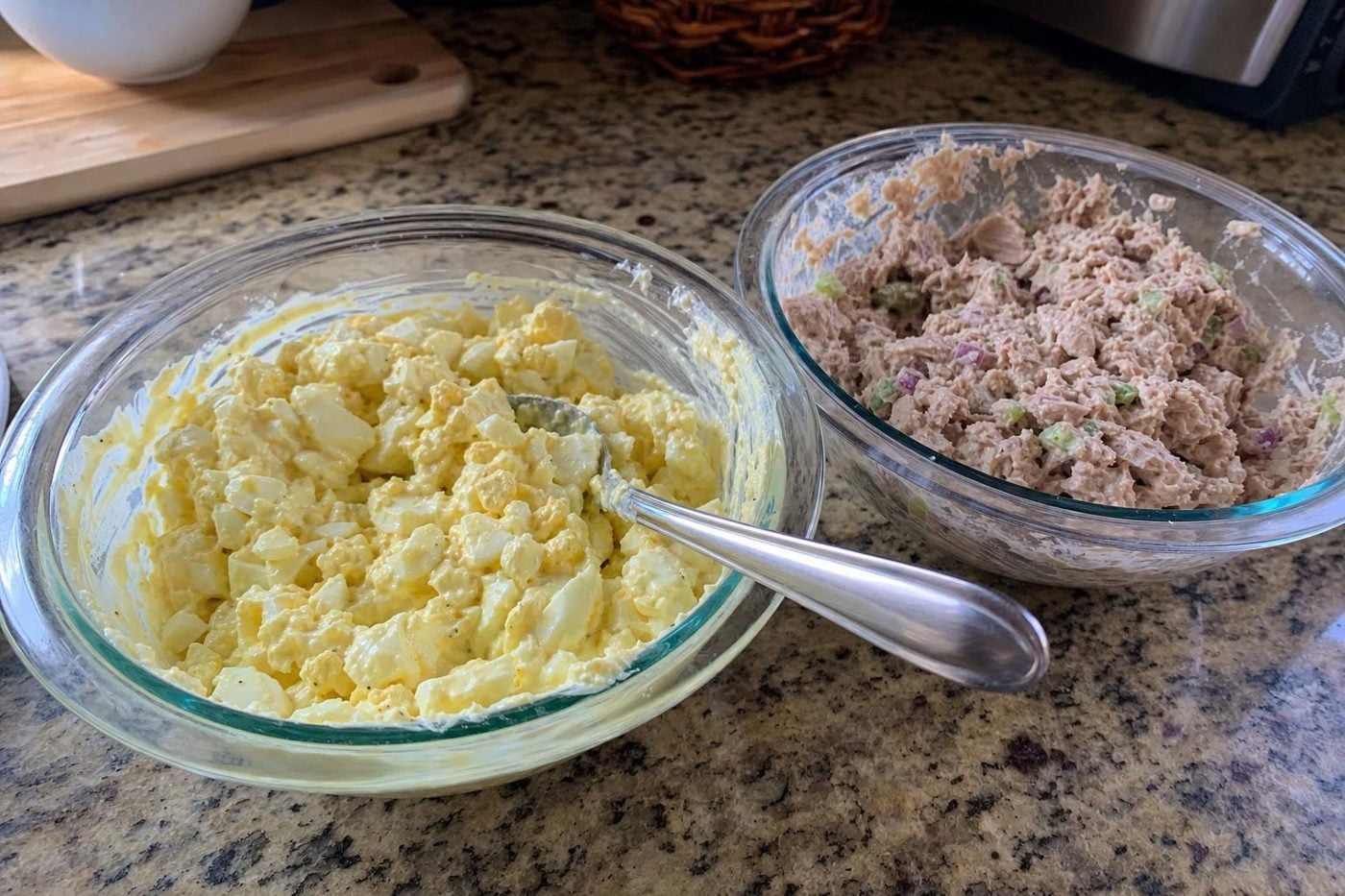
Egg salad, tuna salad, chicken salad, and any dish held together with mayonnaise should stay out of the freezer. This is primarily a quality issue, though the underlying ingredients can create a safety concern if mishandled during thawing.
Mayonnaise is an emulsion, meaning fat and water are held together in a delicate balance. Freezing breaks that emulsion. When the salad thaws, the mayonnaise separates into an oily, watery layer that no amount of stirring will fix. The texture of the protein (tuna, chicken, egg) also turns rubbery or mushy. The result is genuinely unpleasant.
The better approach: refrigerate these salads and use them within three to five days, per USDA guidelines for refrigerated leftovers. If you have more cooked chicken or tuna than you can use, freeze the protein alone before mixing in the mayonnaise. Then make fresh salad after thawing.
This is a quality problem. The food won’t be unsafe, but the texture will make it nearly inedible.
4. Lettuce, Cucumbers, and High-Water Raw Salad Vegetables
Raw leafy greens and vegetables with a very high water content, such as lettuce, cucumbers, celery, and radishes, do not survive freezing in any useful way. The water inside the cells freezes into ice crystals that puncture the cell walls. When the vegetable thaws, it releases that water and collapses into a limp, soggy, translucent version of itself.
There’s no technique or workaround that fixes this for raw salad use. A thawed cucumber is not going to go back into a salad.
If you have surplus cucumbers, consider quick pickling them in the refrigerator instead. Surplus celery can be chopped and frozen for use in cooked dishes like soups and stews, where the texture change doesn’t matter. Leafy greens like spinach can be blanched briefly and then frozen for use in cooked applications, but raw salad greens should simply be composted or used up quickly.
This is a quality problem. The vegetable will be safe to eat after thawing but functionally useless for its original purpose.
5. Cream Sauces, Gravies Thickened with Flour or Cornstarch, Sour Cream, and Soft Cheeses
This category covers a wide range of foods that share the same basic problem: they separate, go grainy, or curdle when frozen and thawed.
Cream-based sauces and gravies thickened with flour or cornstarch are particularly prone to this. They tend to weep liquid when they thaw instead of staying smooth. Sour cream becomes watery and lumpy. Soft cheeses like ricotta, cottage cheese, and cream cheese turn grainy and release whey.
That said, “quality problem” comes with an asterisk here. Many of these separated sauces and cheeses work perfectly well when stirred into a hot cooked dish or baked into a casserole. The separation becomes invisible once it’s incorporated into something else. So don’t automatically throw them away after freezing. Taste them and decide.
If you do freeze a sauce, freeze it in small portions and plan to use it in a cooked dish.
This is a quality problem, with some flexibility depending on how you plan to use the food after thawing.
6. Fried Foods
Fried chicken, french fries, onion rings, egg rolls, fish fillets: anything that came out of hot oil with a crispy crust will lose that crust in the freezer. The moisture inside the food migrates outward during freezing and thawing, and the crust absorbs it. What was crunchy becomes soggy and soft.
You can partially recover fried foods by reheating them in an oven or air fryer at high heat instead of the microwave, but you will not get back the original texture. The coating tends to come out chewy rather than crisp.
If you’re buying frozen fried foods from the store, those are specifically processed for freezing and perform better than home-fried items. For homemade fried food, make what you’ll eat that day. If you do freeze leftovers, reheat them in a hot oven, not the microwave, and accept that the texture will be different.
This is a quality problem. Fried foods are safe after freezing, just noticeably worse.
7. Raw Potatoes
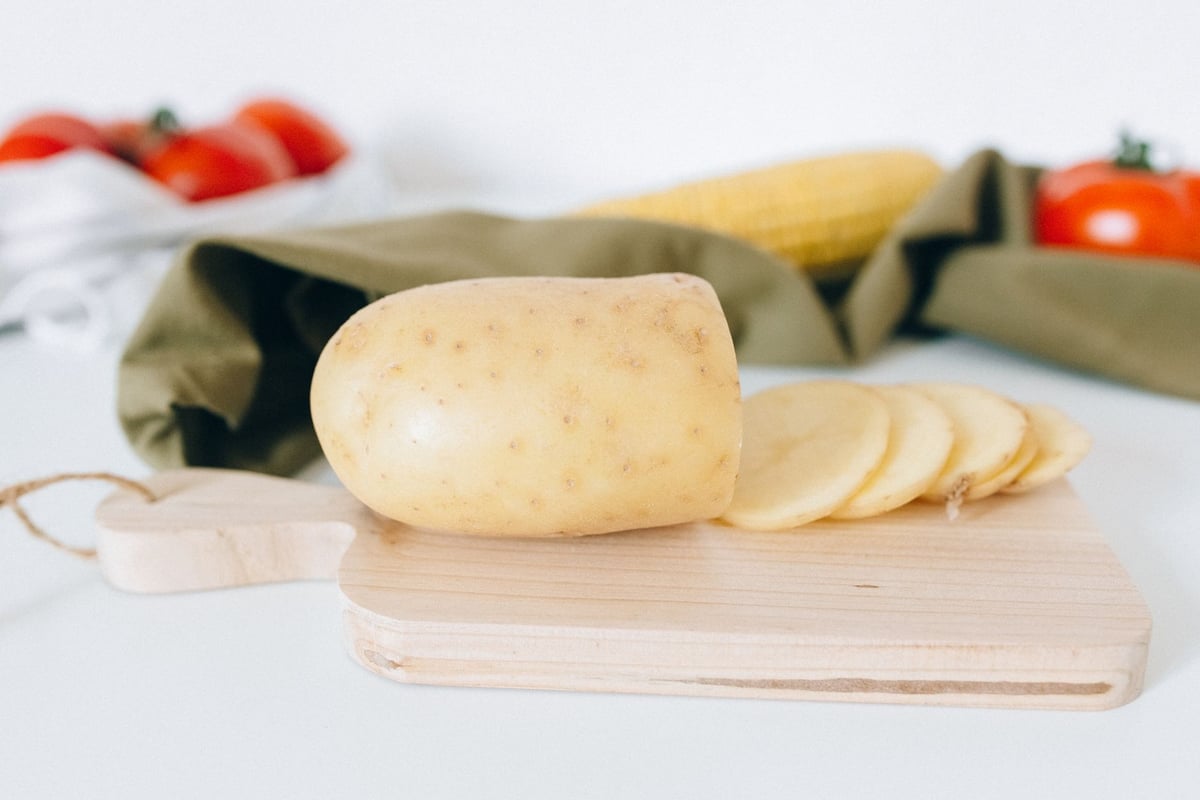
Raw potatoes are one of the more surprising items on this list. They’re dense, they seem sturdy, and freezing feels like a logical way to extend their shelf life. The reality is that raw potatoes turn dark and develop a grainy, mealy texture after freezing and thawing. The cell walls break down, and the starch changes in a way that makes the potato mushy and discolored.
Cooked potatoes freeze much better. Mashed potatoes freeze well (add a little extra butter or cream before freezing to help the texture hold). Roasted or baked potato pieces also freeze reasonably well for use in casseroles or hashes. Twice-baked potatoes freeze well and reheat nicely.
Raw potatoes are best stored in a cool, dark, dry place like a pantry or cellar, not the freezer and not the refrigerator. Cold refrigerator temperatures can turn some of a raw potato’s starch into sugar, which changes the flavor and makes it brown faster when cooked.
This is a quality problem. Raw frozen potatoes are safe to eat, but the texture makes them difficult to use.
8. Carbonated Drinks and Food or Liquid in Glass Bottles
This is the one on the list most likely to cause physical damage to your freezer and to create a safety hazard through broken glass.
Carbonated drinks expand significantly when they freeze. The carbon dioxide gas and the expanding liquid together can cause cans to burst and plastic bottles to deform or split. Glass bottles containing any liquid (carbonated or not) can crack or shatter as the liquid expands. Broken glass inside a freezer is dangerous and extremely difficult to clean up completely.
Beer, sparkling water, soda, wine, and even plain water in glass bottles should not go in the freezer unless the bottle was specifically designed for freezing. If you need to chill a drink fast, set it in a bowl of ice water instead. It works quickly without the risk of expansion and breakage.
This is a safety and a practical concern. Shattered glass in a freezer creates a real hazard and can contaminate other food stored there.
A Word on Thawing
How you thaw food matters as much as how you freeze it. The USDA is direct on this point: thaw food in the refrigerator, in cold water (changing the water every 30 minutes), or in the microwave if you plan to cook it immediately. Never thaw food on the counter at room temperature. Bacteria multiply rapidly in the temperature range between 40°F and 140°F, which is exactly where food sits when it’s left out to thaw.
Refrigerator thawing is the safest method and requires the least attention. Large items take longer than most people expect: USDA says to allow about 24 hours for every 4 to 5 pounds of whole turkey. Plan accordingly.
Quick-Reference Checklist
- Eggs in the shell: Crack and beat before freezing, store in a sealed container.
- Unopened cans: Transfer contents to a freezer-safe container first.
- Mayo-based salads: Refrigerate and use within 3 to 5 days; freeze the protein alone instead.
- High-water raw vegetables (lettuce, cucumbers): Don’t freeze for raw use; blanch hearty vegetables first if freezing for cooking.
- Cream sauces, gravies, sour cream, soft cheeses: Quality problem; may still work in cooked dishes after thawing.
- Fried foods: Skip the freezer; reheat in a hot oven if you do freeze them.
- Raw potatoes: Store in a cool dark place; freeze cooked or mashed instead.
- Carbonated drinks and glass bottles: Keep out of the freezer entirely to prevent breakage.
- Freezer temperature: Keep at 0°F for food that is safe indefinitely.
- Thawing: Fridge, cold water, or microwave only. Never on the counter.
- 0shares
- Facebook0
- Twitter0
- Pinterest0