
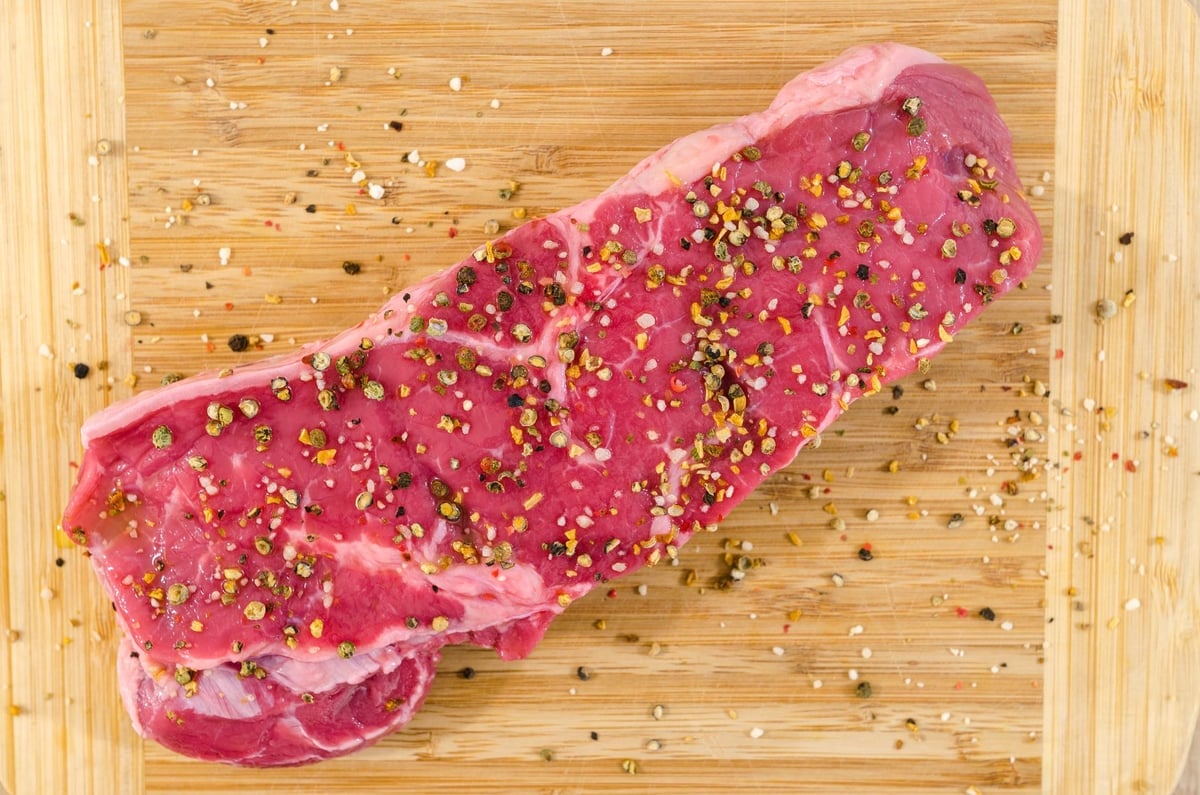
Your cutting board sees a lot of action during the holidays, especially when raw turkey is on the counter. What you may not realize is that the board you used to break down that bird can harbor bacteria like Salmonella and Campylobacter long after the meat is gone. These bacteria spread easily to other foods, your hands and nearby surfaces if you skip a few key steps.
Cleaning a cutting board after raw meat is not complicated. It just requires the right sequence, the right solution and a few habits that food-safety agencies like the USDA FSIS and FoodSafety.gov consistently recommend. This guide walks you through every step so your holiday prep does not turn into a food-safety problem.
Start Before You Even Touch the Meat: Use Two Boards
The most effective thing you can do costs nothing extra if you already own two cutting boards. USDA FSIS and FoodSafety.gov both recommend using one board exclusively for raw meat, poultry and seafood, and a completely separate board for produce, bread and ready-to-eat foods.
Color-coded boards make this easy. Many kitchen retailers sell sets specifically designed so you always know which board is which. If you use the same board for raw turkey and then slice your cooked roast or chop salad vegetables on it without cleaning it first, you risk spreading bacteria from the raw meat to food that will not be cooked again.
Mark your meat board in some way if yours are identical. A small piece of tape on the back, a permanent marker dot on the edge or simply storing them in separate spots works fine. The separation only helps if you actually maintain it every time.
Step 1: Wash Your Hands First, and Again After
Before you do anything to the cutting board, wash your hands. After handling raw meat or poultry, wash with soap and running water for at least 20 seconds. That is roughly the time it takes to sing “Happy Birthday” twice, if you need a mental timer.
Wash your hands again after you finish cleaning the board. Cross-contamination does not only happen through surfaces. Your hands can carry bacteria from one spot in your kitchen to another just as easily as a board can.
Step 2: Scrape Off Any Visible Residue
Before the board goes near the sink, use a bench scraper or the back of a knife to push any visible meat pieces or juices into the trash. Do not rinse this debris down the sink yet. You want to remove the bulk of the contaminated material before water gets involved.
This step matters because water alone will not kill bacteria. It just moves it around. Getting the visible mess off first makes the washing step more effective.
Step 3: Wash With Hot, Soapy Water
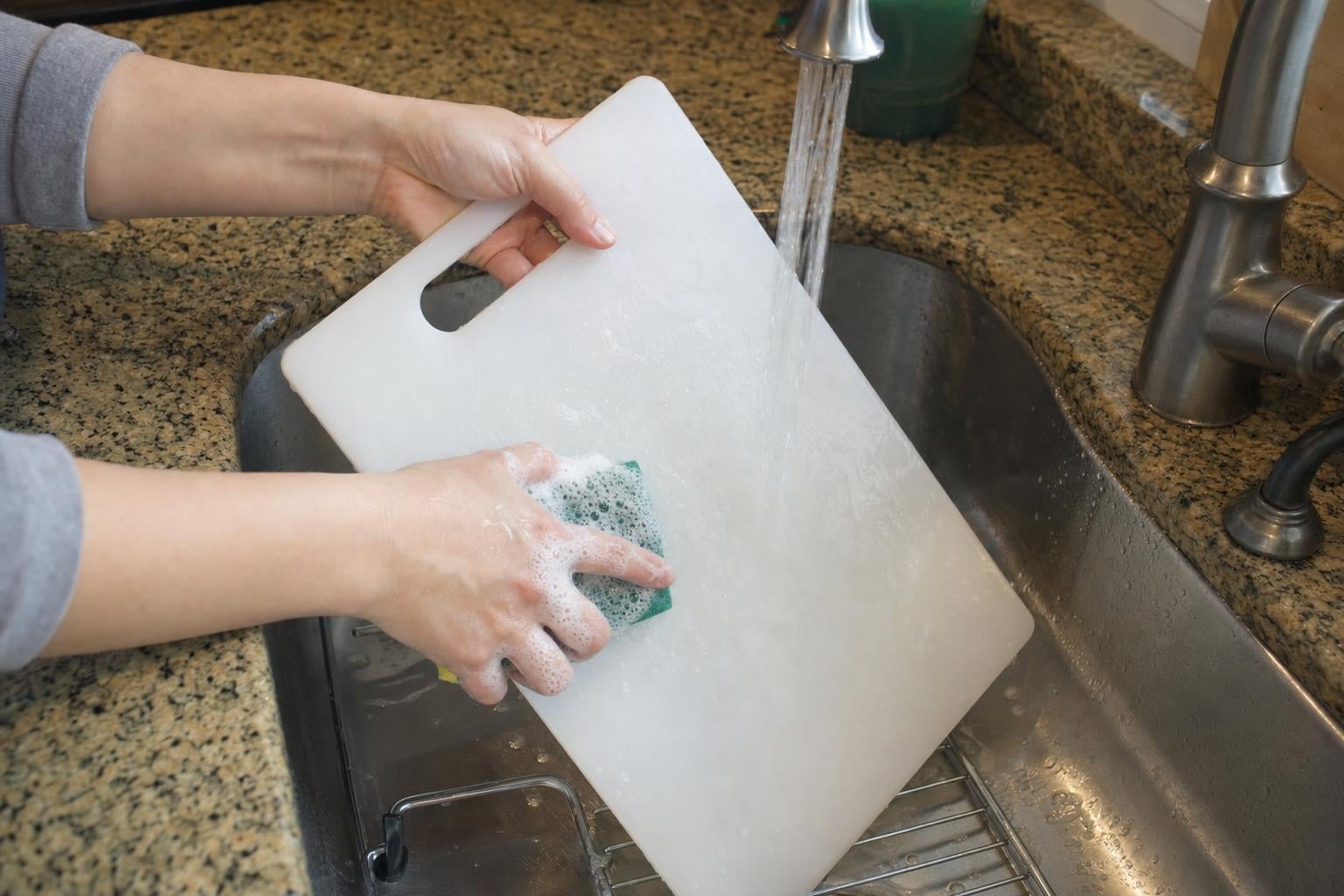
This is the core cleaning step. According to USDA FSIS guidance, you should wash the board with hot, soapy water immediately after it contacts raw meat, poultry or seafood. Use dish soap and hot water, and scrub the entire surface including the edges and underside.
Use a clean scrub brush or sponge dedicated to this task. If your kitchen sponge has already touched raw meat at any point, it can recontaminate the board as you clean it. A brush or a sponge both work, as long as you keep it clean.
Rinse the board thoroughly with clear water after scrubbing, before you move on to sanitizing.
Step 4: Consider the Dishwasher for Plastic, Glass and Solid Wood Boards
If your board is made of nonporous plastic, glass or solid wood, check whether the manufacturer says it is dishwasher-safe. USDA FSIS says nonporous plastic or glass boards and solid wood boards can be washed in a dishwasher, but many wood board makers recommend hand washing, so follow the care instructions for your board.
Laminated boards are a different story. The heat and prolonged moisture inside a dishwasher can cause laminated boards to warp or crack. Once a board has cracks, it is harder to clean effectively because bacteria can settle into those gaps. If you are unsure whether your board is laminated, hand washing is the safer choice.
Even if you plan to use the dishwasher, do the hot soapy water wash first if the board has visible meat residue. The dishwasher is not a substitute for scraping and scrubbing off residue.
Step 5: Sanitize the Surface
Washing removes dirt and most bacteria, but sanitizing takes the safety level up another notch. The USDA recommends a sanitizing solution made from 1 tablespoon of unscented liquid chlorine bleach dissolved in 1 gallon of water.
Here is exactly how to apply it:
- Flood the surface. Pour or spread the bleach solution across the entire board surface. Do not just dab it on. You want full coverage, including corners and edges.
- Let it stand for several minutes. The solution needs contact time to do its job. Do not wipe it off right away. Letting it sit for several minutes allows it to work on any remaining bacteria.
- Rinse with clean water. After the contact time is up, rinse the board thoroughly with clear water to remove the bleach solution.
- Air dry or pat dry with clean paper towels. Cloth dish towels can transfer bacteria back to a just-cleaned surface, especially if they have been used throughout the day. Paper towels are a cleaner option, or simply let the board air dry upright.
One critical safety note: never mix bleach with ammonia or any other household cleaner. That combination produces toxic fumes. Use plain, unscented liquid chlorine bleach mixed only with water.
Step 6: Clean the Sink and Surrounding Counters
Your board is clean, but the area around it may not be. When you wash a contaminated cutting board in the sink, splashing water can carry bacteria onto the faucet handles, nearby counter surfaces and even your dish rack. Wipe down the sink basin, faucet and any nearby counter space where you were working.
Use your bleach solution on these surfaces too, or a kitchen disinfectant used exactly as its label directs. Pay attention to faucet handles since those get touched repeatedly during cooking and are easy to overlook during cleanup.
A Note on Rinsing Raw Poultry in the Sink
This step is about what not to do. Many people grew up seeing their parents rinse raw chicken or turkey in the sink before cooking it. The USDA is clear that this practice should be avoided. Washing raw poultry spreads bacteria around your sink, counter and anything nearby through water droplets and splashing. The bacteria that matter, primarily Salmonella and Campylobacter, are killed by proper cooking temperatures, not rinsing.
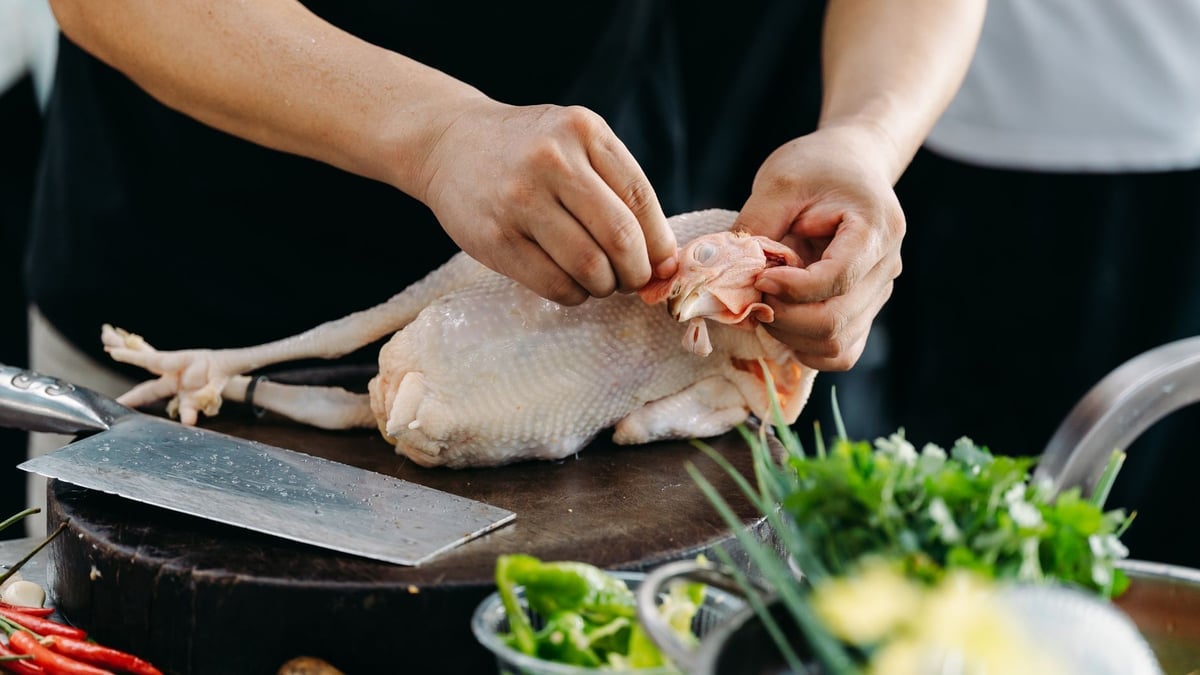
Skip the sink rinse for your turkey. Put it straight from the packaging to the cutting board or roasting pan. Cooking it to an internal temperature of 165 degrees F, checked with a food thermometer in the thickest part, is what makes it safe; rinsing does not.
Wood Boards vs. Plastic Boards: Which Is Safer?
This question comes up every holiday season. The straightforward answer, backed by USDA guidance and university extension food safety resources, is that both wood and plastic boards are acceptable options as long as they are cleaned properly and regularly.
USDA’s Meat and Poultry Hotline says you can use either wood or a nonporous surface such as plastic for raw meat and poultry. Nonporous boards are easier to clean, but neither material is safe if it is not cleaned properly. What matters most is that you clean the board thoroughly after every use with raw meat and that you replace it when it shows significant wear.
Both materials can develop scratches and grooves over time, and both can trap bacteria in those damaged areas.
When To Replace Your Cutting Board
Even with perfect cleaning habits, a cutting board has a lifespan. The USDA and food safety extension resources recommend replacing boards that have deep grooves, cracks or cuts that cannot be scrubbed clean. These pockets are places where bacteria can survive even after washing and sanitizing.
Run your fingers across the board surface. If you feel deep ridges or the board has any visible cracking along the edges or surface, it is time for a new one. This applies to both wood and plastic boards equally. A damaged board that harbors bacteria is a risk no cleaning routine can fully overcome.
Warped boards are also a problem. A board that rocks on the counter is unstable and harder to use safely, and warping often signals that the material has been compromised by moisture or heat over time.
Quick-Reference Checklist for After Raw Meat
Keep this list handy during holiday cooking prep:
- Use a dedicated board for raw meat, poultry and seafood. Never use it for produce or cooked foods without cleaning it first.
- Wash your hands with soap and water for 20 seconds after handling raw meat, and again after cleaning the board.
- Do not rinse raw turkey or chicken in the sink. USDA says this spreads bacteria through splashing.
- Scrape off visible residue into the trash before washing.
- Wash with hot, soapy water and scrub the entire surface, edges and underside.
- Sanitize with bleach solution: 1 tablespoon unscented liquid chlorine bleach per gallon of water. Flood the surface, wait several minutes, then rinse with clean water.
- Never mix bleach with ammonia or other cleaners.
- Use the dishwasher only if the manufacturer approves it for your board material. Avoid this for laminated boards.
- Air dry or use clean paper towels. Skip the cloth dish towel.
- Clean the sink, faucet and nearby counters after washing the board.
- Replace boards with deep grooves or cracks that cannot be scrubbed clean.
If you are prepping multiple rounds of food during a big holiday meal, wash and sanitize the meat board each time before it is used for anything else. One pass through these steps takes only a few minutes.
The information in this article is for general informational purposes only. We are not doctors, medical professionals, lawyers or financial advisors, and nothing on this site is intended as medical, legal or financial advice. Always consult a qualified professional about your own circumstances before acting on any information here. We accept no liability for any loss or damage arising from the use of, or reliance on, the information in this article.
- 0shares
- Facebook0
- Twitter0
- Pinterest0