
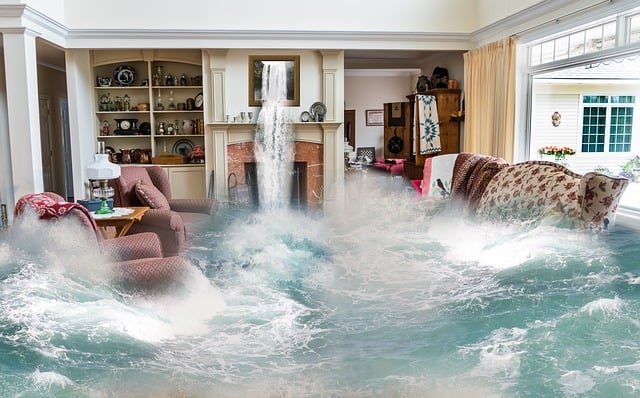
You walk into the laundry room and your socks soak through before you reach the dryer. By the time you find the shutoff, drywall has wicked water two feet up the wall. According to the Insurance Information Institute, the average homeowners claim for water damage and freezing runs about $11,500, and most started as a five-dollar part nobody checked.
Water damage is rarely dramatic. It is a slow leak, a tired hose, or a clogged drain that failed for weeks. The seven sources below cause the bulk of indoor water losses, and every one is preventable this weekend.
1. Washing Machine Supply Hoses
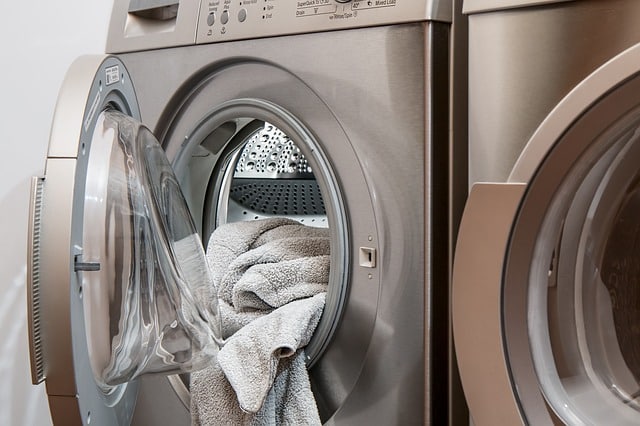
The most common appliance-related water loss in U.S. homes is a burst washing machine hose. Rubber inlet hoses hold pressurized water 24 hours a day, and after five to seven years the rubber starts to swell and crack at the brass fittings.
When one lets go, it does not drip. It sprays roughly 500 gallons per hour until somebody hears it. If you are not home, the damage spreads to subfloor, baseboards, and any room below.
The fix costs about $30. Replace both rubber hoses with stainless-steel braided lines, and turn the supply valves off when you leave for vacation. A burst hose claim averages $5,000 to $8,000 once flooring and mold are factored in, which is one of the repairs that gets expensive fastest when you delay it.
While you are back there, pull the washer six inches off the wall. A faint brown ring around the feet means a slow leak has been wetting the subfloor for months.
2. Water Heater Tank Failure
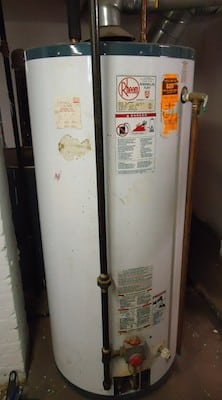
The average residential water heater lasts about 10 years. After that, the steel tank corrodes from the inside and the bottom seam eventually splits. When it goes, 40 to 50 gallons of hot water dump onto the floor in minutes, followed by a steady supply from the cold inlet until the valve is closed.
If your heater sits in a finished basement, utility closet, or worse, the attic, that failure becomes a ceiling collapse. Attic-mounted tanks produce some of the most expensive single-room losses adjusters see.
A new 40 to 50 gallon tank installed by a licensed plumber runs $1,500 to $3,500. A burst tank you ignored is a $6,000 to $15,000 emergency once mold and finish work are included.
Check the manufacture date on the rating plate. If your heater is past nine years, schedule replacement now rather than at midnight on a Sunday. Aging heaters are one of the items every homeowner should check monthly for rust at the base.
3. Roof Leaks and Failed Flashing
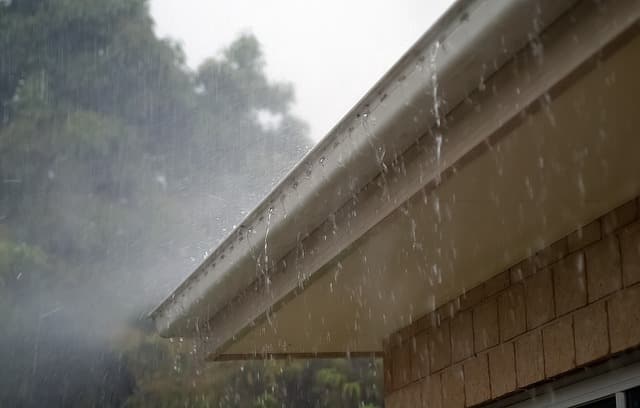
Roof leaks almost never start as a hole. They start as a lifted shingle, cracked pipe boot, or rusted flashing that lets a teaspoon of water in during every storm. Two seasons later, that teaspoon has rotted the decking and stained the ceiling below.
The ceiling stain you finally notice is the last symptom, not the first. By then the attic side has been wet long enough to grow mold and rot the rafter tail.
A targeted repair, replacing flashing, a pipe boot, or a small section of shingles, runs $400 to $1,500. Letting it continue until you need a tear-off pushes you into $8,000 to $20,000, which is when most homeowners start researching what a new roof actually involves. Mold remediation adds another $500 to $6,000.
Twice a year, walk around the house with binoculars. Curled shingles, dark streaks below vents, and granules in the gutter signal trouble.
4. Frozen and Burst Pipes
A pipe does not burst because ice fills it. It bursts because ice forms between a closed faucet and a blockage further down the line, and the trapped pressure ruptures the pipe wall. The Insurance Institute for Business and Home Safety has documented this for decades. It is the reason a frozen pipe can split eight feet from the actual ice plug.
A half-inch copper line under pressure releases 100 gallons in eight minutes. If it bursts inside a wall while you are at work, you come home to ruined hardwood and water running out the front door.
Prevention is cheap. Foam pipe insulation costs about $1 per foot. In hard freezes, leave a pencil-thin trickle running at the faucet furthest from the main, open cabinet doors under sinks on exterior walls, and disconnect garden hoses. The average burst-pipe claim runs $10,000 to $15,000, one of the critical maintenance items most homeowners neglect until the first hard winter.
If you travel in winter, install a freeze alarm or smart water shutoff valve. Either one pays for itself the first time it works.
5. Slab Leaks Under the Foundation
Homes built on concrete slabs run hot and cold supply lines through the slab itself. Over time, soil shift, abrasion, or pinhole corrosion produces a leak directly under your floor. You will not see a puddle. You will see a warm spot on the tile, an unexplained jump in the water bill, or the sound of water running when no fixture is open.
Slab leaks wet the foundation continuously, undermine soil support, and feed mold inside wall cavities you cannot inspect. Many homeowners only discover them after a $300 monthly water bill or a hairline crack creeping up the drywall.
Repair runs $5,000 to $15,000 depending on whether the plumber tunnels under the slab, jackhammers the floor, or reroutes overhead. Insurance often covers the resulting damage but not the access work, which is why slab leaks rank among the most overlooked household hazards.
If your water bill jumps for no reason, shut every fixture and watch the meter for 15 minutes. If the dial still moves, you have a leak, and slab is high on the suspect list in any home older than 20 years.
6. Dishwasher and Toilet Supply Lines
The supply lines behind your toilet and dishwasher are usually plastic-cored hoses with a 5 to 8 year service life. Homeowners almost never replace them on schedule, and the failure mode is identical to a washing machine hose, a sudden split at the crimp under full pressure.
A toilet line failure on the second floor is the worst case. Water runs through the subfloor and out a light fixture in the kitchen. Average loss is $7,000 to $12,000, and that assumes you were home.
Dishwasher leaks are slower but sneakier. The line connects under the cabinet next to the sink, and a slow drip soaks the cabinet floor for weeks before the smell gives it away. Cabinet plus flooring repair runs $2,500 to $6,000, often combined with finish damage like the renovation mistakes that cost homeowners thousands.
Replace every toilet and appliance supply line with stainless-steel braided every five to seven years. Write the install date on the line with a permanent marker.
7. Clogged Gutters and Bad Foundation Grading
Most basement and crawlspace water problems are not plumbing failures. They are landscape failures. When gutters are clogged, water sheets off the roof straight down against the foundation. When the soil grade slopes toward the house, that water collects and seeps through every crack.
The result is a chronically damp basement, efflorescence on the walls, and mold spreading through finished basement carpet for years. It also creates the moist environment that lets mold spores travel through your house the moment HVAC kicks on.
Have the gutters cleaned in late spring and again after leaf drop. Confirm every downspout extends at least four feet from the foundation. If soil within six feet of the house slopes inward, add fill dirt and slope it away at roughly an inch per foot.
Be careful doing it yourself. Some of the gutter cleaning tools sold today actually damage your roof. Professional cleaning runs $150 to $300, and a sump pump install is $300 to $800.
What Actually Works: The Annual Walkthrough That Prevents Most Claims
The homes that never file a water damage claim are not lucky. They have an owner who walks the house twice a year and replaces tired parts before they fail. That walkthrough takes about an hour and costs less than a single insurance deductible.
Start at the water heater and check the manufacture date, drip pan, and base for rust. Move to the washer and look at the inlet hoses for swelling near the fittings. Crawl under every sink and feel the cabinet floor for soft spots. Behind every toilet, squeeze the supply line. If it feels stiff or shows green corrosion, replace it.
Walk the perimeter outside. Confirm the gutters drain, the downspouts discharge away from the foundation, and the grade slopes away. Look at the roof with binoculars for lifted shingles or rusted flashing. These are the items in the checklist most home inspectors quietly use.
If you do nothing else this weekend, replace the two washing machine hoses and check the age of your water heater. Those two actions prevent the majority of the $11,500-average claims insurers see every year.
- 31shares
- Facebook30
- Twitter0
- Pinterest0