
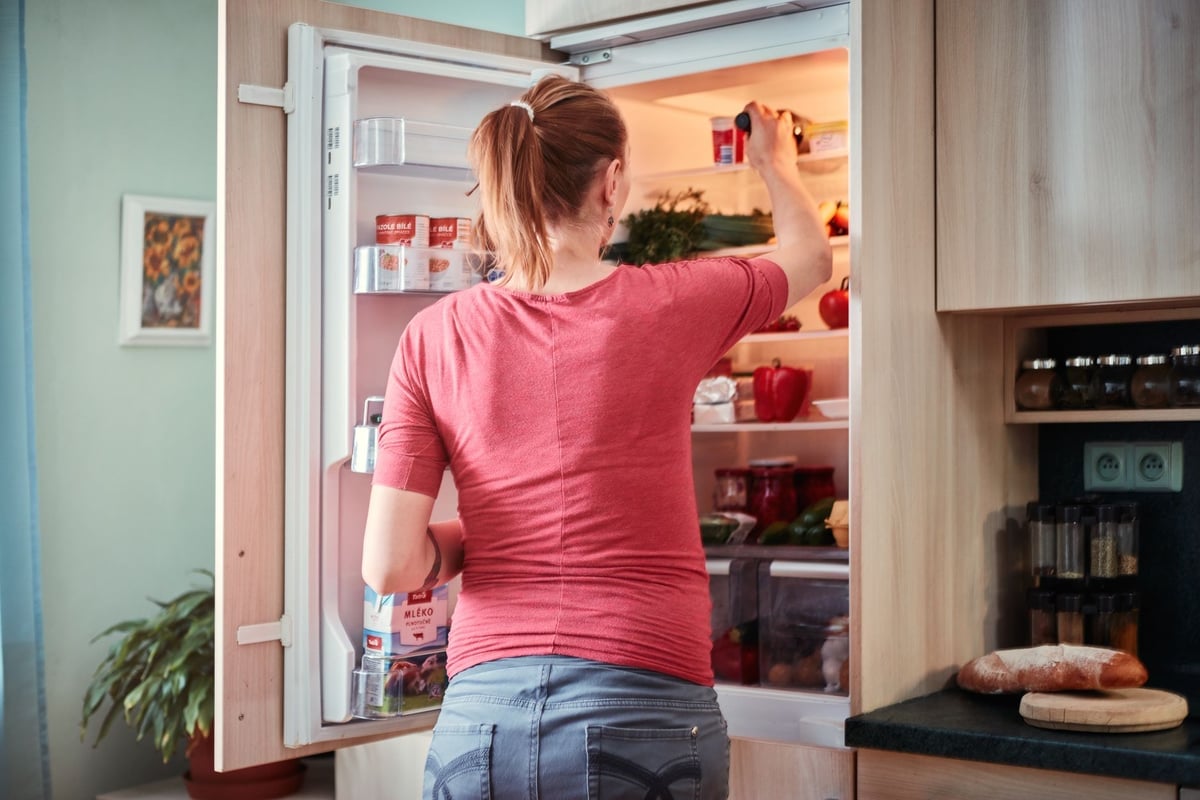
Most people load the fridge door out of habit. Milk goes in the tall door shelf because it fits there. Eggs land in that little molded egg tray. Leftovers get shoved wherever there’s space. It feels organized, but the door is actually the worst place in your refrigerator for anything that spoils quickly.
Every time you open the fridge, the door compartments are exposed to room-temperature air. That happens dozens of times a day in most households. The result is a constant cycle of warming and re-cooling that the main shelves simply don’t experience. The FDA recommends keeping your refrigerator at 40°F or below to slow bacterial growth, and the door is the spot least likely to hold that temperature consistently.
Here are the seven foods most commonly misplaced in the door, why it’s a problem for each one, and where they actually belong.
1. Milk
Milk is probably the food people put in the door most often. The tall shelf on the door seems made for a gallon jug, and in some fridges it literally is. But milk is one of the most temperature-sensitive items you buy at the grocery store.
Because door temperatures fluctuate more than anywhere else in the fridge, milk kept there is regularly exposed to warmer air. That speeds up spoilage, meaning your milk may go bad before the sell-by date even if your fridge is otherwise set correctly.
Where it belongs: The back of a main shelf, as far from the door as possible. That’s the coldest, most stable area in the fridge. If space is tight, move a condiment to the door to make room for the milk jug.
2. Eggs
Many refrigerators come with a small molded egg tray built right into the door. It’s convenient, and it looks purposeful. The FDA and USDA are clear on this one, though: eggs should be refrigerated at 40°F or below at all times, and the door doesn’t reliably maintain that temperature.
The FDA also recommends keeping eggs in their original carton. The carton protects the shells from absorbing odors from other foods, and helps eggs retain moisture. A decorative door tray does none of those things.
Where it belongs: In the original cardboard or foam carton, on a main shelf. The middle shelf toward the back works well. Do not wash eggs before refrigerating them; the USDA advises against it.
3. Raw Meat, Poultry and Seafood
Raw proteins should never be in the fridge door under any circumstances. Beyond the temperature issue, there’s a cross-contamination risk that makes this genuinely dangerous. If a package of chicken or ground beef leaks in the door, the drip can spread to other foods in the door compartments and potentially to foods below.
The USDA is specific about this: raw meat, poultry and seafood should be stored on the bottom shelf of the refrigerator, sealed in a container or bag, so that any juices cannot drip onto ready-to-eat foods. The bottom shelf keeps drips contained and also tends to be one of the colder areas of the main fridge compartment.
Where it belongs: Sealed in a zip-top bag or set in a rimmed container on the lowest shelf. If you’re planning to use it within a day or two, the fridge is fine. Beyond that, freeze it. The USDA recommends using or freezing ground beef within one to two days of purchase and whole cuts within three to five days.
4. Soft Cheeses
Hard cheeses like parmesan or aged cheddar are relatively forgiving when it comes to temperature swings. Soft cheeses are not. Brie, camembert, ricotta, cottage cheese and fresh mozzarella all have high moisture content, which means bacteria can multiply faster when temperatures rise even briefly.
People often keep these in the door because they’re used as toppings or spreads and feel easy to grab. The problem is that every time the door opens, those soft cheeses warm up a little. Over the course of a week, that adds up to real spoilage risk.
Where it belongs: On a main shelf in a sealed container or in the original packaging with the lid secured. The crisper drawer is another option for soft cheeses, since it tends to hold a steadier temperature than the door. Use ricotta and cottage cheese within one week of opening, per general food safety guidance.
5. Yogurt and Sour Cream
Yogurt and sour cream are dairy products with the same basic vulnerability as soft cheeses: high moisture, relatively short shelf life, and a need for steady cold temperatures. They’re also sold in tub containers that people often drop into a door shelf because the size fits perfectly.
Temperature swings don’t just speed up spoilage. With cultured dairy products like yogurt and sour cream, they can also change the texture, causing separation or a watery surface layer. The product may still be safe to eat for a few days, but the quality degrades faster than it should.
Where it belongs: On a main shelf, ideally toward the middle or back. Keep the lids tightly sealed after each use. If you notice excessive liquid pooling on top of your yogurt, that’s a sign the temperature has been inconsistent, though stirring it back in is generally fine if the product is still within its use-by date.
6. Leftovers
Leftover soup, pasta, cooked chicken, casseroles, and similar foods often get crammed wherever they fit in a busy fridge, and the door is a common landing spot for smaller containers. The problem here is twofold: temperature instability and the way leftovers are often stored.
The FDA recommends refrigerating leftovers within two hours of cooking and eating them within three to four days. That timeline assumes your food is being held at a consistent 40°F or below. If it’s in the door, it may not be. A shallow, covered container on a main shelf is the right setup because shallower containers cool more quickly and hold temperature more evenly than deep ones.
Where it belongs: In a shallow, airtight container on a main shelf. Label the container with the date so you don’t lose track of the three-to-four-day window. If you’re not going to eat leftovers within that time, freeze them before the window closes, not after.
7. Cut Fruit and Prepared Salads
Whole, uncut fruit like apples or oranges can sit on the counter. Once you cut into fruit, the rules change. Cut melon, sliced strawberries, halved avocado, and fruit salad all become perishable and need consistent refrigeration at 40°F or below, per the FDA.
The same applies to prepared salads: green salads with dressing, pasta salad, coleslaw, and anything mixed with mayo or a dairy-based dressing. These are ready-to-eat foods that don’t get cooked again before you eat them, so any bacterial growth from temperature inconsistency goes straight to the table.
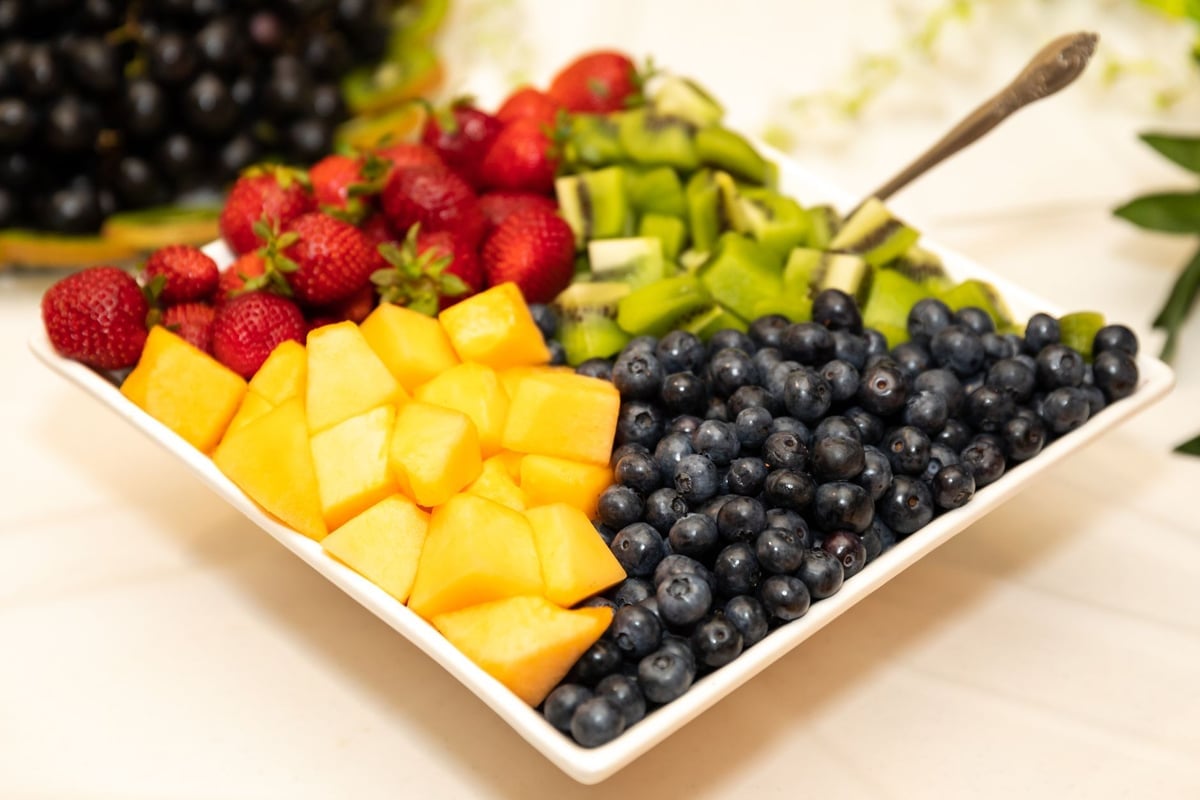
Where it belongs: In sealed containers on a main shelf. Cut fruit should be covered and used within a few days. Prepared salads like egg, chicken, tuna or macaroni salad should be used within three to five days, per USDA guidance. Keep them away from raw proteins on the shelf.
What Does Belong in the Fridge Door
The door isn’t useless. It’s actually well-suited for foods that are less sensitive to temperature fluctuations, typically because they have high acidity, high salt content, or preservatives that slow spoilage.
Good door candidates include:
- Condiments like ketchup, mustard, hot sauce, salad dressings, pickles and relish
- Bottled water and juice in sealed bottles
- Butter, kept in a covered compartment (most fridges include one built into the door)
- Jam, jelly and preserves after opening
- Soy sauce, fish sauce and similar condiments with high salt or acid levels
These items tolerate the door’s temperature swings far better than dairy, proteins or produce do.
One Tool Worth Having
The FDA recommends using an appliance thermometer to verify that your refrigerator is actually holding at 40°F or below and your freezer at 0°F. Your fridge’s built-in dial gives you a relative setting, not an exact reading. A small refrigerator thermometer, available at most kitchen or hardware stores, gives you an actual number.
Place the thermometer on a main shelf (not the door) and check it after the fridge has been closed for at least an hour. If it reads above 40°F, adjust the thermostat and check again. If it still doesn’t reach 40°F, the fridge may need servicing.
This matters because a fridge running at 45°F isn’t just slightly less cold. At that temperature, bacteria in raw meat and dairy multiply noticeably faster. The two-hour rule for leaving perishable food at room temperature (per the FDA and USDA) exists for the same reason: time at the wrong temperature is the real risk factor.
Quick-Reference Checklist
Use this to reorganize your fridge today:
- Milk: Back of a main shelf, away from the door
- Eggs: Original carton, on a main shelf at 40°F or below
- Raw meat, poultry, seafood: Sealed container or bag, bottom shelf only
- Soft cheeses (brie, ricotta, cottage cheese): Main shelf or crisper drawer, sealed
- Yogurt and sour cream: Main shelf, lids tightly closed
- Leftovers: Shallow covered containers, main shelf, eaten within 3 to 4 days
- Cut fruit and prepared salads: Sealed containers, main shelf, used within a few days
- Fridge temperature: Verify with an appliance thermometer; target is 40°F or below
- Freezer temperature: Target is 0°F, per FDA guidance
Moving these items takes about two minutes. Start with milk and eggs since those are the two foods most consistently stored in the wrong place, and go from there.
- 0shares
- Facebook0
- Twitter0
- Pinterest0