
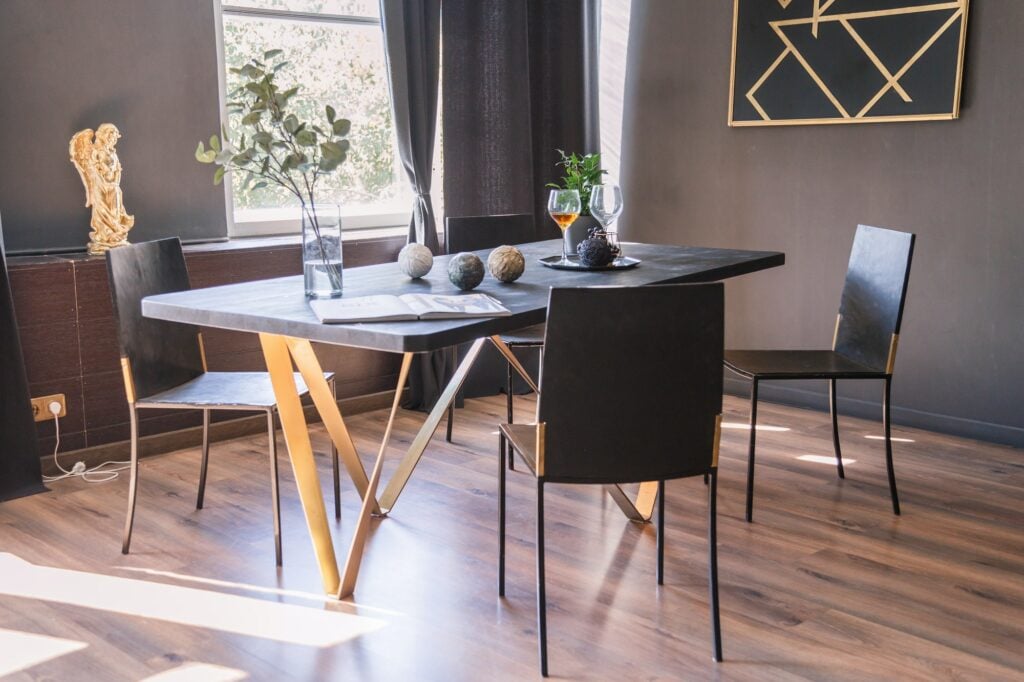
Your dining room paint color matters more than you think with resale value. According to the Zillow 2017 paint study and follow-up research from Opendoor, certain dining room colors actively repel potential buyers and can lower your final sale price by thousands of dollars. If you are planning to sell your home, understanding which colors cost you money is just as important as knowing which ones add appeal.
1. Bright Red: Loses $1,500 to $2,500 in Offers
Bright red in a dining room is one of the most aggressive color choices buyers encounter. The Zillow 2017 paint study found that homes with bright red dining rooms saw offers drop significantly, with buyers deducting $1,500 to $2,500 from their initial appraisals. Red walls create psychological tension that most people associate with formal, unwelcoming spaces rather than comfortable family gathering areas.
Red also interferes with how buyers envision their own decor in the space. Even if you love the color, repainting it away costs between $300 and $800 for a typical dining room, depending on whether primer is required. Custom paint formulations at premium brands like Benjamin Moore or Sherwin-Williams can run $50 to $100 per gallon. The math works against you when buyers know they will need to repaint before moving in.
2. Terracotta Orange: Dated and Expensive to Cover
Terracotta orange reads as distinctly dated to most modern homebuyers. This warm, rustic tone peaked in popularity during the 2000s and now signals an outdated interior design sensibility. When buyers see terracotta walls, they immediately begin calculating renovation costs rather than imagining their own space.
Terracotta orange also requires aggressive coverage. Its natural pigmentation resists light paint colors, meaning you will likely need primer and two coats of a neutral base to truly hide it. That adds $150 to $250 in material costs alone. Opendoor research shows orange dining rooms typically receive 5% to 8% fewer offers than comparably sized homes with neutral walls, translating to thousands of dollars lost in competitive markets.
3. Mustard Yellow: Dingy and Depressing
Deep mustard yellow was another 1990s and 2000s trend that now feels dingy and depressing to modern eyes. Unlike soft, pale yellows that brighten a room, mustard tones absorb light and make spaces feel smaller and staler. Buyers consistently report that mustard yellow dining rooms feel dated, particularly when paired with older light fixtures or hardware.
The color is also notoriously difficult to photograph for online listings, which has become crucial to home sales. Mustard yellow photographs as an unflattering brownish-gold that discourages clicks before potential buyers even schedule a viewing. A fresh coat of Benjamin Moore Revere Pewter or Sherwin-Williams Agreeable Gray costs $400 to $600 and dramatically improves both in-person appeal and photos.
4. Avocado Green: Unmistakably Retro
Avocado green is so distinctly associated with 1970s decor that it immediately dates your entire home. While some vintage design elements work in nostalgic or deliberately retro spaces, avocado dining room walls feel more like neglected decoration than intentional style. Buyers interpret this color as a sign that the rest of the home may not have been updated either.
This muted, murky green is also psychologically associated with stale environments. It does not energize or relax; instead, it creates a vague sense of discomfort. Professional stagers and real estate agents universally recommend removing avocado paint before listing. The Zillow study found that soft, modern greens like Sherwin-Williams Sea Salt actually attract buyers, proving that it is the specific shade and warmth of the color that matters most for resale.
5. Dark Navy: Cramped Rooms Feel Smaller
Dark navy blue might look sophisticated in a magazine, but in actual dining rooms, it shrinks the perceived space and creates a cave-like atmosphere. Opendoor research shows that dark navy walls make small to medium dining rooms feel claustrophobic, which is the opposite of what buyers want. Natural light that bounces off pale walls instead gets absorbed by dark navy, darkening the entire room.
Navy also requires careful lighting to avoid making the space feel gloomy during evening hours. Buyers mentally calculate the cost of new fixtures, painting, and possible lighting upgrades before even making an offer. Repainting dark walls to a light neutral takes at least two coats plus primer, pushing labor and material costs to $600 to $800. That expense usually exceeds what your navy walls might recoup in buyer goodwill.
6. Bright Purple: Impractical and Immature
Bright purple dining room walls scream impulsive decorating choice to most adult homebuyers. While children and design enthusiasts might appreciate bold color, the majority of homebuyers seeking a dining room want mature, versatile spaces that complement their own furniture and decor. Bright purple is nearly impossible to coordinate with standard dining chairs, tables, or artwork.
This color also photographs poorly in online listings, appearing washed out or garish depending on lighting. Zillow data shows purple dining rooms attract fewer serious inquiries, with buyers assuming the owner has unusual taste that may extend to hidden maintenance or design problems. A fresh paint job in white, gray, or soft sage costs $400 to $700 and instantly broadens your potential buyer pool.
7. Pure Black or Near-Black: Industrial and Cold
Pure black dining room walls are essentially impossible to sell to mainstream buyers. While high-end design sometimes incorporates black as a bold accent, black walls in a room meant for gathering and eating create an unsettling, funeral-like atmosphere. Buyers describe black dining rooms as cold, industrial, and emotionally unwelcoming, regardless of the style of furniture inside.
Black also ages poorly and shows dust, fingerprints, and imperfections immediately. Opendoor studies found that black dining rooms ranked among the lowest performers in resale value, with buyers often requesting $5,000 to $6,500 price reductions to justify the painting and decorating work required. Switching to Benjamin Moore White Dove or Sherwin-Williams Alabaster transforms the space and signals to buyers that the home is clean, modern, and move-in ready.
What Actually Works: Designer-Approved Colors That Buyers Want
If your dining room currently wears one of these problematic colors, the good news is that fixing it is affordable and dramatically improves resale appeal. Professional stagers and real estate agents consistently recommend moving to soft, warm neutrals that feel modern without being boring. Benjamin Moore Revere Pewter is the top-rated choice among staging professionals because it feels upscale and warm while remaining truly neutral.
Sherwin-Williams Agreeable Gray and Alabaster are equally popular for their clean, refreshing appearance that appeals to the broadest range of buyers. For those wanting subtle color, soft sage like Sherwin-Williams Sea Salt introduces natural beauty without alienating buyers. These colors cost the same as problematic hues, averaging $50 to $100 per gallon in quality brands, but deliver thousands of dollars in increased buyer confidence and final sale price. Pairing your new paint with updated fixtures and tasteful decor amplifies the effect, turning your dining room into one of your home’s strongest selling points.
The Zillow 2017 paint study and subsequent Opendoor research makes one truth clear: your dining room paint color is a financial decision, not purely a personal aesthetic choice. Before painting in bold or unusual tones, honestly assess whether the color will broaden or narrow your buyer pool when you eventually sell. Neutral, warm, designer-approved colors increase perceived home value and speed your sale, while stylish, dark, or dated colors cost you real money in lost offers and future repainting expense. The smartest approach is to choose colors that work for you now and for the buyers who will come later.
- 0shares
- Facebook0
- Twitter0
- Pinterest0