
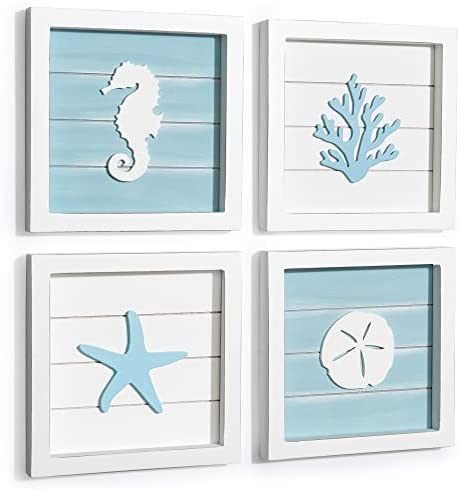
Your bathroom is one of three rooms that appraisers weight most heavily when assessing home value. A 2024 National Association of Realtors survey found that over-personalized bathrooms reduce buyer interest by up to 15 percent, especially when a single theme dominates so completely that buyers cannot picture their own lives there. Themed bathrooms are taking thousands off sale prices, and most sellers never connect the decor to the loss.
The seven mistakes below are drawn from appraiser feedback, NAR buyer preference data, and documented resale patterns. If you plan to sell within three to five years, reading this now gives you time to correct course without a rushed renovation.
1. Heavy Beach and Nautical Themes Narrow Your Buyer Pool ($3,000 to $8,000 appraisal impact)
A bathroom decorated with anchors, ship wheels, driftwood frames, and nautical signage appeals to a specific type of buyer and actively repels everyone else. Appraisers note that dominant coastal styling locks a space into one design era, making it harder for buyers to visualize their own use of the room. According to a 2023 Zillow report on buyer preferences, neutral bathrooms receive offers 18 percent faster than themed ones.
The financial damage is not subtle. Homes with overwhelming beach themes lose $3,000 to $8,000 in appraised value compared to similar homes with neutral bathrooms. Removing the decor costs $150 to $300 in labor and disposal, but the appraisal hit is far larger, and most sellers absorb that loss without connecting it to the anchor on the wall.
If you love coastal style, keep it in removable items: towels, one small piece of artwork, a soap dish. Use soft seafoam or pale blue paint as your wall color. Buyers can swap a towel in minutes; they cannot swap a theme without a renovation budget.
2. Seashell-Encrusted Mirrors Read as Unprofessional ($200 to $400 to remove and replace)
Hot-glued seashell mirrors are one of the most recognizable craft projects in residential bathrooms, and appraisers and home inspectors recognize them instantly. A 2023 survey by the American Society of Home Inspectors found that 67 percent of inspectors flag visible handmade bathroom decor as a signal of lower maintenance standards throughout the property. That perception costs you money whether or not it is accurate.
Beyond the impression they create, shell-covered mirrors trap dust, soap residue, and mold in every crevice between shells and frame. Organic materials deteriorate in humidity in ways that are difficult to clean and easy for buyers to spot. Replacing a decorated mirror with a clean frameless design runs $200 to $400 installed, and frameless mirrors visually expand small bathrooms.
One good mirror matters more than multiple decorated ones. A bathroom that smells and looks clean signals professional maintenance to every buyer who walks in.
3. Mismatched Faucet Finishes Signal Piecemeal Updates ($150 to $600 to correct)
An oil-rubbed bronze shower trim paired with brushed nickel sink faucets and polished chrome towel bars tells buyers one story: this bathroom was updated in pieces, without a plan. Appraisers view inconsistent hardware finishes as evidence of reactive rather than deliberate maintenance, and that perception translates into a 2 to 4 percent reduction in perceived value in small bathrooms where every detail is visible at a glance.
Correcting the mismatch is straightforward. Refinishing a single faucet runs $150 to $300, while full replacement costs $300 to $600 per fixture. Committing to one finish across all hardware gives the bathroom a unified look that reads as professionally designed. Inexpensive bathroom upgrades like consistent hardware swaps consistently rank among the highest-return fixes before a sale.
Choose your finish before you buy anything, and apply it to every towel bar, robe hook, toilet paper holder, and faucet. Buyers notice when the hardware does not match.
4. Shower Curtains Appraise Lower Than Glass Doors ($800 to $2,000 to upgrade)
Shower curtains feel temporary, even when they are high-quality. Homes with curtain enclosures consistently appraise 3 to 5 percent lower than comparable homes with framed or frameless glass doors because buyers associate glass with permanence, cleanliness, and an upscale finish. That gap represents real money on a $400,000 home.
Basco frameless glass shower door systems and Coastal Industries enclosures resist mold and maintain clarity with standard cleaning. Installation of a frameless glass system runs $800 to $2,000 depending on size and finish, and recouped 65 to 75 percent of its cost at resale according to Remodeling magazine’s 2023 Cost vs. Value report. A basic framed glass door still outperforms any premium curtain on appraisal day.
If your bathroom has a moisture problem that shortens shower hardware life, address ventilation before installing glass. The sequence matters.
5. Dated Bathroom Wallpaper Signals Moisture Neglect ($300 to $900 to remove and repaint)
Wallpaper in a wet environment is a risk that appraisers and home inspectors notice before buyers do. Seams peel, edges bubble, and patterns that felt current years ago now read as dated. Even perfectly installed bathroom wallpaper draws attention to the possibility of hidden moisture problems, which is the last association you want a buyer making during a showing.
Removing wallpaper from a standard bathroom costs $100 to $300 per wall, and repainting all four adds $200 to $600 for professional labor and two coats. Total investment runs $300 to $900 for a refresh that makes the room feel newer and larger. The wrong paint finish or color can undercut even a clean renovation, so choose soft neutrals in an eggshell or satin finish that hold up in bathroom humidity.
6. Bold Paint Colors Reduce Buyer Flexibility ($300 to $800 to repaint)
Deep teal, navy blue, and terracotta are current style choices in design media, but appraisers consistently document that bold bathroom paint reduces perceived home value by 4 to 6 percent. Buyers cannot visualize their own space inside a heavily personalized room, and the mental math of repainting before move-in works against your sale price. Appraiser feedback compiled by the National Association of Realtors puts neutral bathrooms ahead of bold ones in offer frequency and final sale price.
Repainting from bold to neutral costs $300 to $800 for professional work and two quality coats. Pale gray, warm white, and very subtle sage green test well with the broadest buyer pool. If you want to understand which paint colors work across connected rooms, choosing a palette that flows from bathroom to hallway adds cohesion that buyers respond to positively.
Reserve color for items buyers can replace themselves. Adding color through accessories rather than permanent surfaces keeps your bathroom appealing to the widest possible audience.
7. Themed Built-In Storage Locks Buyers Out of the Space ($500 to $1,500 to modify)
Floating shelves styled with seashells, rolled beach towels, and nautical rope accents look intentional when you live there and limiting to everyone who does not. Built-in storage that is architecturally tied to a specific theme cannot be easily repurposed without leaving the space looking bare or requiring a redesign. Buyers mentally subtract the modification cost from their offer before they leave the showing.
Removing or repositioning built-in shelves costs $500 to $1,500 depending on installation and wall repair. Schluter shower systems and similar professional waterproofing products are worth the investment for storage near wet areas, but themed shelving there creates both a visual and a maintenance liability. If you already have built-in shelves, style them with plain white towels and one neutral object.
Buyers want storage they can use, not storage they have to redesign. A clean, organized bathroom shows better in every price range, and minimal styling costs nothing.
What Actually Works: A Neutral Bathroom That Sells
Every mistake above shares the same root cause: prioritizing personal expression over buyer flexibility. Your bathroom should feel like a well-maintained blank canvas, not a completed design project. Buyers need room to imagine their own space, and anything that prevents that imagination from running costs you money at closing.
The upgrades with the best return are also the least dramatic: consistent hardware finishes, a glass shower door, soft neutral paint, and clean open shelving. These choices appeal to nearly every buyer profile and hold their value regardless of which design cycle is current at the time of sale. For a full picture of where bathroom investments go wrong, bathroom renovation mistakes that cost thousands covers the structural and cosmetic errors most sellers overlook until it is too late.
If you are preparing to list, tips for selling your home fast covers the sequencing of improvements that produce the best results in the shortest timeline. And if you want an objective sense of what your home is worth before you start, getting a home valuation first gives you a baseline that makes every improvement decision more informed. Your bathroom is an investment in your home’s resale value. Treat it that way.
- 2shares
- Facebook0
- Twitter0
- Pinterest2