
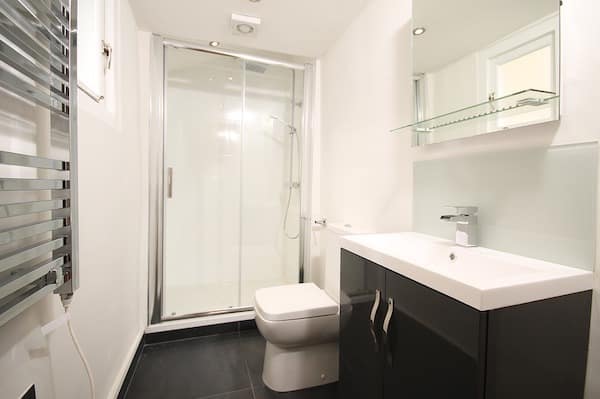
Your bathroom cleaning routine may be doing more damage than dirt ever could. Many products homeowners reach for weekly corrode finishes, etch stone, and create conditions where mold spreads faster than scrubbing can reverse it. These seven mistakes cost real money, and most go unnoticed until a contractor is already involved.
1. Mixing Bleach and Ammonia in the Same Cleaning Session
Bleach and ammonia react to form chloramine gas, a colorless vapor that irritates the lungs, burns the eyes, and causes chest tightness within minutes. Many household glass cleaners, urine-stain removers, and all-purpose sprays contain ammonia, while bleach-based toilet bowl cleaners and mold sprays sit on the same shelf. Using both products in the same bathroom on the same day creates a hazardous concentration in an enclosed space.
Poison control centers receive calls from this scenario every week. The symptoms mimic a cold at first, so people keep cleaning and increase their exposure. Prolonged contact damages respiratory tissue and worsens asthma and allergies over time.
Choose one bleach-based product for the toilet and mold spots, then use an ammonia-free cleaner for everything else. Method All-Purpose Cleaner and Mrs. Meyer’s Multi-Surface Spray are both ammonia-free. Read labels before you buy. If you are concerned about other products creating toxic fumes at home, that problem extends well beyond the bathroom.
2. Using Acidic Cleaners on Natural Stone Surfaces
Marble, travertine, and limestone are calcium-based stones that dissolve when they contact acid. Vinegar, lemon juice, and many “natural” bathroom cleaners are acidic enough to etch the polished surface permanently. A single wipe-down with the wrong product leaves dull, rough patches that no amount of buffing will restore without professional refinishing costing $200 to $800 per area.
Etching removes the top layer of stone and opens the pores underneath, letting water and minerals seep in. Stains that follow are nearly impossible to remove because damaged stone cannot be sealed properly. Many homeowners discover this only during a home sale when an inspector flags the shower surround.
Use pH-neutral cleaners on natural stone. Bar Keepers Friend Granite and Stone Cleaner is formulated for this purpose. For daily maintenance, warm water and a few drops of dish soap applied with a soft cloth is enough. Never use bleach, vinegar, Clorox toilet cleaners, or any spray that lists citric acid in the ingredients on a stone surface.
3. Skipping the Exhaust Fan After Every Shower
An exhaust fan is your primary defense against mold. Without it running during and for 20 minutes after each shower, steam condenses on walls, grout, caulk, and ceiling drywall. Mold spores germinate within 24 to 48 hours when humidity stays above 60 percent, which is exactly what a sealed bathroom reaches after a hot shower. You cannot see or smell mold in its early stages, but it establishes colonies in grout and behind tile long before any visible sign appears.
Once mold reaches the framing behind tile, surface cleaning will not fix it. Full remediation, including removing tile, cutting out drywall, and treating the framing, runs $500 to $6,000 depending on how far it has spread. Understanding how exhaust fan placement affects mold spread helps you put ventilation where it does the most good.
Run the fan every time, clean the intake grille twice a year, and confirm the duct vents to the outside rather than into the attic. A new exhaust fan costs $25 to $80 and installs in under two hours.
4. Letting Hair Build Up in the Drain
Hair does not dissolve. It accumulates in the drain trap, binds with soap scum and mineral scale, and eventually forms a dense plug that holds standing water in the basin. That standing water keeps surfaces permanently damp, accelerating mold growth and softening caulk seams. Persistent clogs also create back-pressure that can loosen pipe joints and force water into wall cavities.
A blocked drain that backs up into a wall cavity requires a plumber with a motorized snake or camera inspection. Professional drain cleaning costs $150 to $300. If a pipe joint has failed, repair costs jump to $500 to $1,500 depending on access. The common causes of water damage in homes almost always include a neglected drain.
Install a hair catcher over every shower and tub drain and clear it after each use. If the drain is already slow, a manual drain snake ($20 at any hardware store) clears most blockages in five minutes. Avoid pouring chemical drain openers repeatedly into the same pipe. They degrade older pipe materials and create a worse problem than the clog they target.
5. Ignoring Mildew on Caulk Seams
Silicone caulk seals the gap between your tub or shower pan and the surrounding tile. When mildew colonizes that caulk, fungal filaments grow into the material itself, weakening the bond and opening micro-channels where water reaches the substrate behind the tile. Once water saturates the cement board or drywall back there, it begins rotting the subfloor and framing.
Scrubbing with bleach removes visible mildew temporarily but leaves the damaged caulk intact. The mildew returns in two to four weeks because compromised caulk holds moisture instead of repelling it. Regrout and recaulk work costs $400 to $1,500. If the substrate is water-damaged, tile removal and subfloor repair adds $1,500 to $8,000. Reviewing the renovation mistakes that cost homeowners thousands shows that caulk failure is one of the most common and preventable sources of major damage.
Replace caulk at the first sign of persistent discoloration. Use a caulk removal tool ($5 to $10) to strip out the old bead completely, clean the joint with rubbing alcohol, and apply fresh 100-percent silicone caulk. Avoid paintable latex caulk in bathrooms. It does not fully cure in humid conditions and breaks down within a year.
6. Using a Dirty Squeegee After Every Shower
A squeegee removes water from glass surfaces and reduces the moisture that mold needs. But a squeegee left wet in the shower between uses becomes a reservoir for mold spores and bacteria. The rubber blade traps organic material, and the slot where the blade meets the frame stays damp indefinitely. Every stroke across your shower glass deposits those organisms directly onto the surface you are trying to keep clean.
Most homeowners treat the squeegee as a set-and-forget tool. After a few months without cleaning, it is more likely to spread invisible contamination than prevent it. Persistent streaks on glass that regular wiping cannot clear are often the first sign the blade is the problem.
Rinse the blade and wipe it dry after each use. Once a week, soak the blade for five minutes in a 10-percent bleach solution, rinse thoroughly, and let it air dry outside the shower. If the blade is cracked, stiff, or discolored, replace it. A replacement blade or a new squeegee costs $8 to $15 and performs far better than a degraded one.
7. Using the Wrong Cleaner for Your Fixture Finish
Oil-rubbed bronze, brushed nickel, polished chrome, and matte black fixtures each carry a different protective coating. Acidic cleaners and bleach-based sprays strip the lacquer or PVD coating from brushed nickel and oil-rubbed bronze within weeks. Once that coating is gone, the base metal oxidizes and produces dark spots, pitting, and rust. A corroded faucet replacement costs $200 to $500 in labor and parts.
Many homeowners apply the same spray to every surface without checking whether it is safe for metal finishes. Glass cleaners containing ammonia are a particular problem because they are the most convenient product on hand, and they damage chrome and nickel quickly despite looking effective in the short term.
For brushed nickel and oil-rubbed bronze, use warm water and a soft microfiber cloth only. For polished chrome, a dry microfiber cloth after each use prevents water spots. For stainless steel, a cloth with a small amount of mineral oil, wiped with the grain, cleans and protects. Never use vinegar, bleach, or abrasive powders on any metal finish. Protecting the fixtures you already have is the most cost-effective upgrade available.
What Actually Works: A Cleaning Routine That Protects Your Bathroom
The seven mistakes above share one root cause: using the wrong product or skipping a basic maintenance step until the damage compounds. Stopping them costs almost nothing. Check every cleaner you currently use for ammonia or acid content, and reassign or replace the ones that do not belong near stone or metal finishes. Run the exhaust fan without exception, clear the drain weekly, and replace caulk before mildew becomes structural.
A consistent speed-cleaning routine built around these principles takes less time than dealing with a single contractor visit. If your bathroom already shows signs of long-term moisture damage, check the hidden sources of contamination that cleaning products alone will not address. And if you want the space to stay fresh between deep cleans, the habits that keep a bathroom smelling clean reinforce everything covered here. The bathroom damage most homeowners face comes not from one bad product choice, but from months of small habits repeating until a contractor is the only option left.
- 8shares
- Facebook0
- Twitter0
- Pinterest6