
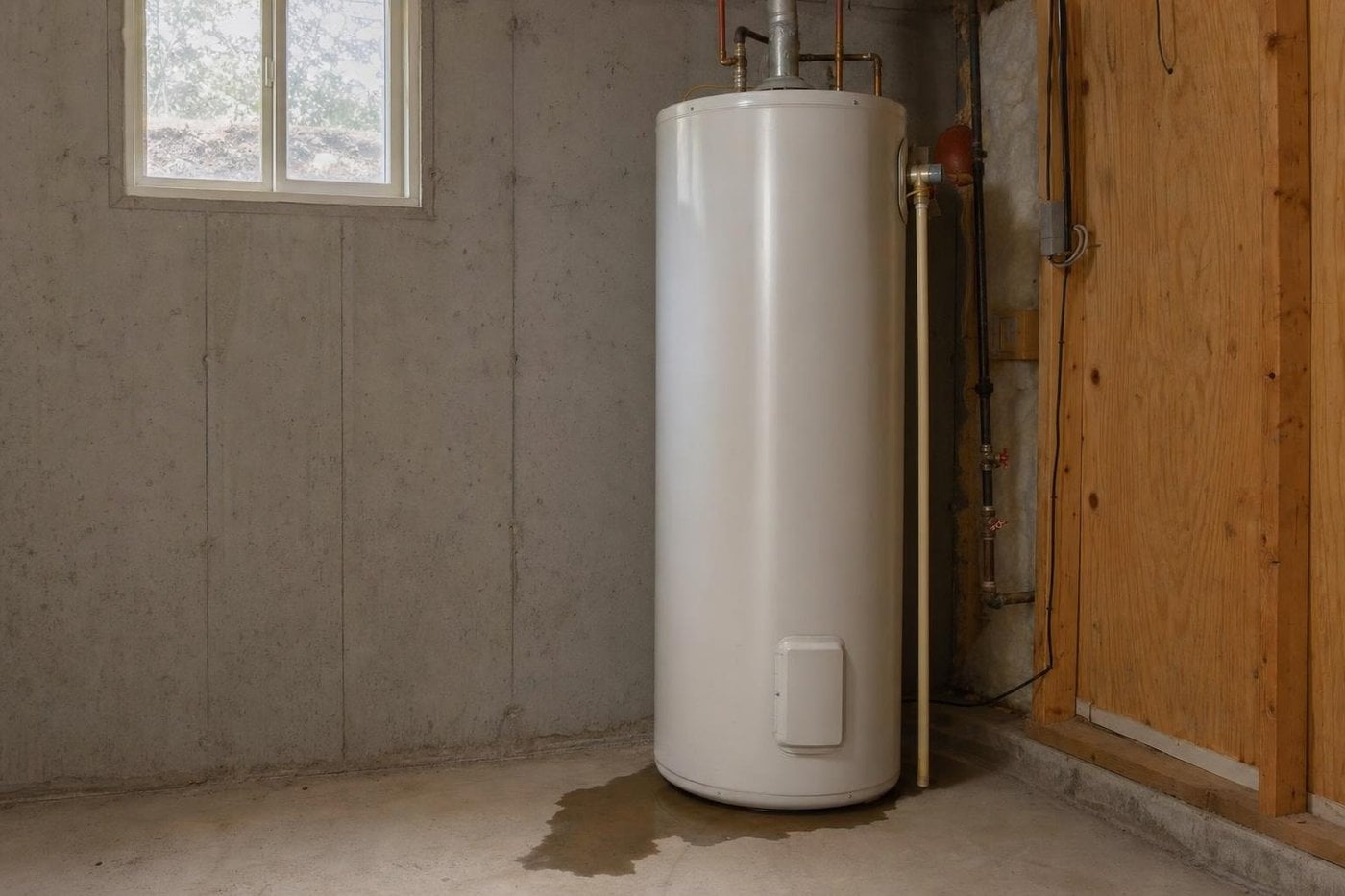
Most water heaters fail quietly. There is no dramatic countdown, no warning light on the wall. One morning you step into the shower and the water never gets warm, or you come downstairs and find water spreading across the utility room floor. The good news is that a tank water heater often gives you signals before it reaches that point. You just have to know what to look for.
The six signs below apply to standard storage-tank water heaters, both gas and electric, which are the most common type in U.S. homes. If you have a tankless unit, the general idea is the same but the maintenance steps differ. Check your owner’s manual for the specifics on your model.
1. The Tank Is Getting Old
The U.S. Department of Energy notes that storage water heaters typically last about 10 to 15 years. After that window, the risk of a failure, a slow leak, or a full rupture goes up considerably, especially if the tank has not been maintained over the years.
The problem is that most homeowners have no idea how old their water heater actually is. The manufacture date is not always printed in plain text on the label. Instead, it is usually coded into the serial number. The first few characters often represent the year and week of manufacture, though the exact format varies by manufacturer. A quick search with your brand name and “serial number date code” will usually decode it.
What to do: Find the label on the side of your tank and look up the manufacture date. If the unit is older than 10 years and is also showing any of the other signs on this list, start planning for a replacement rather than waiting for it to fail on its own. A proactive replacement on your schedule is far less disruptive than an emergency call.
2. Rusty or Discolored Hot Water
If the water coming out of your hot taps looks brownish, reddish, or just off-color, the tank may be corroding from the inside. Steel tanks rely on a sacrificial anode rod, usually made of magnesium or aluminum, to attract the corrosive elements in the water before they can attack the tank itself. When that rod is depleted, the tank becomes vulnerable.
The key diagnostic step here is to check whether the discoloration happens on the cold side too. Run the cold water at the same faucet. If the cold water is clear and only the hot water is rusty, the heater is almost certainly the source, not the pipes. If both are discolored, the issue may be in your supply line or municipal system.
What to do: Have a licensed plumber inspect the anode rod. If the rod can be replaced and the tank has not begun corroding through, that may extend the life of the unit. If the tank itself is rusting, replacement is the only real fix. A corroded tank will eventually leak, and there is no patch for it.
3. Rumbling, Popping, or Banging Noises
A water heater that suddenly starts making noise is trying to tell you something. The most common culprit is sediment. Over time, minerals from the water supply, primarily calcium and magnesium, settle to the bottom of the tank. As the burner or heating element works to heat the water, it heats that layer of sediment too. The rumbling and popping sounds are water percolating up through it and steam pockets forming underneath.
This matters for two reasons. First, sediment buildup forces the heater to work harder, which puts more stress on the tank and reduces efficiency. Second, repeated heating cycles can cause small cracks in the glass lining that protects the steel tank, which is how internal corrosion gets started.
What to do: Flushing the tank can help remove sediment, and your owner’s manual describes the correct procedure for your model. For most tanks, the process involves turning off the power or gas as your manual directs, connecting a garden hose to the drain valve, and running the water to a floor drain or outdoors until it clears. Tank water can be hot enough to scald, so keep hands and feet clear. If the noise continues after flushing, have a plumber take a look. A heavily scaled tank may be close to the end of its useful life.
4. Water Around the Base or a Visible Leak
Any water you find near your water heater deserves attention immediately. The source matters a lot, though. A drip from a pipe fitting, a loose connection at the pressure relief valve, or condensation on a cold tank surface are all different situations from water seeping out of the tank body itself.
A small drip at a fitting may be tightened or resealed by a plumber without replacing the unit. But if the water is coming from the tank itself, that is not a repairable situation. The tank wall has failed, and it will get worse.
What to do: If you see water and cannot immediately identify a loose fitting as the source, treat it as a tank leak until you know otherwise. Turn off the power supply (at the breaker for an electric heater) or the gas supply valve for a gas model. Then turn off the cold water supply valve, which is typically located on the pipe feeding into the top of the tank. Call a licensed plumber. Do not try to continue using a leaking tank.
5. Not Enough Hot Water, or Water That Never Gets Fully Hot
If you used to be able to run the dishwasher and take a shower back to back and now you cannot, something has changed. On electric heaters, one common cause is a failed heating element. Most electric tanks have two elements, upper and lower, and when one fails, the tank limps along on the remaining one. The result is noticeably less hot water than you are used to.
Sediment buildup can also reduce capacity effectively, since a thick layer of scale at the bottom of the tank insulates the water from the burner or element. On gas heaters, a burner that is not firing correctly or a thermocouple that needs service can produce the same lukewarm result.
A thermostat set too low is another possibility and the easiest to rule out first. The Department of Energy recommends setting your water heater thermostat to 120 degrees Fahrenheit for most households. If your thermostat is set significantly below that, adjusting it may solve the problem without any repairs.
What to do: Check the thermostat setting first. If the setting looks right and you are still running out of hot water faster than before, call a plumber or water heater technician. A failing element on an electric heater is a relatively straightforward repair if the tank itself is in decent shape.
6. Cloudy Water, a Metallic Taste, or a Rotten-Egg Smell
These are three different symptoms that can all trace back to the same general area: the inside of your tank and the condition of the anode rod. Cloudy hot water that clears from the bottom of the glass up within a minute or two is usually just harmless air bubbles. Cloudiness that persists often points to minerals coming out of the water as it heats. A metallic taste or odor can point to corrosion in the tank or in aging pipes connected to it.
The rotten-egg smell, which is actually the odor of hydrogen sulfide gas, is the most alarming of the three but is often the most fixable. It typically results from a reaction between sulfur bacteria in the water supply and a magnesium anode rod. Some water supplies are more prone to this than others. The gas is unpleasant but, at the low concentrations typically found in home water heaters, is generally a water quality issue rather than a safety emergency. The exception: if a rotten-egg smell is in the air around a gas water heater rather than in the water, treat it as a possible gas leak. Leave the house and call your gas utility from outside.
What to do: If only the hot water smells and the cold water does not, the heater is the source. A plumber or water treatment professional can advise on whether replacing or changing the type of anode rod will help, or whether a water treatment solution is a better fit for your situation. Do not ignore persistent odors or discoloration, as they are often early indicators of a tank that is breaking down internally.
Basic Maintenance That Can Add Years to Your Heater’s Life
Catching the warning signs early is one part of the equation. Regular maintenance is the other. None of this requires special tools or professional training for the basic steps, though some tasks are best left to a pro.
Flush the Tank Once a Year
Draining water from the tank reduces sediment buildup. Many manuals call for a flush once a year, and the Department of Energy suggests draining about a quart every three months. Your owner’s manual outlines the correct procedure for your specific unit. This is one of the most effective things you can do to keep the heater running efficiently and extend its service life.
Test the Temperature-Pressure Relief Valve
The T&P relief valve is a safety device. It is designed to open and release pressure if the tank overheats or pressure builds beyond a safe level. Your owner’s manual will describe how to test it. Stand clear of the discharge pipe when you do, because the water that comes out can be scalding. If the valve drips constantly, fails to open during a test, or does not reseat properly after testing, call a plumber. Never cap or plug a T&P valve. That is a safety hazard, not a repair.
Keep the Thermostat at 120 Degrees Fahrenheit
The Department of Energy recommends 120°F for most households. This temperature is hot enough to meet daily needs, reduces scald risk (which is a real concern for children and older adults), and puts less long-term stress on the tank than higher settings do.
Gas Heater Safety
Keep the area around a gas water heater clear of anything that can burn. Never store gasoline, paint thinner, or solvents nearby. Flammable vapors can travel along the floor and ignite at the pilot light or burner. The Consumer Product Safety Commission recommends carbon monoxide alarms on every level of the home and outside sleeping areas, which matters most in a home with gas appliances.
Know Where the Shutoff Valve Is
Before something goes wrong, locate the cold water shutoff valve on your heater and make sure everyone in the household knows where it is. In a leak situation, being able to close that valve immediately limits how much damage occurs.
When to Call a Licensed Plumber Right Away
Some situations should not wait for a scheduled appointment. Call a plumber immediately if you have a leak coming from the tank body itself. If you smell gas near a gas water heater, leave the house without turning any lights or switches on or off, and call your gas utility from outside. If your T&P valve is discharging hot water, do not touch it. Call a plumber.
Quick-Reference Checklist
- Age: Find your manufacture date. If the unit is over 10 years old and showing other symptoms, start planning for replacement.
- Rusty hot water: If only the hot side is discolored, have the anode rod inspected. Internal rust means replacement.
- Noises: Rumbling or popping usually means sediment. Flush the tank per your owner’s manual. Persistent noise warrants a professional look.
- Water at the base: Shut off power or gas and the cold water supply. Call a plumber. Do not keep using a leaking tank.
- Low hot water: Check thermostat first (should be 120°F). If the setting is fine, have a technician check the heating element or burner.
- Odor or cloudy water: If only the hot water is affected, have a plumber or water treatment professional assess the anode rod and tank condition.
- Annual maintenance: Flush the tank, test the T&P valve, and confirm the thermostat setting per your owner’s manual.
- Gas models: Keep flammables away, install a carbon monoxide alarm, and know where the gas shutoff is.
- Emergency contacts: Know your plumber’s number and your gas utility’s emergency line before you need them.
The information in this article is for general informational purposes only. We are not doctors, medical professionals, lawyers or financial advisors, and nothing on this site is intended as medical, legal or financial advice. Always consult a qualified professional about your own circumstances before acting on any information here. We accept no liability for any loss or damage arising from the use of, or reliance on, the information in this article.
- 0shares
- Facebook0
- Twitter0
- Pinterest0